
Why two aircon quotes for the same house are not the same job
The six things that move a split-system aircon install quote in Melbourne — sizing, brand, electrical scope, condensate and commissioning.
Quick answer
Two split systems can look identical on the wall and still land at very different costs, and the reasons are real, not made up to inflate the bill. When someone quotes down the phone without seeing the rooms, they’re working off a hopeful average rather than your actual house. Six things decide where your job lands: the correct unit size for the actual room, the brand and the compliance accessories that go with it, the electrical scope back at the switchboard, the route the condensate has to take, where the indoor and outdoor heads sit and what the walls are made of, and how the unit gets commissioned at the end. The rest of this is me unpacking each one so you know what you’re actually paying for.
Factor 1: getting the size right
Get the sizing wrong and everything downstream suffers, which is why I start here. Most online calculators just multiply about 150 watts of cooling per square metre and call it done. Sizing a Greenvale family room properly means floor area times ceiling height, then adjusting for orientation (a west-facing room copping the afternoon sun needs far more grunt than a shaded south-facing one), for how well the room is insulated, and for how many people are usually in it. Go too big and the unit short-cycles, slamming on and off, and burns out in half the time. Go too small and it flogs itself flat out on a 40-degree day and never quite catches up.
Factor 2: brand and compliance accessories
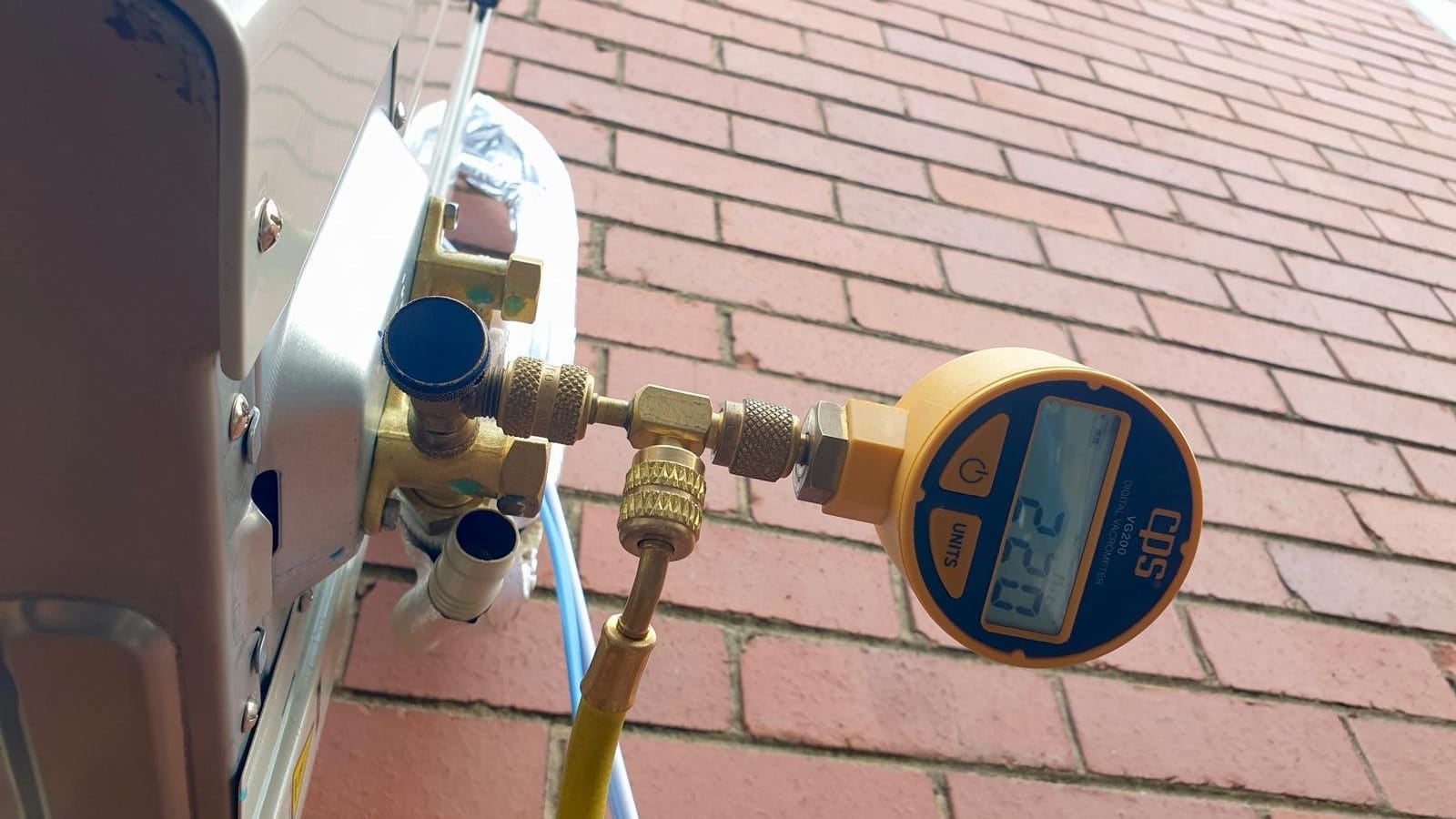
Two units rated at the same kW can behave nothing alike. The inverter technology, the running efficiency and the warranty terms vary a lot between brands, and a unit that’s genuinely efficient in our climate often costs a touch more up front but quietly hands it back on your power bill across a few summers. Every install also relies on the gear that makes it compliant: the refrigerant gauges, the vacuum pump, a proper leak-test, the isolator switch. A bargain quote sometimes leaves that kit off the page, and you don’t find out until something fails.
Factor 3: electrical scope from the switchboard
This is the part that lives in my world, and it’s where two quotes most often split apart. A split system wants its own dedicated circuit with proper RCD protection, and not every board has the room. Plenty of Greater Melbourne homes built since 2010 take the new circuit without a fuss. But pop the cover on an old 1980s board in a suburb like Greenvale or Roxburgh Park and you’ll often find no spare DIN-rail space, so I fit the room to land the new RCBO before anything else happens. Step up to a ducted system instead of a wall split and the electrical side grows again.
Factor 4: condensate drainage
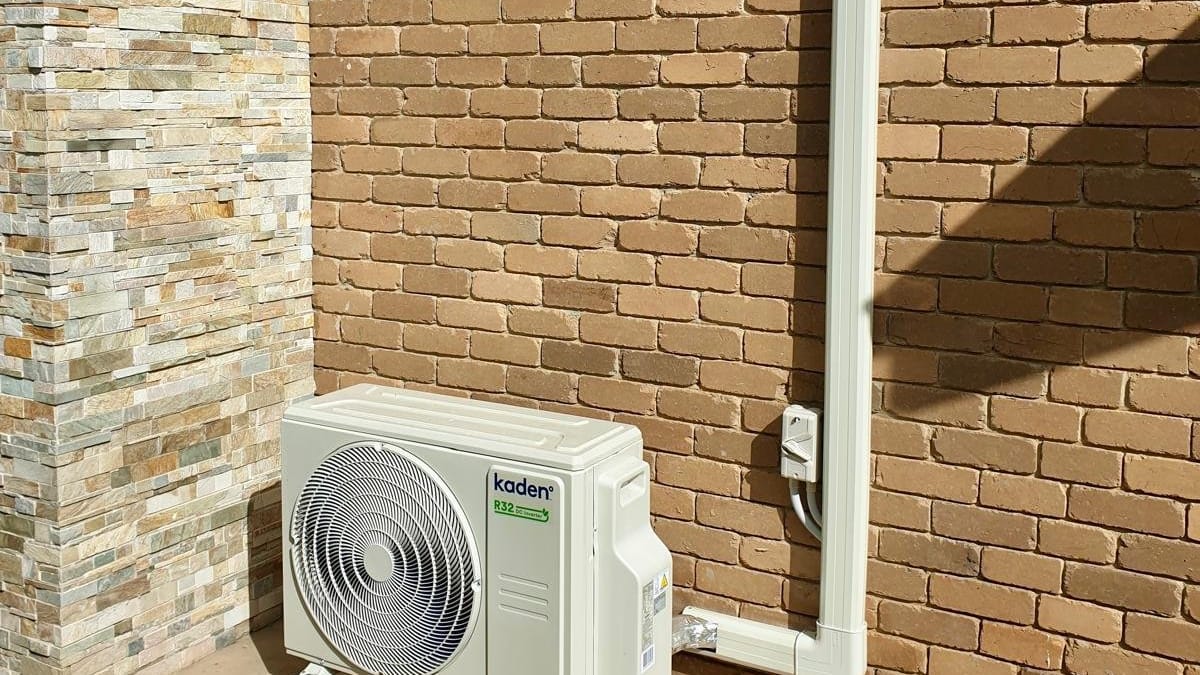
This is the quiet one people forget. While the indoor head is cooling it sheds water, and that water has to go somewhere safe. On a single-storey place with the head on an outside wall, a short gravity drain to a stormwater catchment does the job. Put that head on an internal wall, or up on a second storey, and now I’m running the drain through the ceiling cavity to a spot that won’t wreck a plaster ceiling if it ever weeps, often with a condensate pump pushing it along. The difference between doing this properly and rushing it is a brown stain spreading across your ceiling a couple of summers down the track.
Factor 5: head placement and wall types
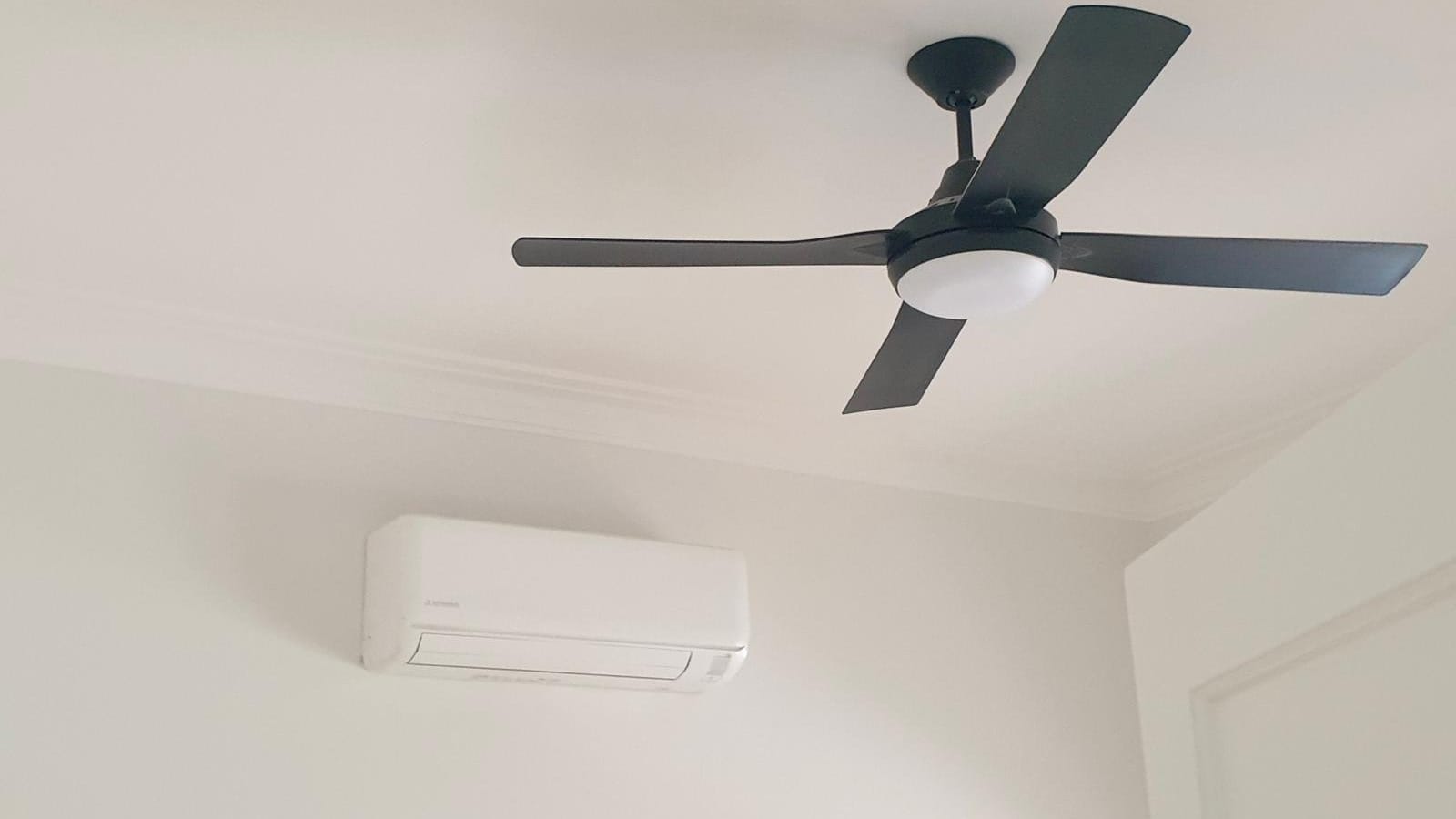
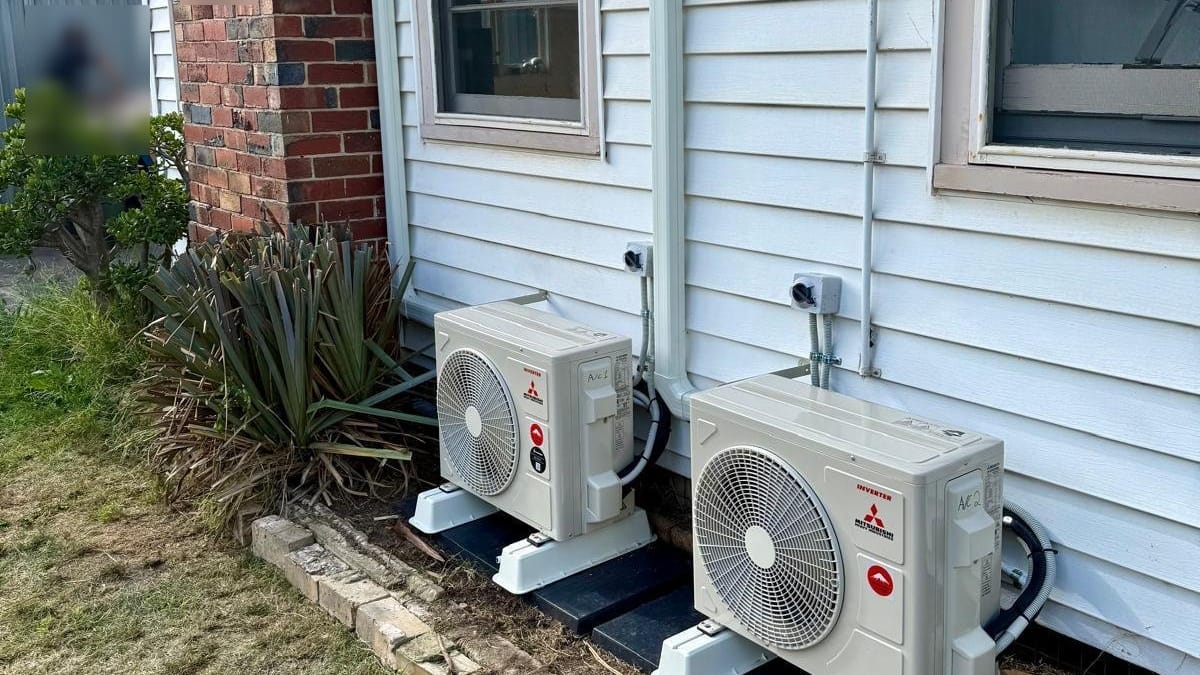
Where the heads go is half airflow, half what I’m drilling through. The indoor head wants a clean wall position that throws air across the room the way it should, and the outdoor unit needs breathing space and to sit within the refrigerant line’s real maximum distance from inside. Through brick veneer, that penetration is quick work. Hit a solid double-brick wall and I’m core-drilling clean through both leaves of brick, which takes time and the right gear. On a heritage place the position rules can be tight enough that the whole head layout changes to suit.
Factor 6: commissioning workflow
Hanging the unit isn’t finishing the job. A proper commission means vacuum-pumping the lines to pull every bit of moisture out, charging the system to the manufacturer’s spec, running it through every mode, checking the airflow and the temperature drop off the supply air, then lodging the Certificate of Electrical Safety with Energy Safe Victoria. That’s 30-40 minutes I’m not willing to skip, and it’s exactly the bit a rock-bottom quote leaves out. A unit that never got commissioned will still blow cold for a while, but it works harder, costs more to run, and gives up years early.
How I scope an aircon install on site
When I come out, I walk every room you want cooled before I write a word. I measure the floor area, ceiling height, orientation, insulation and how the room gets used, then I land on the right unit size and the right brand for how you’ll actually run it. From there I work out where the indoor and outdoor heads sit, trace the condensate route, and check what the switchboard needs to carry the new circuit. Once it’s in and running, I commission it and lodge the Certificate of Electrical Safety with Energy Safe Victoria so the paperwork matches the work. The air conditioning pillar covers the wider scope.
A short note on comparing quotes
Two written quotes for the same house get a lot easier to read once you know what to look for. Run each one against six simple checks. Does it name the exact indoor and outdoor unit models? Does it state the kW size and say why that size suits the room? Does it spell out the refrigerant line distance and any pump or pipe accessories? Does it set out the condensate route, pump and all? Does it cover the electrical scope at the switchboard, including any new sub-circuit or RCBO? And does it commit to lodging a Certificate of Electrical Safety with Energy Safe Victoria? Tick all six and you’re looking at a genuine install scope. Miss any of them and the quote is either leaning on assumptions that surface as variations on install day, or it’s quietly skipping a corner you’ll pay for later. For any Greater Melbourne aircon job, whether it’s a single split, multi-head or ducted, send your room dimensions and one photo of the switchboard to the email below and I’ll have a written quote back to you the same day. The site visit runs about fifteen minutes, and it’s the difference between a scope I’ll stand behind and a guess made over the phone.
Sources
Common questions
Why does my mate's identical-looking aircon install cost half of mine?
Because his isn't really identical — even when the indoor unit looks the same. Two installs in the same suburb on the same wall can differ substantially depending on the indoor and outdoor head placement, the refrigerant line distance, the wall types being penetrated, the condensate route, the switchboard work needed, and whether the install is being certified properly. A free quote with a site walk-through is the honest way to compare.
Should I just pick the lowest aircon quote?
Generally no. A suspiciously cheap quote is usually missing something — most commonly the electrical certification, the proper condensate drainage, the wall-mounting compliance, or the refrigerant-handling licensing under ARCtick. A non-compliant install voids the warranty, fails any future house sale's safety check, and is a real refrigerant-leak risk.
What's the difference between the electrical scope and the mechanical scope?
The electrical scope is what connects the unit to the household supply — the dedicated sub-circuit at the switchboard, the wall-mounted isolator, the cabling to the outdoor unit. The mechanical scope is the refrigerant pipework, the indoor and outdoor head mounting, the vacuum-and-charge commissioning. ARCtick covers the mechanical side, REC covers the electrical. Thunderman holds both, which means one install, one CoES, one accountable contractor.
Does condensate drainage really change the cost?
Yes — and it's one of the most common shortcuts a cheap quote takes. The indoor unit produces condensate during cooling, and it needs to drain somewhere safe. On a single-storey home with the unit on an external wall, that's a short gravity drain to a stormwater catchment. On a double-storey or an internal wall, it's a condensate pump and a longer drainage run. Skipping the proper drainage is a future water-damage claim waiting to happen.
Do you commission the unit properly after install?
Yes. Proper commissioning means vacuum-pumping the refrigerant lines to remove moisture, charging to the manufacturer's spec, running through all modes, confirming the airflow and the temperature drop, checking the electrical isolation, and lodging the Certificate of Electrical Safety with Energy Safe Victoria. It takes 30-40 minutes and is what separates a long-lasting install from one that limps along for two summers.

The owner does your job
You'll get Yiannis — not a subcontractor.
Book Thunderman and the licensed electrician who quotes your job is the one who does it — and stands behind it afterwards. REC 28523, ARCtick certified, public liability insured, rated 4.9★ across 53 Google reviews.
More from the Journal
Got a follow-up question? Just call.
Free quotes across Greater Melbourne — Yiannis answers personally.