
How to size a split system air conditioner for a Melbourne home
A licensed Melbourne sparky on kilowatts per square metre, what our climate changes, and the sizing mistakes that leave families sweating.
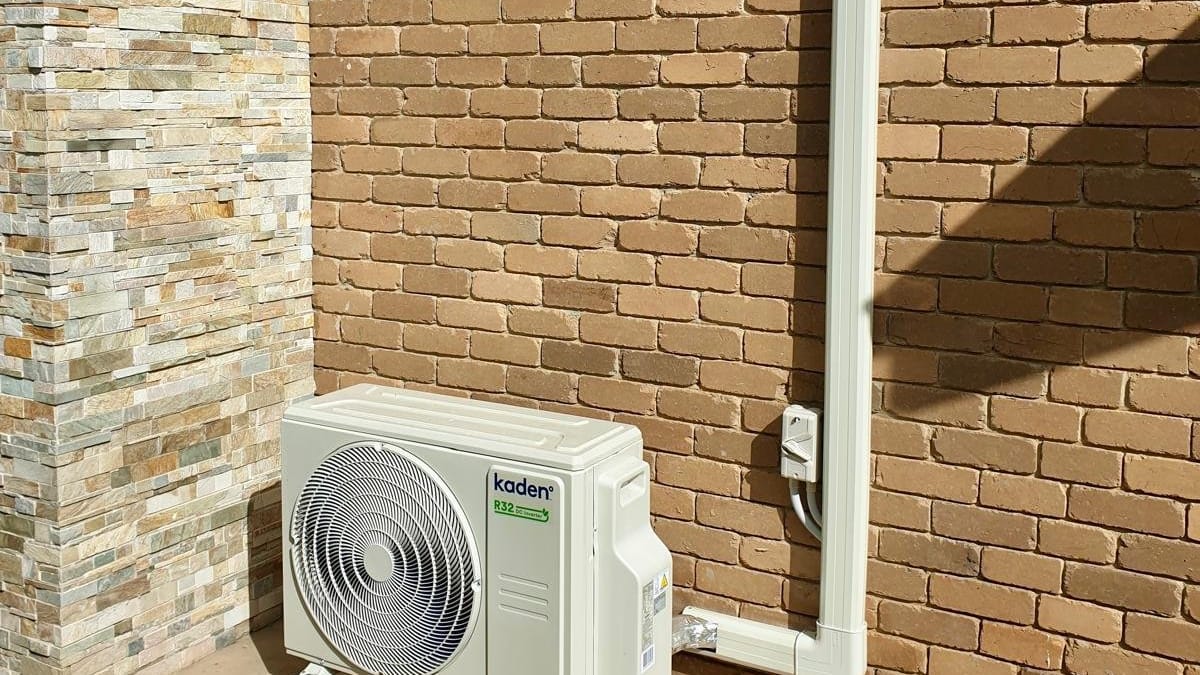
Quick answer
For a typical insulated Melbourne living room of 25 m², plan on a 3.5–5 kW reverse-cycle split system. The exact number shifts with ceiling height, insulation, window orientation, glazing, and how the room opens to the rest of the house. Right-size beats oversize: an oversized unit short-cycles, wastes power, and leaves the room muggy.
Calculator
Quick aircon-sizing estimate.
A live version of the rule-of-thumb in this article. Gives you a kW range you can use to compare quotes — not a final spec. A real Thunderman quote walks the room.
Estimated kW range
—
Fill in the room details above to get an estimate.
Estimate only — not a fixed spec. Final sizing depends on window area, door openings, kitchen appliances and other variables that need a site visit. A Thunderman quote is free.
The rule of thumb (and why it’s only a starting point)
Most aircon sizing calculators start with about 150 watts of cooling per square metre of floor area. A 25 m² room therefore wants somewhere around 3.7 kW. For a Greater Melbourne climate that’s a reasonable opening number — but it’s not the final number, because watts per square metre treats every room as a rectangle with average insulation, average glazing, and no people in it. Real rooms aren’t like that.
The factors that push the number up:
- High ceilings. Standard sizing assumes a 2.4 m ceiling. Add another 600 mm and you’re cooling 25 percent more volume of air. Inner-suburb period homes in Brunswick and Carlton with 3 m or more above the floor often need a unit a full size up.
- West-facing windows. Afternoon sun through a big west window in January adds a serious thermal load. Add roughly half a kilowatt for a single big west-facing window.
- Single glazing. Older Melbourne homes were built before double glazing was standard. A single-glazed window leaks heat in summer and out in winter; expect to add 10–15 percent for a room with a lot of old glass.
- Open-plan layout. If the lounge opens straight into the kitchen with no door, you’re not cooling 25 m² — you’re cooling the open space. Measure honestly.
- People and appliances. Every adult in the room is essentially a 100-watt heater. A TV, gaming PC, and a few lamps add up. A media room sized for “the family” cools to a different number than the same room measured empty.
The factors that pull the number down:
- Modern double glazing and insulation. A new build to current National Construction Code (NCC) standards leaks far less heat than a 1970s brick veneer.
- South-facing rooms. No direct sun load means the unit only has to handle ambient air temperature, not radiant gain.
- A door you actually close. Cooling a 25 m² room with the door shut is genuinely 25 m². Cooling the same room with the door open to a 60 m² hallway is 85 m².
Why oversizing is the more common mistake
People assume bigger is better — pay more, get more cool. With aircon, the opposite is closer to the truth.
Reverse-cycle split systems run most efficiently when they’re operating near their rated capacity. An oversized unit cools the room to setpoint quickly, then switches off. The room warms a degree or two. The unit switches back on for a short blast. This is called short-cycling, and three things go wrong:
- Energy use goes up. Compressors draw the most power at startup. Many short cycles use more electricity than fewer long ones.
- Humidity stays high. Aircon doesn’t only cool — it dehumidifies. But it only pulls meaningful moisture out of the air when it runs for sustained periods. Short cycles cool the air without drying it, leaving the room a strange clammy cold.
- The compressor wears out earlier. Most aircon compressors are rated for a finite number of startup cycles. Doubling the cycle count roughly halves the unit’s service life.
The right-sized unit runs for longer, cycles less, dehumidifies properly, sips less power, and lasts longer.
Single split vs multi-head vs ducted
Once you’ve sized the cooling load, the next question is the system architecture.
A single split system has one outdoor compressor connected to one indoor head. Best for cooling a single zone — a master bedroom, a lounge, a home office. Most efficient, simplest, cheapest to maintain. About 80 percent of residential installs in Greater Melbourne are single splits.
A multi-head system has one outdoor compressor connected to two, three, or sometimes four indoor heads in different rooms. Useful when you only have space for one outdoor unit (terrace courtyard, balcony, narrow side passage), or when you want zoned control across bedrooms. The catch: most multi-heads can’t run individual zones at full capacity if every head is on at once, and they’re less efficient than separate splits per room.
Ducted refrigerated cooling uses a single big outdoor unit, a central indoor coil in the roof space, and ducted vents into every room. The right choice for whole-home cooling in newer builds or large renovations — but it’s a much bigger install, needs more switchboard capacity, and only makes sense when you’re cooling four or more rooms regularly. Many Craigieburn new builds spec ducted from day one because the rough-in is far cheaper at frame stage than retrofitting later.
The electrical work you have to plan for
This is where a lot of weekend-DIY plans come unstuck. Air conditioning installs need a licensed electrician for the connection to mains power and an ARCtick-licensed refrigerant handler for the gas — and in practice, that’s the same person if you book Thunderman.
Specifically:
- A new split system needs a dedicated circuit back to the switchboard for anything over about 4 kW input. Tapping it off the lounge power circuit is a code-fail and a fire risk.
- Older switchboards (ceramic fuses, no RCDs on every circuit) often need an upgrade before the install can be signed off under AS/NZS 3000.
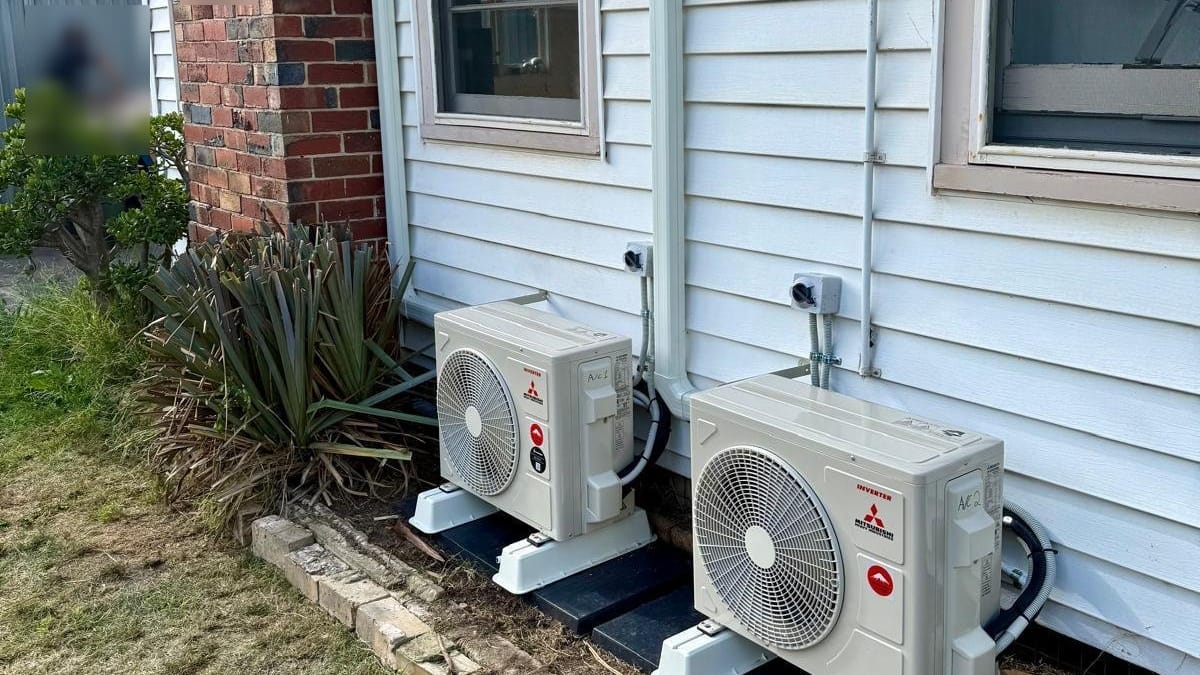
- The outdoor unit needs an isolator within sight, weatherproof, mounted to the IP rating the wiring rules specify.
- All this work needs a Certificate of Electrical Safety lodged with Energy Safe Victoria afterwards — that’s your proof the install is legal, and what your house insurance and any future buyer will ask for.
If a quote comes in conspicuously below others and the contractor isn’t asking about the switchboard, isn’t talking about an isolator, and doesn’t mention a CoES — walk away. The corner-cutting will either kill the warranty or kill the install.
A practical method for getting the right number
If you want to do the sizing maths yourself before getting a quote:
- Measure the floor area of the room with the door shut (or the entire open-plan zone if no door).
- Multiply by 150 W/m² as a baseline.
- Add 10 percent for ceilings above 2.7 m.
- Add 10–15 percent for any big west-facing single-glazed window.
- Add 5 percent per regular occupant beyond two.
- Round to the next standard unit size (2.5, 3.5, 5, 6, 7.1, 8.5, 10 kW).
That gives you a number to sanity-check the quote against. A sparky who arrives, looks at the room, and quotes 2.5 kW for a sun-soaked open-plan kitchen-lounge is either rushing or wrong. A sparky who says “your lounge is 28 m² but it opens straight to the dining room and faces west — 6 kW” is doing the job properly.
What to do next
Measure the rooms you actually want to cool — door shut, the way you’d use the aircon in February. Note ceiling height, window orientation and glazing type. If you have an older switchboard, photograph it. If you’d rather a licensed sparky handle the sizing, the install, and the certification, give Yiannis a call on 0434 254 474 or send a quick message for a free quote.
Sources
- Energy Safe Victoria — household wiring and safety switches
- ARCtick — why refrigerant handling is licensed
- AS/NZS 3000:2018 — Wiring Rules
Common questions
What size air con do I need for an average Melbourne lounge room?
A typical 25 m² lounge in a single-storey Melbourne home usually lands around 3.5 kW for a well-insulated room, or 5 kW if the ceiling is high, the room is west-facing, or it opens into a kitchen. Always check with a sparky on site — orientation and insulation move the number more than people expect.
Is a bigger air con always better?
No. An oversized unit short-cycles — it cools the room fast, switches off, then switches on again a few minutes later. That uses more energy, wears the compressor out earlier, and leaves the room feeling clammy because the unit never runs long enough to pull moisture out of the air. Right-sized beats oversized every time.
Why does Melbourne weather change the sizing calculation?
Melbourne gets long, hot dry spells in summer but also the famous late-afternoon cool changes. The unit has to handle 38°C peak days and humid muggy evenings, plus 5°C winter mornings if you're using it in reverse cycle. We size for the worst summer day with the windows shut and people in the room — not for a mild Tuesday in October.
Do I need a licensed electrician to install a split system?
Yes. In Victoria, anyone connecting a split system to the electrical supply must be a Registered Electrical Contractor, and anyone handling the refrigerant must be ARCtick licensed. A non-licensed install voids the warranty, fails any future house sale's safety check, and is illegal under Energy Safe Victoria rules.
Can I use a portable unit instead?
For a small room or short-term need, a portable can take the edge off. But they're loud, less efficient, vent hot air through a window kit that leaks the cool air back out, and aren't a real substitute for a properly sized split system. Most homeowners who try a portable end up booking a split install the following summer.

The owner does your job
You'll get Yiannis — not a subcontractor.
Book Thunderman and the licensed electrician who quotes your job is the one who does it — and stands behind it afterwards. REC 28523, ARCtick certified, public liability insured, rated 4.9★ across 53 Google reviews.
More from the Journal
Got a follow-up question? Just call.
Free quotes across Greater Melbourne — Yiannis answers personally.