ESV charges AusNet over low-hanging transmission line safety failures
Energy Safe Victoria has charged AusNet over alleged failures to manage low-hanging transmission line risks. Here's what it means for Melbourne homeowners.
Quick answer
Energy Safe Victoria has charged AusNet over alleged failures to manage low-hanging transmission line risks. The case is a reminder that electrical safety obligations run all the way from the high-voltage network down to your home’s switchboard — and that the regulator takes enforcement seriously when those obligations are not met.
What happened, and why it matters today
ESV announced on 19 August 2026 that it has charged AusNet over alleged failures to manage risks posed by low-hanging transmission lines. The charges relate to Victoria’s high-voltage transmission network — the infrastructure that carries electricity across the state before it reaches your suburb’s distribution lines and, eventually, your switchboard.
ESV is Victoria’s electrical and gas safety regulator. It has the power to investigate network operators and, where it believes duties have been breached, to lay charges through the courts. That is what has happened here. The matter has not yet been determined, so the alleged failures are not yet proven — but the fact that ESV has moved to charges signals that it has gathered enough evidence to take the matter forward.
For most Melbourne homeowners, this kind of headline sits at the edge of awareness. Transmission lines feel abstract — they are the big pylons you see along the freeway, not the power point in your kitchen. But there are a few reasons this story is worth paying attention to.
Why transmission line safety affects you directly
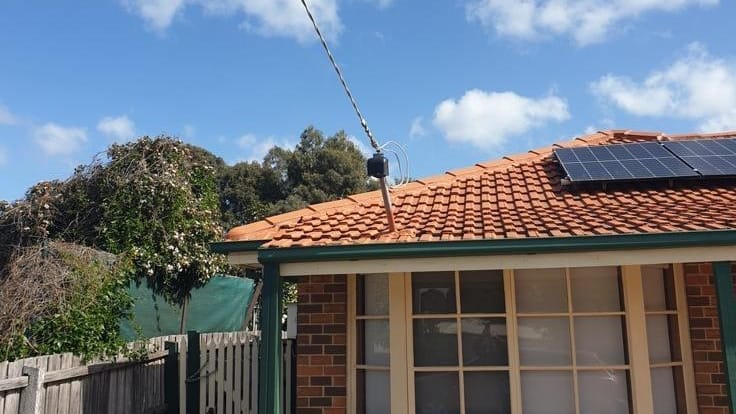
The most immediate risk is physical. A transmission line sagging below its required clearance height can be lethal. High winds, summer heat causing conductors to expand and sag, trees growing into the clearance zone, or vehicles striking a line — any of these can bring a live, high-voltage conductor within reach of a person on the ground. If you are in Epping or Craigieburn, or anywhere across the northern growth corridor, there is overhead transmission infrastructure in the surrounding area.
The rule with any downed or unusually low line is simple: treat it as live, stay well back — at least eight metres — and call 000. Do not approach it to check, even if it looks dead.
The less visible risk is what happens inside your home when the network is stressed. Faults on transmission or distribution infrastructure can cause voltage fluctuations and surges. A modern switchboard with properly rated circuit breakers and safety switches offers some protection at the point where the network meets your installation. An old board — one still running ceramic rewireable fuses, without any safety switches — offers considerably less.
What a transmission network fault can do to your switchboard
When a fault occurs upstream on the network, the energy has to go somewhere. Depending on the nature of the fault, your installation can experience a brief overvoltage event. Most modern appliances handle minor fluctuations without drama, but older or sensitive equipment can be damaged, and if the overvoltage is significant, it can trip safety switches or damage wiring.
A safety switch (RCD) is designed to cut the circuit in milliseconds when it detects current leaking to earth — the kind of leakage that happens when insulation breaks down or a person completes a circuit. It is not primarily a surge protection device, but a well-maintained switchboard is your first line of defence at the boundary between the network and your home.
Under AS/NZS 3000:2018, the Wiring Rules, all new and significantly altered residential installations must include RCDs on power and lighting circuits. But plenty of Melbourne homes, particularly in established suburbs and older parts of the growth corridor, have switchboards that pre-date those requirements. If you have never had your switchboard looked at, you may not know what is in there.
ESV’s guidance on household wiring and safety switches is worth a read. The short version: if your home does not have safety switches on every circuit, it is worth getting it looked at by a licensed electrician. That is not an alarmist position — it is the same position ESV takes.
What ESV’s enforcement action tells us about the regulatory environment
ESV does not lay charges lightly. The fact that it has moved against AusNet — one of Victoria’s major network operators — over transmission line clearance management is a signal that the regulator is willing to pursue significant duty holders through the courts when it believes safety obligations have not been met.
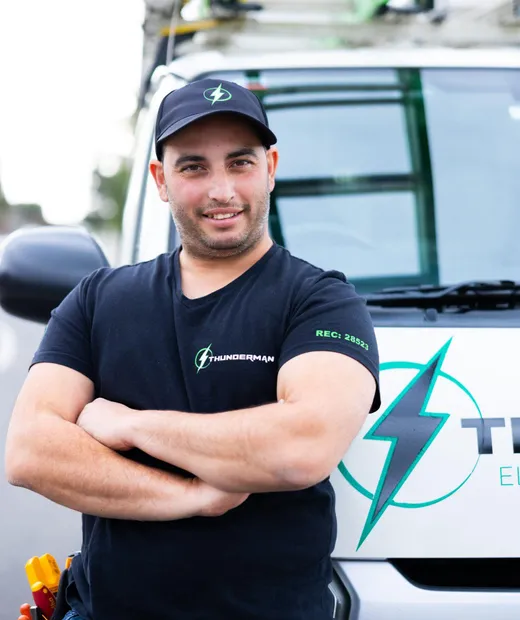
For homeowners, this is mostly reassuring. It means the body responsible for electrical safety in Victoria is watching, and it acts. You can verify any licensed electrical contractor on ESV’s public register — Yiannis is listed there as REC 28523, and you can confirm that directly before any work begins.
For Thunderman’s residential electrical customers in Melbourne’s northern suburbs, the practical takeaway from today’s news is not panic — it is a prompt to check the things you can actually control. You cannot manage AusNet’s transmission lines. You can make sure your own switchboard is in good shape.
What you can check yourself — and where to stop
There is a short list of things a homeowner can do without calling anyone:
- Locate your switchboard and note whether the switches are circuit breakers or old ceramic fuses.
- Press the test button on each safety switch — a working RCD should trip and cut the circuit when tested, then reset normally when you push it back.
- Check whether all circuits have a safety switch protecting them, or just one or two.
- Note whether any circuit breakers feel loose, look discoloured, or smell unusual.
That is the limit of what you should do yourself. If a safety switch does not trip when tested, if a circuit breaker feels warm, or if there is any visible scorching or unfamiliar smell around the board, that is a job for a licensed electrician — not a DIY fix. Switch off at the mains if it is safe to do so and call someone.
Anything involving opening the board, replacing fuses, touching wiring, or working on the installation itself is licensed electrical work in Victoria. Full stop.
What to do next
Today’s ESV enforcement news is a useful prompt. The regulator is doing its job at the network level. Your job is to make sure the installation inside your home is in the same shape.
If you have not had your switchboard inspected recently, or if you are not sure whether your home has safety switches on all circuits, it is worth getting it looked at — especially heading into the warmer months when network demand peaks and storm activity increases.
If you’d rather a licensed sparky handle it, give Yiannis a call on 0434 254 474 or send a quick message for a free quote.
Sources
- Energy Safe Victoria — household wiring and safety switches
- Energy Safe Victoria — public register of electrical licences
- AS/NZS 3000:2018 — Wiring Rules
Common questions
What does it mean when ESV charges a network operator like AusNet?
Energy Safe Victoria is Victoria's electrical and gas safety regulator. When ESV lays charges, it means they believe a duty holder has breached the Electricity Safety Act 1998. The matter then proceeds through the courts. ESV enforces these obligations to protect the public from electrical hazards, including live overhead lines.
Are low-hanging power lines dangerous to homeowners?
Yes. Overhead transmission lines that sag below their required clearance heights can pose a serious risk of electrocution, fire, or both — particularly during high winds, storms, or when trees or vehicles make contact with them. If you spot a line that looks lower than it should be, keep well clear and call 000 or your network operator.
What should I do if I notice a low or downed power line near my home?
Treat every downed or sagging line as live. Do not touch it, do not approach it, and keep others away. Call 000 for emergency services and then your network operator's faults line. Never assume a line is dead because it is not sparking or making noise.
Does this AusNet case affect my home's switchboard or internal wiring?
The charges relate to transmission infrastructure — the high-voltage lines that move electricity across Victoria. Your home's switchboard, wiring, and safety switches are a separate system. That said, network faults can cause power surges that affect your internal installation, which is one reason a properly maintained switchboard with working safety switches matters.
How do I check that my switchboard is safe and up to date?
Have a licensed electrician inspect it. A modern switchboard should include safety switches (RCDs) protecting all power point and lighting circuits. If yours still has ceramic rewireable fuses and no safety switches, it is worth getting checked — and potentially upgraded.
The owner does your job
You'll get Yiannis — not a subcontractor.
Book Thunderman and the licensed electrician who quotes your job is the one who does it — and stands behind it afterwards. REC 28523, ARCtick certified, fully insured, rated 4.9★ across 53 Google reviews.
More from the Journal
Got a follow-up question? Just call.
Free quotes across Greater Melbourne — Yiannis answers personally.