
Home battery fire safety: what Victoria's ESV warning means for your system
After Energy Safe Victoria's home-battery fire warning, what Melbourne homeowners with a solar battery should check — and when to call a sparky.
Quick answer
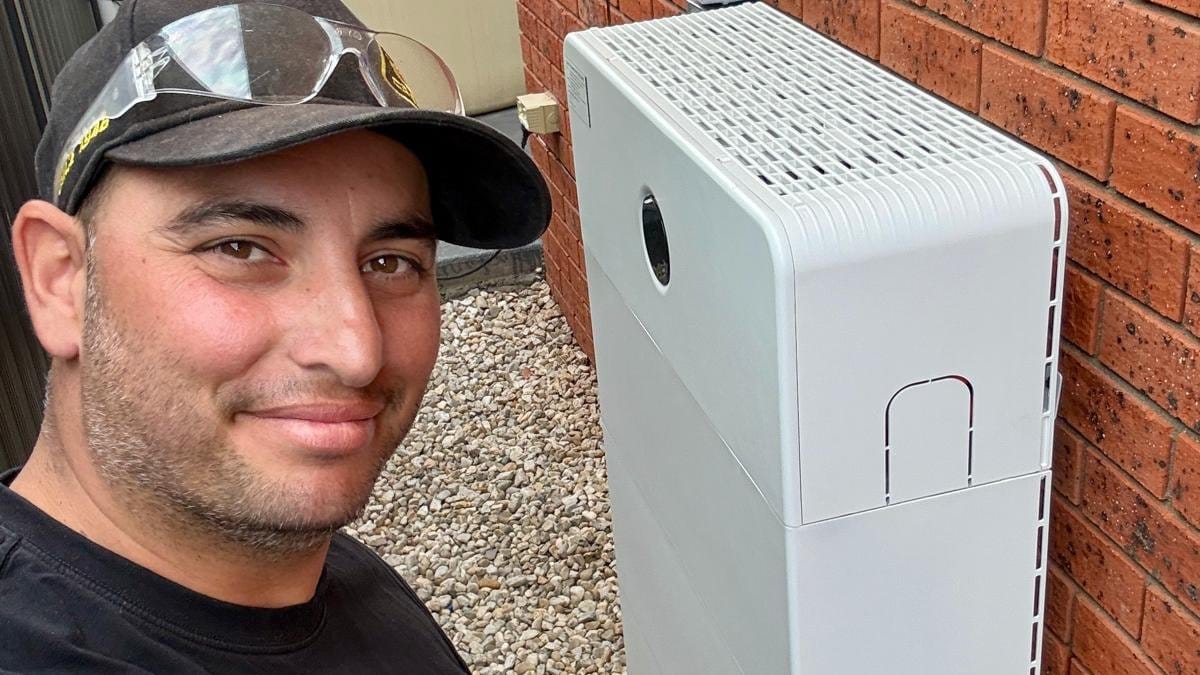
Energy Safe Victoria warned homeowners after a spate of home battery storage fires — five in a single day in March 2026. The lesson holds whatever the date on the calendar: if you have a solar battery system at home, do a visual check of the unit — look for heat, swelling, burning smells, or scorch marks — and if anything looks wrong, turn it off at the isolator if it’s safe to do so and call a licensed electrician.
What ESV actually said, and why it still matters
In March 2026, Energy Safe Victoria — the state’s electrical and gas safety regulator — published an urgent warning after five separate home battery fires occurred within a single day in Victoria. Five fires. One day.
That’s not a statistical blip. ESV doesn’t issue public warnings lightly, and when they do, Victorian homeowners with battery storage systems should take it seriously — and keep taking it seriously, because the underlying risk doesn’t expire when the news cycle moves on.
The warning is directed squarely at home battery storage systems — the kind installed alongside a rooftop solar setup or as a standalone energy storage unit. If you have one, or you’re considering one, this is for you.
The full ESV notice is at energysafe.vic.gov.au. Worth reading directly.
Why battery fires are a different kind of electrical hazard
A standard electrical fault — an overloaded circuit, a wiring issue — will usually trip your safety switch (RCD) and cut the power. Dangerous, but containable. A lithium-ion battery fire is a different animal.
The failure mode is called thermal runaway. It’s a chain reaction inside the battery cells where heat generates more heat, faster than the system can dissipate it. Once it starts, it can be very difficult to stop, and it can produce its own oxygen — meaning cutting the power supply doesn’t necessarily put it out. That’s why battery fires are taken so seriously by fire services and electrical regulators alike.
Home battery systems have grown rapidly across Melbourne’s northern suburbs over the past few years, including areas like Craigieburn and Epping where newer housing estates have seen strong solar uptake. More batteries in more homes means this risk sits closer to people’s living spaces than it ever has before.
That’s the reality ESV is responding to. Not scaremongering — just maths.
What to look for right now
You don’t need to be a sparky to do a basic visual check of your battery system. Here’s what to look at:
- The enclosure itself. Any scorch marks, discolouration, or signs of heat damage on the outside of the unit or the wall behind it? That’s a red flag.
- Swelling or distortion. A battery enclosure that looks bowed, warped, or like it’s bulging in places it shouldn’t — treat that as a red flag.
- Smell. A sharp chemical smell near the unit, or anything that smells like something burning, even faintly.
- Heat. The unit will generate some warmth during charge and discharge cycles. But if it’s hot to the touch when it shouldn’t be — during mild weather, when it’s been sitting idle — get it looked at.
- Unusual behaviour. Repeatedly dropping offline, error codes on the display that weren’t there before, the system refusing to charge or discharge normally.
If you notice any of these: don’t ignore it, don’t poke around inside the enclosure, and don’t leave it running overnight unattended. Turn it off at the isolator if you can do so safely, and call a licensed electrician.
What a proper installation actually looks like
Not every battery system on a Melbourne rooftop was installed to the same standard. The Clean Energy Council accredits installers specifically for battery storage — that’s separate from basic solar accreditation. Under AS/NZS 3000 (the Australian Wiring Rules), battery storage installations have specific requirements around enclosure location, ventilation, cable protection, and protection devices.
A properly installed system will have:
- Appropriate isolation switches that can cut the battery from the rest of the electrical installation
- Correct cable sizing and protection
- The unit mounted in a location with adequate ventilation (not stuffed in a cupboard, not next to a heat source)
- A safety switch protecting the circuit
- Compliant cabling and conduit throughout
If your battery was installed a few years ago, or you inherited it when you bought the property, it’s worth asking: who installed it, are they CEC-accredited, and was the installation inspected? A licensed residential electrician can check the installation against the current standard and flag anything that needs attention.
This isn’t about pointing fingers at any particular brand or installer. It’s about knowing what you’ve actually got on your wall.
When to call a sparky, and when to call the fire brigade
If your battery is on fire, or you see flames, smoke, or smelling like burning plastic and you can’t identify the source: get everyone out of the house, call 000, and don’t go back in to investigate. Do not attempt to fight a battery fire with a standard home extinguisher.
If you’ve noticed one of the warning signs above — heat, swelling, smell, unusual behaviour — but nothing is actively burning: turn the system off at the isolator if it’s safe to reach. Don’t open the enclosure. Call a licensed electrician before you turn it back on.
For everything else — a routine inspection, a question about your installation, or you just want peace of mind after reading this — a licensed sparky with battery and electrical services experience is the right first call. That’s not a sales line; it’s just the correct sequence.
ESV’s position is clear: battery storage systems must be installed by a licensed electrician, and any concerns about an existing installation should be assessed by a licensed electrician. Not a neighbour, not a YouTube video, not the bloke who did your deck.
What to do next
Start with the visual check described above. If everything looks normal and the system is behaving normally, that’s a reasonable baseline — but consider booking a professional inspection, especially if the system is more than a few years old or you don’t have documentation of the original install.
If anything looks or smells wrong: isolator off, stay out of the room with the unit, and make the call.
If you’d rather a licensed sparky handle the inspection, give Yiannis a call on 0434 254 474 or send a quick message for a free quote. Thunderman covers Greater Melbourne including Craigieburn, Epping, and surrounding suburbs — no pressure either way, but better to know than to wonder.
Sources
Common questions
What caused the five battery fires ESV warned about?
ESV has not named a single cause. Their urgent warning points to home battery storage systems as the common factor. The specific failure modes — whether installation fault, thermal runaway, or product defect — are subject to ongoing investigation. Check the ESV website for updates.
Is my solar battery system safe?
A properly installed, compliant battery system from a reputable manufacturer, fitted by a licensed electrician with the relevant solar and battery accreditation, carries a low risk. The concern is systems that were installed incorrectly, are damaged, or have been modified. If you're not sure about yours, get it inspected.
What are the warning signs of a battery problem?
Heat coming from the battery enclosure when it shouldn't be, a chemical or burning smell, visible swelling or distortion of the unit, unusual sounds like hissing or clicking, or the system repeatedly dropping offline without explanation. Any of these: turn it off if it's safe to do so and call a licensed sparky.
Can I check my battery system myself?
You can check the outside of the unit for visible damage, swelling, scorch marks, or loose cabling at the connection points — without opening anything. Anything beyond a visual inspection of the exterior is licensed electrical work in Victoria. Don't open the enclosure, don't probe terminals.
Does this apply to portable battery packs and power stations too?
ESV's March 2026 warning focused on home battery storage systems connected to the grid or solar. That said, lithium-ion batteries in any form — including large portable power stations — carry thermal runaway risk if damaged or charged incorrectly. Keep them out of living areas and don't leave them charging unattended overnight.
Who do I call for a battery inspection in Melbourne's north?
Yiannis at Thunderman covers Greater Melbourne including suburbs like Craigieburn and Epping. Call 0434 254 474 for a free, no-obligation quote on a battery and switchboard inspection.
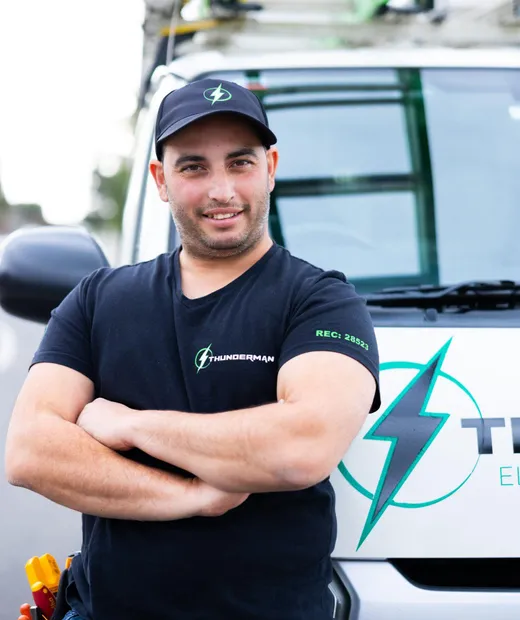
The owner does your job
You'll get Yiannis — not a subcontractor.
Book Thunderman and the licensed electrician who quotes your job is the one who does it — and stands behind it afterwards. REC 28523, ARCtick certified, fully insured, rated 4.9★ across 53 Google reviews.
More from the Journal
Got a follow-up question? Just call.
Free quotes across Greater Melbourne — Yiannis answers personally.