
Switchboard upgrade: when an old board becomes a fire risk
Ceramic fuses and no safety switch are the two clearest signs a Melbourne switchboard needs replacing. Here's how to tell if yours is overdue.
Quick answer
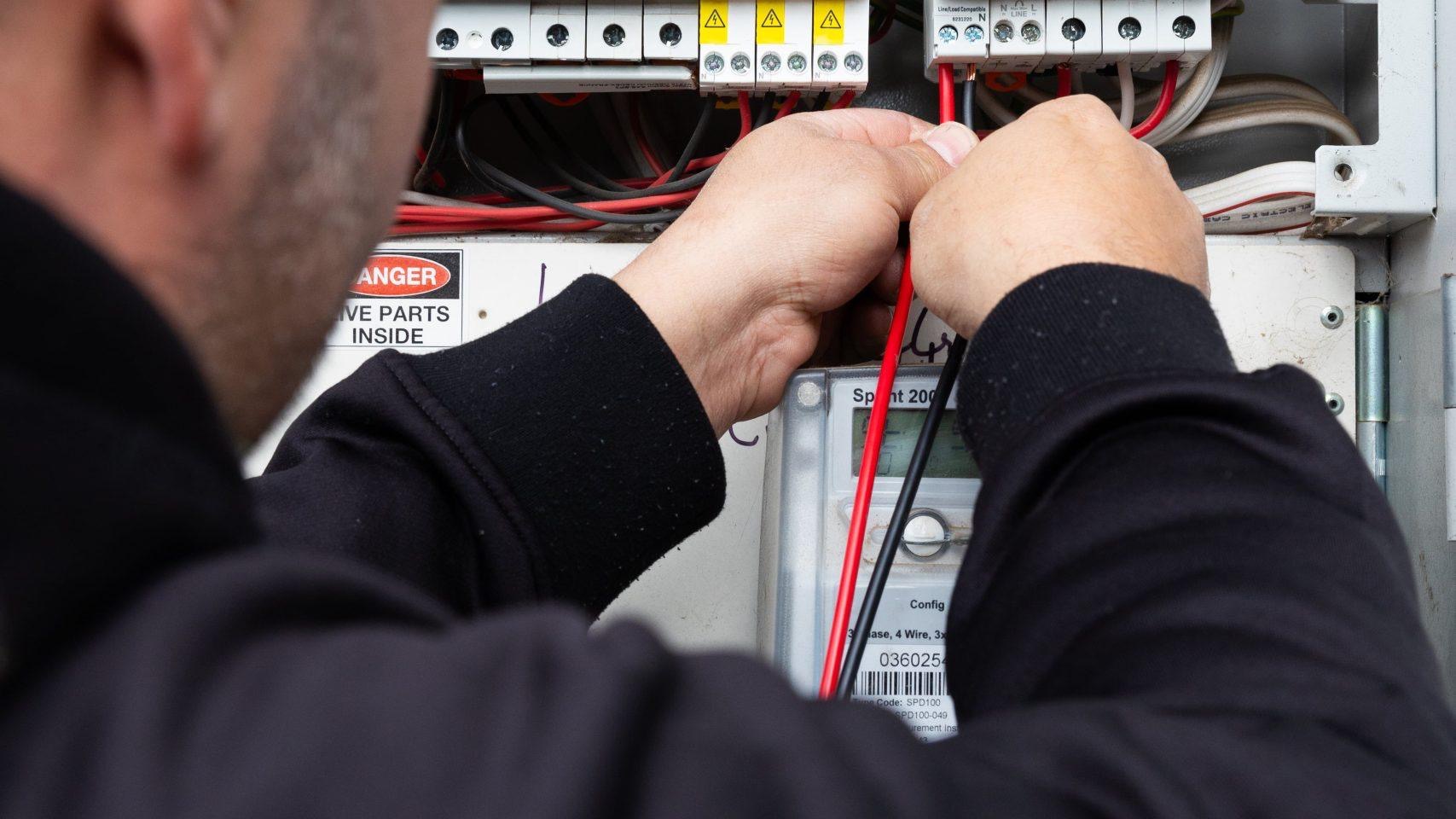
If your switchboard still runs ceramic rewireable fuses and has no safety switch (RCD), it is overdue for an upgrade by any practical measure. The same applies if the board shows scorch marks, smells of burnt plastic, or trips repeatedly without a clear cause. Switch off at the mains if you’re concerned and call a licensed electrician — this is not a job for a weekend fix.
What’s actually in that box on your wall
The switchboard is the distribution point for every circuit in your home. Power arrives from the street, passes through the main switch, and gets divided across individual circuits — lights, power points, hot water, the oven, the aircon. Each circuit has protection that should cut power if something goes wrong.
The protection is the thing that varies enormously between an older board and a modern one, and that difference matters in ways that aren’t always obvious until something fails.
A board installed before roughly the late 1990s is likely running ceramic rewireable fuses. Each one is a small porcelain holder with a thin wire stretched across it. When the circuit overloads, the wire melts and breaks the circuit. In principle, that’s functional. In practice, the wire is replaced by whoever owns the property — and over decades, it gets replaced with wire that’s the wrong gauge, or with copper stripped from other sources, or in one way or another made less safe than the original. Energy Safe Victoria flags this directly: old wiring and outdated switchboards without safety switches are among the more common hazards in Victorian homes.
Modern circuit breakers do the same job, but they’re rated precisely, they trip reliably, and they reset cleanly. No wire to fiddle with.
Safety switches: the gap that matters most
A safety switch (also called a Residual Current Device, or RCD) is different from a fuse or circuit breaker. A fuse protects the wiring. A safety switch protects you. It detects when current is flowing somewhere it shouldn’t — through a person, for instance — and cuts power in milliseconds. That speed is what makes the difference between a shock and a fatality.
Under AS/NZS 3000, new electrical installations require safety switches on power and lighting circuits. Older properties were never retrofitted automatically — the requirement applied when work was done, not to every home all at once. That means a lot of older Melbourne homes in suburbs like Coburg, Brunswick, and Preston — where the housing stock runs heavily to pre-1970s brick construction — still have switchboards with no RCD protection at all.
That is the single most important thing to check. Open the cover on your switchboard. If you see ceramic fuses and no safety switch (they’re usually labelled “RCD” or have a small test button on them), that gap is worth fixing.
Signs a switchboard is struggling
Beyond the fuse vs. breaker question, there are physical signs a board is getting unsafe. None of these need a licensed sparky to spot — you can check them visually with the outer door open:
- Scorch marks or discolouration around any of the holders or at the wiring entry points. That’s evidence of heat that shouldn’t be there.
- A burning smell near the board, even faintly. Electrical insulation that overheats has a distinctive acrid smell. Don’t ignore it.
- Breakers or fuses that trip or blow repeatedly without an obvious cause like a faulty appliance. Occasional trips are normal; regular ones suggest the circuit is undersized or there’s a fault.
- Corrosion or moisture inside the enclosure. Switchboards in older homes are sometimes in laundries or on exterior walls, and moisture ingress is a real problem.
- Wiring that looks improvised. Multiple conductors twisted together, insulation that’s cracked or brittle with age, connections that look like they’ve been added to rather than properly installed.
If you see any of these, the right move is to call a licensed electrician before anything else. If the smell is strong or you see signs of active overheating, switch off at the mains if it’s safe to do so and call one urgently.
How new loads push old boards over the edge
Here’s the situation that’s coming up repeatedly in Melbourne homes right now: someone installs solar panels, or an EV charger, or ducted aircon — and suddenly the old switchboard becomes the weak link.
Each of those loads adds significant demand. A ducted aircon system can pull several kilowatts. An EV charger on a dedicated circuit is drawing current for hours overnight. A solar inverter is pushing current back through the board in the other direction. A board that was adequate for a 1970s household — two or three bedrooms, no aircon, no dishwasher, no EV — may be carrying two or three times the load it was ever designed for.
For residential electrical work like these upgrades, a licensed electrician is required to assess whether the existing switchboard can safely handle the new load before any installation goes ahead. That’s not a formality — it’s the reason some solar or EV installs trigger a switchboard upgrade as part of the job. The board wasn’t rated for what you’re asking it to do.
An upgraded switchboard — with modern circuit breakers, proper RCD protection across all circuits, and capacity for future loads — is what AS/NZS 3000 requires for new work. An electrician completing installation work in Victoria is required to issue a Certificate of Electrical Safety confirming the work meets those requirements. That document matters for insurance and for any future sale of the property.
Retrofitting vs. replacing
If your board is in reasonable structural condition and there’s physical space, it’s sometimes possible to retrofit RCD protection without replacing the whole board. An electrician can install a combined RCD/circuit breaker (an RCBO) on individual circuits, or add a dedicated RCD that covers a group of circuits.
That approach has limits. A board running ceramic fuses with heat damage, corroded connections, or no room to add modern components isn’t a good candidate for a retrofit — it needs replacing. And a full upgrade gives you a clean slate: correctly rated protection on every circuit, capacity for modern loads, and a board that a future electrician (or a buyer’s inspector) won’t flag immediately.
The honest answer to “do I need a full replacement or just a retrofit” is: it depends on what the sparky finds when they open the board. There’s no substitute for a hands-on look.
What a licensed sparky actually checks
When a licensed electrician assesses a switchboard, they’re looking at:
- Whether circuit protection is correctly rated for the wiring it protects
- Whether safety switches are present and covering the required circuits
- The condition of the wiring connections inside the enclosure
- Whether the board has physical capacity for additional circuits or modern protective devices
- Any visible signs of heat damage, moisture, or deterioration
They’ll also check what’s already running on each circuit — older homes often have circuits carrying more points and fittings than they were originally rated for, as rooms have been extended or renovated over the years.
You can verify a Victorian electrical contractor’s registration on the Energy Safe Victoria public register. Yiannis is registered as REC 28523.
What to do next
If your board has ceramic fuses, no visible safety switch, or any of the physical signs of overheating described above, the sensible move is to get it looked at by a licensed electrician. You don’t need to know exactly what’s wrong — that’s what the assessment is for.
Switch off at the mains if you’re concerned about an active problem, and don’t leave a burning smell uninvestigated. For everything else, a scheduled inspection is the right starting point.
If you’d rather a licensed sparky handle it, give Yiannis a call on 0434 254 474 or send a quick message for a free quote.
Sources
- Energy Safe Victoria — household wiring and safety switches
- Energy Safe Victoria — about Certificates of Electrical Safety
- AS/NZS 3000:2018 — Wiring Rules
Common questions
How do I know if I have ceramic fuses or circuit breakers?
Open the switchboard cover (the outer panel door — not the wiring inside). Ceramic fuses look like small white or cream-coloured cylinders in individual holders, often with a visible rewireable wire. Circuit breakers are rectangular plastic switches, usually black or grey, that flip up and down.
Can an electrician just add a safety switch to my old fuse board instead of replacing the whole thing?
Sometimes, yes — a licensed electrician can retrofit an RCD to an old board if there's physical space and the board is otherwise sound. But if the board is showing signs of heat damage, corrosion, or is carrying ceramic rewireable fuses with no room to add protection, a full upgrade is the safer and often more practical answer.
Is my landlord required to upgrade the switchboard?
Victorian rental providers must have the property's electrical installations checked by a licensed electrician every two years under the Residential Tenancies Regulations 2021. If that check identifies a switchboard that doesn't meet safety standards, the rental provider is obliged to have it rectified.
Does adding solar panels or an EV charger require a switchboard upgrade?
Not automatically, but it often triggers one. Adding significant new load — a solar inverter, EV charger, or ducted aircon — requires the switchboard to handle the extra capacity safely and to have appropriate circuit protection in place. An electrician assesses whether the existing board is up to the job before any new installation goes ahead.
What is a Certificate of Electrical Safety and do I get one after an upgrade?
A Certificate of Electrical Safety (CoES) is the document your licensed electrician is required to issue after completing any electrical installation work in Victoria. It confirms the work has been inspected and meets the required standards. You should receive one after a switchboard upgrade — keep it with your property records.
The owner does your job
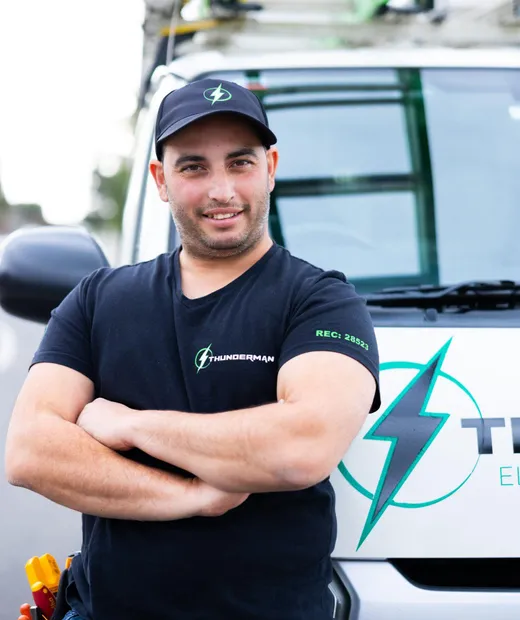
You'll get Yiannis — not a subcontractor.
Book Thunderman and the licensed electrician who quotes your job is the one who does it — and stands behind it afterwards. REC 28523, ARCtick certified, fully insured, rated 4.9★ across 53 Google reviews.
More from the Journal
Got a follow-up question? Just call.
Free quotes across Greater Melbourne — Yiannis answers personally.