Do I need to upgrade my switchboard? The warning signs
Not sure if your switchboard needs upgrading? Here are the signs that say yes — ceramic fuses, no safety switches, tripping, and adding big loads — and how to know for certain.
Quick answer
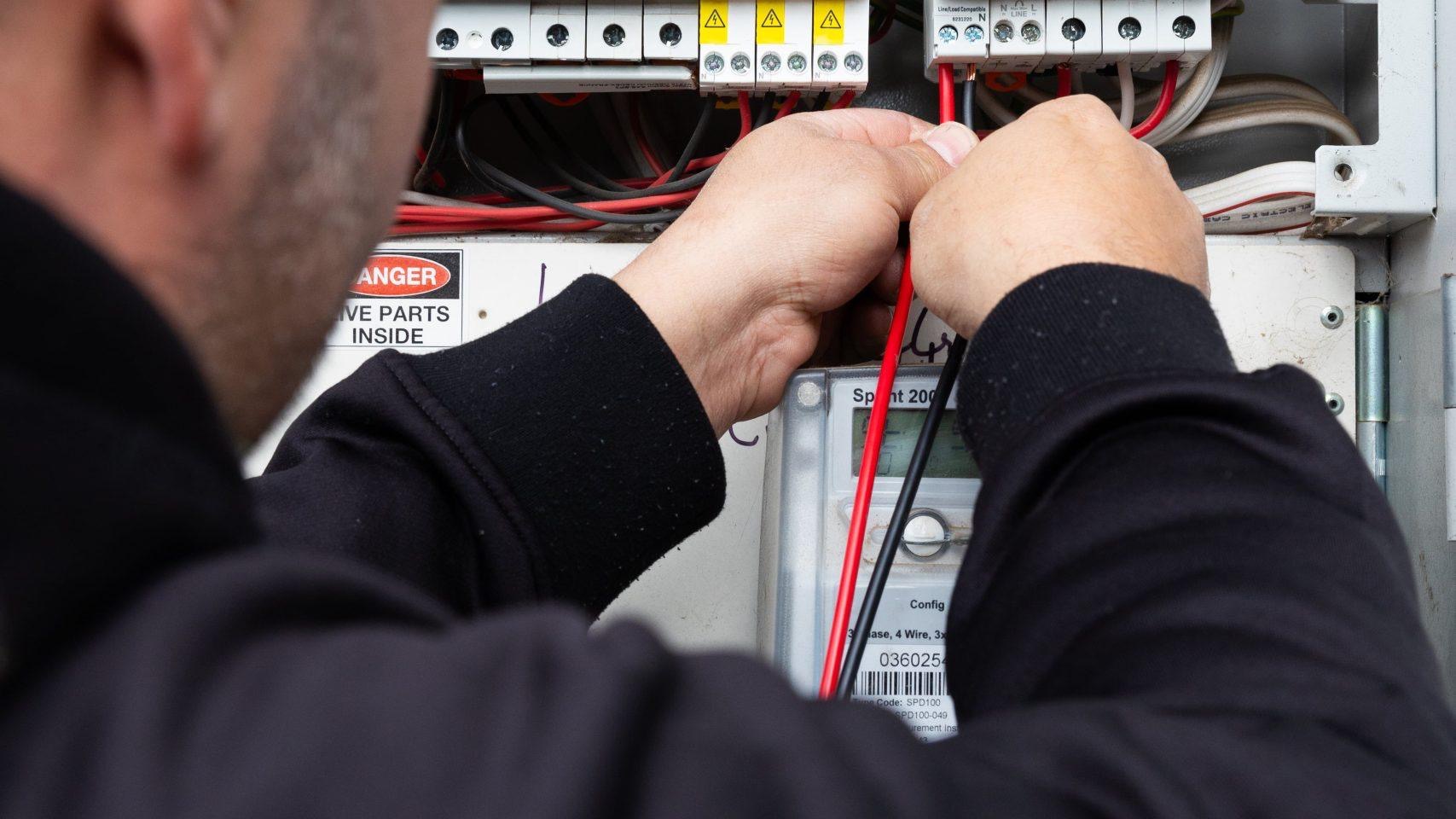
If your switchboard still has ceramic rewireable fuses, has no safety switches on it, trips regularly, or you’re about to add ducted air conditioning, solar or an EV charger, the answer is almost certainly yes — it’s due for an upgrade. The two things that matter most are whether the board has safety switches (RCDs) protecting the circuits, and whether it can carry the load a modern home actually puts on it. A short inspection settles it either way. Here are the signs worth knowing before you call.
Sign 1: ceramic fuses instead of circuit breakers
Open the door of the board. If you see porcelain fuse holders you pull out and rewire with fuse wire, rather than switches you flick, that’s a 1970s-or-earlier board. Those ceramic rewireable fuses were fine for the homes they were installed in — two-bar heaters, a coil-top oven, not much else — but they’re two generations behind current practice, and they don’t provide the shock protection a modern board does. On the older streets around Coburg and Melbourne’s inner north, this is the single most common board I’m called to replace.
Sign 2: no safety switches (RCDs)
This is the important one. A safety switch — an RCD — is what cuts the power in milliseconds when current leaks to earth, which is the fault that electrocutes people. A circuit breaker or a fuse protects the wiring from overload; it does not protect a person from a shock. If your board has no RCDs — no devices with a small ‘T’ or ‘Test’ button on them — then nothing on that board is protecting the people in the house from an earth-leakage fault. Energy Safe Victoria’s whole “Test. Reset. Protect.” message is built around having working safety switches for exactly this reason.
Sign 3: it trips, flickers or smells
A board that trips repeatedly, lights that flicker or dim across the house, a warm or discoloured switchboard, or any burning smell at the board are all signs that something is wrong at the installation level rather than with one appliance. Sometimes that’s a fault to trace; often, on an old board, it’s the board itself reaching the end of its life. A burning smell or heat at the board is never something to wait on — that’s a call to make now.
Sign 4: you’re adding a big load
Even a board that’s coping today can be the wrong board for tomorrow. Ducted reverse-cycle air conditioning, an induction cooktop, a heat-pump hot water unit, solar and a battery, or an EV charger all add significant load and often need their own protected circuits. The original board frequently doesn’t have the space or the capacity, so the upgrade becomes part of the bigger job. It’s cheaper and cleaner to do it once, properly, than to bolt additions onto a board that’s already full.
Sign 5: the house is being renovated or sold
A renovation is the natural moment to upgrade, because the walls are often open and the new circuits a modern kitchen or extension needs have to land somewhere. And when selling, a buyer’s inspector will note an old fuse board — bringing it up to a modern, safety-switched standard removes a bargaining chip and a genuine safety concern in one move.
Sign 6: the board is full, or a mess
Some boards don’t need replacing because they’re old — they need it because they’re out of room or have grown into a tangle. If every slot is used, if there are double-adapters and piggy-backed circuits, or if nothing is labelled and no one can tell which switch does what, the board has been extended past what it was built for. A tidy, correctly sized board isn’t cosmetic: it’s what lets the next fault be isolated to one circuit instead of tripping the whole house, and what lets the next tradesperson work on it safely.
How to know for certain
You don’t have to diagnose it yourself, and you shouldn’t open the board to investigate — the inside of a switchboard is licensed electrician territory. What you can do is look at the front: fuses or breakers, and whether there are any ‘Test’ buttons. Then a licensed electrician can tell you in a short inspection whether the board genuinely needs replacing or whether a smaller fix will do. A good one won’t sell you a full board you don’t need — deteriorating wiring and old boards are a real hazard, as Energy Safe Victoria’s guidance on household wiring makes clear, but not every old board is an emergency.
If it does need doing, a switchboard upgrade strips the old gear, fits a new enclosure with a main switch and an RCD on every final sub-circuit, and is certified with a Certificate of Electrical Safety lodged with Energy Safe Victoria.
What to do next
Take thirty seconds and look at your board. Ceramic fuses, or no ‘Test’ buttons anywhere? That’s worth an inspection. Planning solar, aircon or an EV charger? Factor the board in before you commit. For a straight answer on whether your switchboard needs upgrading across Greater Melbourne, call Yiannis on 0434 254 474 or send a quick message for a free quote.
Sources
- Energy Safe Victoria — Household wiring
- Energy Safe Victoria — Test. Reset. Protect. (safety switches)
- AS/NZS 3000:2018 — Wiring Rules
Common questions
How do I know if my switchboard needs upgrading?
The clearest signs are ceramic rewireable fuses instead of circuit breakers, no safety switches (RCDs) on the board, circuits that trip or lights that flicker under load, any scorching or burning smell at the board, and a plan to add a big load like ducted air conditioning or an EV charger. Any one of those is worth an inspection; two or three usually means an upgrade is due.
Are old fuse boxes dangerous?
They're not compliant with current standards and they leave a real gap. A ceramic rewireable fuse protects the wiring from overload, but it does nothing to protect a person from electric shock — that's the job of a safety switch (RCD), which those old boards don't have. Combined with a modern household load they were never designed for, that's why they're the most common upgrade on Melbourne's older homes.
Do I have to upgrade my switchboard when I add solar or an EV charger?
Often, yes. Solar, home batteries and EV chargers add load and equipment the original board may not have room or capacity for, and the connection has to be done to current standards. Whether it's a full upgrade or just a re-rate depends on the existing board — a licensed electrician confirms it as part of quoting the solar or EV job.
Can I just replace a blown fuse instead of upgrading?
You can keep rewiring a ceramic fuse, but a fuse that blows repeatedly is telling you something — an overloaded or faulty circuit — and the old board still can't protect anyone from a shock. Replacing the fuse treats the symptom. If the board is the 1970s ceramic type with no safety switches, the upgrade is the actual fix, and it brings the whole installation up to standard.
How do I know the upgrade was done properly?
A switchboard upgrade is prescribed electrical work, so it must be certified — the electrician lodges a Certificate of Electrical Safety with Energy Safe Victoria, carrying their REC number, and gives you a copy. If a board is replaced without that certificate, the job isn't properly complete.
The owner does your job
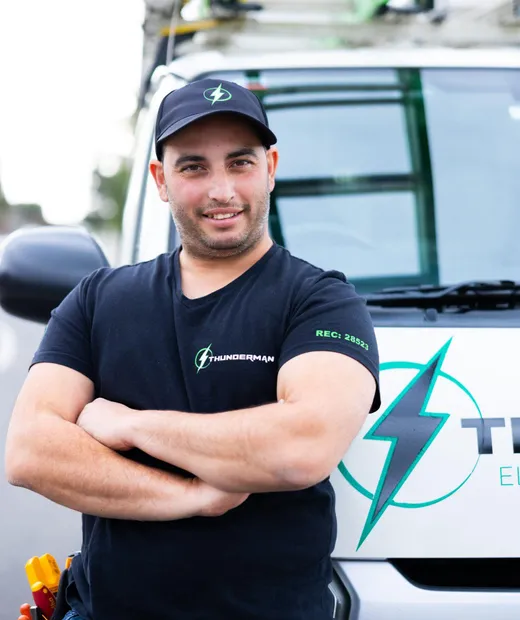
You'll get Yiannis — not a subcontractor.
Book Thunderman and the licensed electrician who quotes your job is the one who does it — and stands behind it afterwards. REC 28523, ARCtick certified, fully insured, rated 4.9★ across 53 Google reviews.
More from the Journal
Got a follow-up question? Just call.
Free quotes across Greater Melbourne — Yiannis answers personally.