
Replacing gas ducted heating with reverse-cycle: what changes electrically
Switching from gas ducted heating to reverse-cycle in Melbourne means real electrical work — new circuits, possible switchboard upgrades, and a licensed installer. Here's what to expect.
Quick answer
Replacing gas ducted heating with a reverse-cycle ducted system almost always requires a new dedicated electrical circuit and may require a switchboard upgrade. You also need an ARCtick-licensed technician for the refrigerant side and a Registered Electrical Contractor for all wiring. The ducting may or may not be reusable — that depends on condition and layout, not assumed either way.
What actually changes when you ditch the gas
Your old gas ducted heater had very modest electrical demands. The fan motor, controls, and ignition drew a small amount of power — often on a shared circuit, sometimes without a dedicated breaker at all. The heat itself came from burning gas.
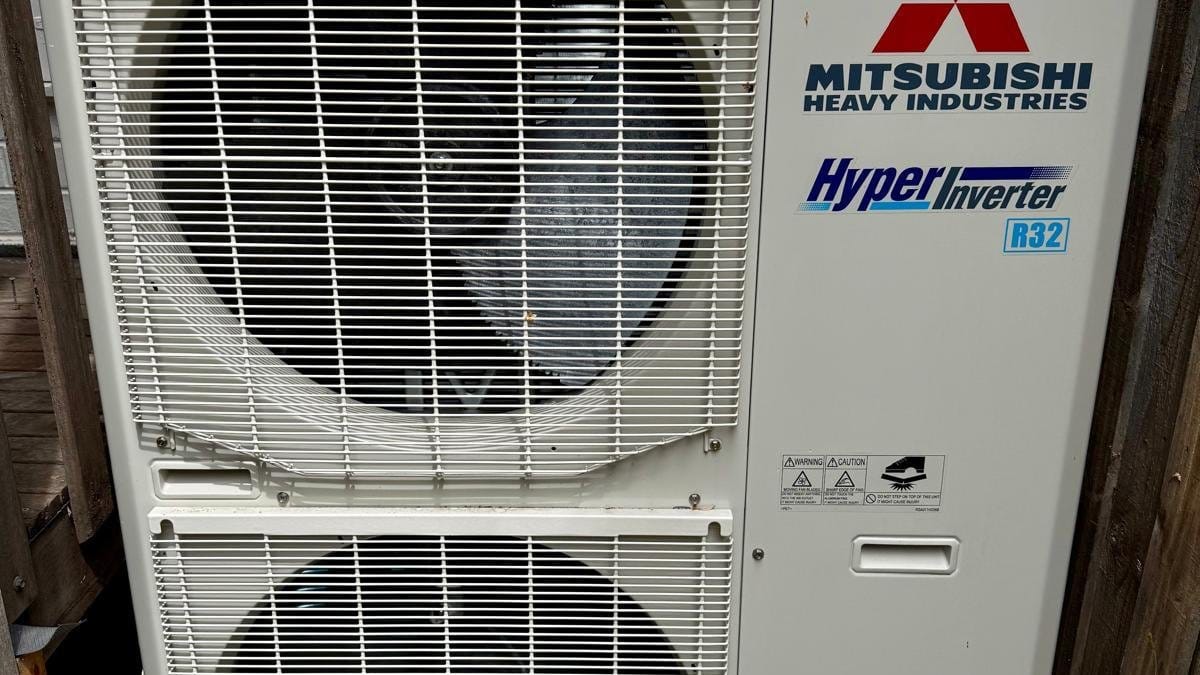
A reverse-cycle ducted system is a fundamentally different beast. It runs a compressor, a large indoor air-handling unit, and the controls, all electrically. The outdoor unit alone can draw well over 10 amps at full load on a cold morning, and a system sized for a four-bedroom Melbourne home may draw considerably more. That load needs its own dedicated circuit, properly sized cable run from the switchboard, a dedicated breaker, and an isolator within reach of the outdoor unit.
If your home hasn’t had significant electrical work done in the past decade or two, the switchboard may also be the first conversation you have with an electrician — before you talk ducting or compressor size.
Switchboard capacity: the bit most homeowners don’t think about first
A residential switchboard has a finite number of circuits and a finite incoming supply capacity. An older board — the kind still common in homes built before the early 2000s in suburbs like Epping and Thomastown — may be running rewireable ceramic fuses rather than circuit breakers, and may have no safety switches (RCDs) fitted at all.
Energy Safe Victoria is clear that all new electrical installation work must meet current standards. Adding a large new circuit to a board that is already at capacity, or that doesn’t have safety switches, typically means the sparky needs to upgrade the board before the new circuit can be properly connected. That’s not a complication — it’s the job being done correctly.
Even on a relatively modern board with spare ways, the sparky will check what the existing circuits are running. A house with a pool pump, EV charger, electric oven, and hot water system already connected has a very different headroom picture than one that’s been on gas for cooking and heating for thirty years. The assessment is straightforward; skipping it isn’t.
What you should ask any electrician quoting this work: “Can you look at the switchboard before we finalise anything?” A good one will do this as a matter of course. It’s residential electrical work that sets the whole job up right from the start.
The dedicated circuit: what it involves
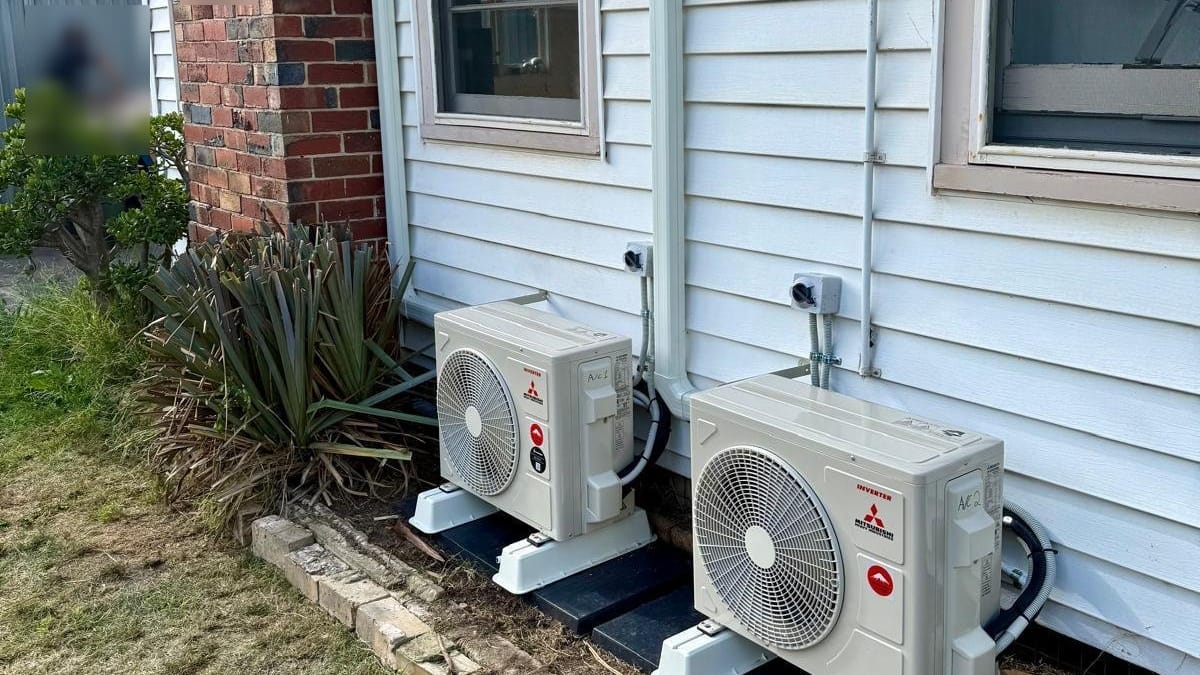
A dedicated circuit for a ducted reverse-cycle system means a cable run from the switchboard to the indoor unit location (typically the ceiling space), a separate run to the outdoor unit, a correctly rated breaker in the board, and an isolator — a lockable switch — mounted within sight of the outdoor unit. That isolator is a safety requirement, not an optional extra, so that anyone working on the unit in the future can safely isolate it at the source.
Cable sizing depends on the unit’s rated current draw and the length of the run. Get this wrong and you get voltage drop, nuisance tripping, or worse. A licensed electrician sizes it from the spec sheet and the actual run distance in your home — not a round number.
All of this work requires a Certificate of Electrical Safety (CoES) once complete. Energy Safe Victoria administers the CoES system, and any Registered Electrical Contractor doing installation work is required to issue one. If someone does this work and doesn’t hand you a CoES, that’s a problem worth following up on.
The refrigerant side: ARCtick is federal, not Victorian
Here’s where things split into two licence types, and it’s worth understanding the difference.
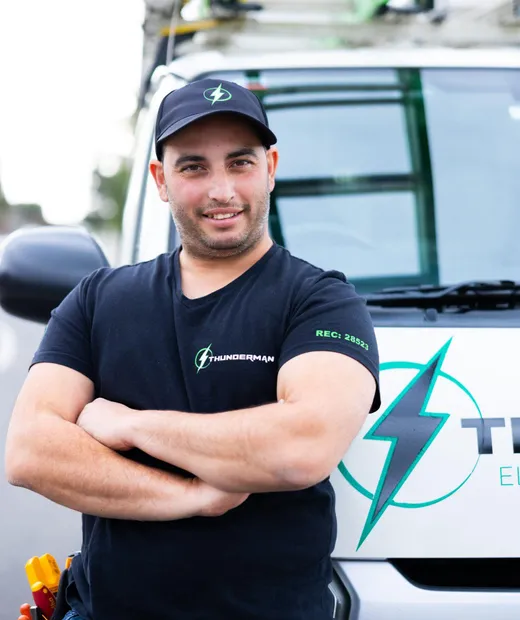
The electrical work — circuits, switchboard, isolator — is done by a licensed electrician holding a Registered Electrical Contractor (REC) number from Energy Safe Victoria. Yiannis holds REC 28523.
The refrigerant pipework — connecting the indoor and outdoor units, pressure-testing and charging the system with refrigerant — requires an ARCtick licence. ARCtick is a federal scheme, administered at the national level, not by any Victorian authority. It exists because refrigerants are controlled substances under federal law, and handling them without the licence is not a grey area.
Some installers hold both qualifications, which simplifies the job considerably. Others work in pairs — one ARCtick-licensed refrigeration technician and one licensed electrician. Either way, before the system is commissioned and running, both types of work need to have been done by appropriately licensed people. The Clean Energy Council also recommends checking installer credentials before any significant aircon install.
If someone quotes you a ducted reverse-cycle installation and doesn’t mention both licences, ask directly. It’s a fair question and a straightforward answer.
Ducting: reuse it or replace it?
This question matters because the ductwork is a significant part of a ducted system’s total installed cost, and the honest answer is: it depends on what’s up there.
Gas ducted heating ducts are typically sized for the airflow of a gas system. A reverse-cycle system moves air differently — it operates over a longer, steadier cycle rather than the short high-temperature blasts of a gas furnace. In some homes the existing duct layout works well; in others the trunk sizing, zone layout, or duct condition means replacement or modification is the better path.
Leaky ducts are the most common problem. A duct system that’s been in a ceiling cavity for fifteen or twenty years, particularly if it was installed in flexible duct rather than rigid sheet metal, may have sagged, separated at joints, or degraded enough that a significant proportion of the conditioned air never reaches the rooms it’s meant to. Running an efficient reverse-cycle system through leaky ducts undermines the whole point.
A competent installer will inspect the existing ductwork as part of any quote. If they don’t mention it, ask specifically: “Have you looked at the condition of the existing ducts, and are they sized for this unit?” That question tells you a lot about who you’re dealing with.
If replacement is needed, that’s a separate scope of work — typically done by the aircon installer rather than the electrician, but both need to be factored into the overall job timeline and planning.
The Victorian electrification picture
Victoria has been progressively shifting away from gas in new homes, and the trajectory is clear enough that many Melbourne homeowners making long-term renovation decisions are factoring in the move to all-electric as part of broader upgrades. Replacing gas ducted heating with a reverse-cycle system fits directly into that pattern.
The electrical infrastructure in your home — the switchboard, the incoming supply, the circuits — is what makes that shift possible. An older home that hasn’t had electrical work done in decades may need more preparation than a newer one, but the work is well-understood and the outcome is a home set up properly for electric loads going forward.
The air conditioning services side of this job and the electrical side aren’t separate decisions — they need to be planned together, because the switchboard capacity and the system size are directly linked.
What to do next
If you’re seriously considering replacing gas ducted heating with reverse-cycle, the most useful first step is a combined assessment: someone who can look at the existing ductwork, the switchboard, and the physical layout of your home before recommending a system size and scope of work.
Check that whoever you’re dealing with holds an ARCtick licence for the refrigerant work and a current REC number for the electrical side — you can verify REC numbers through Energy Safe Victoria’s public register. Make sure a CoES is part of what you receive when the job is done.
If you’d rather a licensed sparky handle the electrical side and coordinate the full installation, give Yiannis a call on 0434 254 474 or send a quick message for a free quote.
Sources
Common questions
Can I reuse my existing gas ducting for a reverse-cycle ducted system?
Sometimes. If the ducts are in good condition and the layout suits the new unit's airflow requirements, a qualified installer may be able to adapt them. Leaky or undersized ducts will undermine efficiency, so the ducting always gets assessed as part of the quote.
Do I need a new circuit for a ducted reverse-cycle system?
Almost always, yes. A ducted reverse-cycle system draws significantly more current than the fan-only motor from a gas heater. It needs a dedicated circuit sized to the unit, and that work must be done by a licensed electrician.
Will my switchboard handle it?
That depends on your switchboard's age, available capacity, and whether it already has safety switches fitted. Many Melbourne homes still have older boards that need an upgrade before a large aircon can be connected. A licensed electrician can assess it before you commit to any equipment.
Is ducted reverse-cycle better than split systems for a whole house?
Both have genuine strengths. Ducted reverse-cycle heats and cools every room through one system, which suits larger or open-plan homes well. Multiple split systems give you zone control without ductwork. The right answer depends on your floor plan, insulation, and how you use the house.
Who installs a ducted reverse-cycle system — an electrician or a refrigeration technician?
You need both, or one person who holds both licences. The refrigerant pipework requires an ARCtick licence. The electrical connection — new circuit, isolator, switchboard work — requires a Registered Electrical Contractor (REC). Both sign off before the system runs.
Does the work require an electrical safety certificate?
Yes. Any new electrical installation work — including a new circuit for an aircon — requires a Certificate of Electrical Safety (CoES) from the licensed electrician who did the work. You should receive this after the job is complete.
The owner does your job
You'll get Yiannis — not a subcontractor.
Book Thunderman and the licensed electrician who quotes your job is the one who does it — and stands behind it afterwards. REC 28523, ARCtick certified, fully insured, rated 4.9★ across 53 Google reviews.
More from the Journal
Got a follow-up question? Just call.
Free quotes across Greater Melbourne — Yiannis answers personally.