ESV's 2026 regulatory report: what it means for Melbourne homeowners
Energy Safe Victoria has published its year of regulatory action and reform. Here's what the findings mean for Victorian homeowners and small businesses right now.
Quick answer
Energy Safe Victoria published its year of regulatory action and reform on 6 November 2026. The report signals that ESV is actively pursuing unlicensed electrical work, non-compliant installations, and breaches of the Certificate of Electrical Safety system — not just logging complaints. If your home or business has had electrical work done recently, now is a reasonable time to confirm it was done by a registered contractor and that a CoES was issued.
What ESV just published — and why it matters this week
Energy Safe Victoria released its regulatory action and reform report on 6 November 2026. ESV is the Victorian government body that licenses electricians, registers electrical contractors, investigates incidents, and takes action against those doing unsafe or unlicensed work.
A report like this isn’t just a bureaucratic summary. It’s ESV putting on record what it found, what it did about it, and where its enforcement focus is heading. When the regulator publishes this kind of document, it’s worth paying attention — both as a homeowner and as anyone responsible for a commercial premises.
The core message in a report like this is consistent: electrical safety obligations in Victoria are real, they are enforceable, and ESV is not a passive body. It investigates. It prosecutes. It has the power to cancel registrations and refer matters for criminal prosecution where warranted.
For most Melbourne homeowners, the practical question is a simple one: has the electrical work in your home been done properly, by someone who is registered, and have you received the paperwork you’re legally entitled to?
What “regulatory action” actually looks like in practice
When ESV takes regulatory action against an electrical contractor or unlicensed operator, the consequences are serious. They include formal warnings, suspension or cancellation of a licence, enforceable undertakings, and in some cases referral for prosecution. ESV also has the authority to issue improvement and prohibition notices.
The kinds of things that trigger ESV action include:
- Electrical work carried out without a Registered Electrical Contractor (REC) number
- Installation work done without issuing a Certificate of Electrical Safety (CoES) to the customer
- Non-compliant wiring or switchboard work that doesn’t meet AS/NZS 3000 (the Australian Wiring Rules)
- Repeated failures on the part of a contractor despite prior warnings
For homeowners in suburbs like Footscray and Sunshine, this matters for a specific reason: both are areas with significant housing stock that ranges from newer builds to properties that haven’t had the wiring touched in decades. Old wiring, absent safety switches, and switchboards running on outdated fuse technology are real issues — and if previous work was done unlicensed, the ESV report is a prompt to look into it.
The Certificate of Electrical Safety: the document you should always receive
One of the clearest indicators that electrical work was done correctly is the Certificate of Electrical Safety (CoES). Under Victorian law, any licensed electrician who completes installation, alteration, or repair work is required to issue one.
This isn’t just paperwork for the sparky’s file. ESV describes the CoES as a declaration that the work complies with the Wiring Rules. You, as the owner or occupier, should receive a copy.
If you’ve had work done on your home — a switchboard upgrade, new power points, an aircon installation — and you don’t have a CoES, that’s worth following up. It doesn’t necessarily mean the work was done badly, but it does mean the documentation chain is incomplete. And if you’re buying or selling a property, it matters.
For residential electrical work in Greater Melbourne, Thunderman issues a CoES for every job. It’s not optional — it’s the law, and it’s how you know the work has been verified.
Rental properties: a specific obligation that ESV enforces
Victorian rental providers have a legal obligation to have electrical installations and fittings checked by a licensed electrician every two years. This obligation sits in the Residential Tenancies Regulations 2021, and Consumer Affairs Victoria makes it clear that it applies to the ongoing safety of the rental property — not just at the start of a tenancy.
ESV’s enforcement activity covers this area. A landlord who hasn’t kept up with two-yearly checks, or who has used an unregistered person to do the work, is not in a defensible position if something goes wrong.
The check itself follows AS/NZS 3019, the standard for periodic verification of electrical installations. It produces a report — not a CoES, which is a different document — and it must be carried out by a licensed electrician. The report needs to be kept as a record.
If you’re a rental provider and you’re not sure when the last check was done, or who did it, now is the right moment to get that sorted. The ESV report released this week is a signal that this compliance obligation is in the regulator’s field of view.
Unlicensed electrical work: the hidden risk in a lot of Melbourne homes
Unlicensed electrical work is more common than most people realise. It turns up during home inspections, when insurance claims get complicated, and when a licensed sparky opens a switchboard and finds something that clearly wasn’t done to standard.
The risk isn’t just regulatory. Unlicensed work is often technically incorrect — breakers installed at the wrong ratings, earthing that doesn’t meet AS/NZS 3000, connections that work fine until they don’t. That’s how fires start. ESV’s focus on this is not bureaucratic pedantry. It reflects real incident data.
If you’ve bought a property recently, or you’ve had work done by someone who didn’t issue you a CoES, it’s worth having a licensed electrician inspect the relevant parts of your installation. For commercial premises in particular, the liability question is sharper still — a business owner who discovers unlicensed work after an incident is in a difficult position.
You can verify any electrician or contractor is registered by searching the ESV public register. Thunderman holds REC 28523 — search it there and confirm it for yourself.
What reform signals for the year ahead
ESV’s report isn’t only backward-looking. When a regulator publishes a summary of its enforcement actions alongside references to reform, it usually signals where the next wave of focus is heading. For Victorian electricians and their customers, that tends to mean tighter scrutiny of documentation, greater emphasis on consumer protection for unlicensed work, and clearer expectations on contractor obligations.
That’s a good thing. The homeowner who gets proper work done by a registered sparky, with a CoES in hand, is in a solid position regardless of what any regulator finds. The person who cut corners — or unknowingly used someone who did — is exposed.
The simplest protection: ask for the REC number before work starts, and ask for the CoES when it’s done.
What to do next
If you’ve read this and you’re not entirely sure your home’s electrical work is properly documented, here’s the practical response. Check whether you have CoES records for major work done in recent years. If you don’t, ask your sparky to provide them — a licensed contractor should be able to track down their own certification records. If you’re a rental provider, confirm when your last two-yearly check was carried out and by whom.
If anything’s unclear, or if you’d like a licensed set of eyes on your switchboard or installation, give Yiannis a call on 0434 254 474 or send a quick message for a free quote. No pressure either way — sometimes just knowing what you’ve got is enough.
Sources
Common questions
What is Energy Safe Victoria and why does it matter to me as a homeowner?
Energy Safe Victoria (ESV) is the state regulator for electrical and gas safety in Victoria. It registers electrical contractors, issues licences, investigates incidents, and enforces compliance. If a sparky works on your home without a valid registration, ESV is the body that pursues them — and your work won't have a Certificate of Electrical Safety.
How do I check that my electrician is registered with ESV?
You can search the ESV public register online at energysafe.vic.gov.au. Search by business name or REC number. Thunderman holds REC 28523 — go ahead and check.
What is a Certificate of Electrical Safety and do I need one?
A Certificate of Electrical Safety (CoES) is a legal document that a licensed electrician must issue after completing any installation, alteration, or repair work in Victoria. It confirms the work meets the Wiring Rules (AS/NZS 3000). You should receive one after any work is done on your home — if you didn't, that's worth following up.
Does ESV's compliance crackdown affect rental properties specifically?
Yes. Victorian rental providers are required by law to have electrical installations checked by a licensed electrician every two years. ESV's regulatory activity makes clear that obligations like these are actively enforced — not just sitting in a regulation somewhere.
What should I do if I suspect unlicensed electrical work has been done in my home?
Don't use the affected circuits if you have any concern about safety. Switch off at the switchboard if it's safe to do so, then call a licensed electrician to inspect the work. You can also report suspected unlicensed work to ESV directly.
Is Thunderman listed on the ESV public register?
Yes. Thunderman Electrical and Air Conditioning Services Pty Ltd holds REC 28523, which you can verify on the ESV public register.
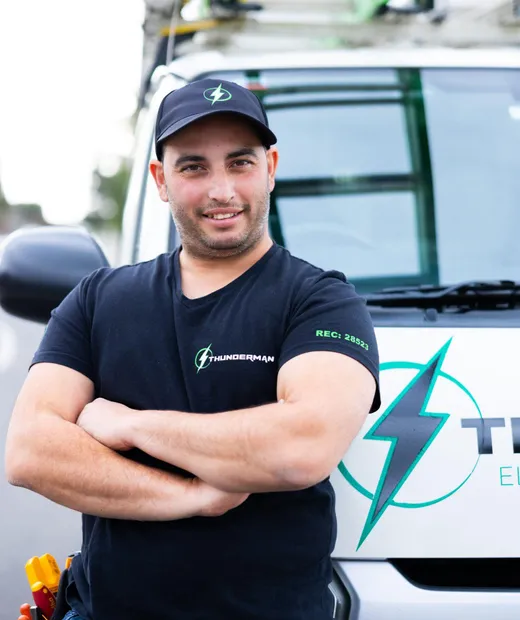
The owner does your job
You'll get Yiannis — not a subcontractor.
Book Thunderman and the licensed electrician who quotes your job is the one who does it — and stands behind it afterwards. REC 28523, ARCtick certified, public liability insured, rated 4.9★ across 53 Google reviews.
More from the Journal
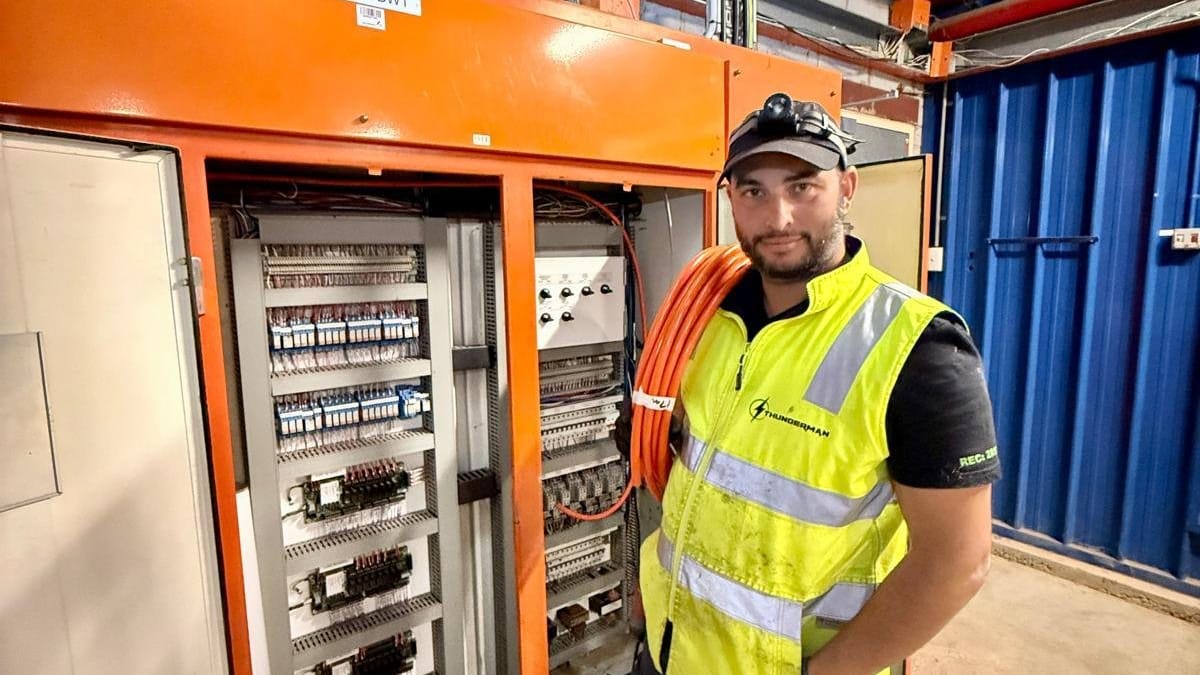
Got a follow-up question? Just call.
Free quotes across Greater Melbourne — Yiannis answers personally.