
What drives the cost of a solar-and-battery retrofit in Victoria
Six factors that move a Victorian solar + battery retrofit quote — array size, battery capacity, inverter, roof type and distributor approvals.
Quick answer
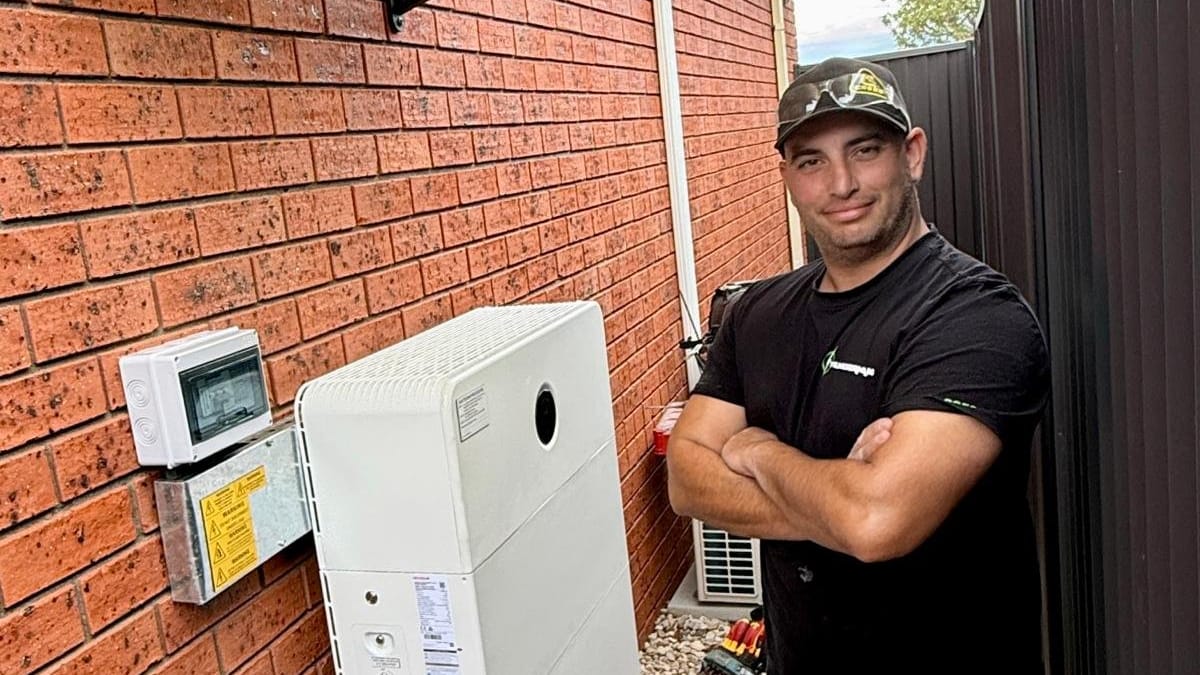
People ring up wanting one number for solar and battery, and there isn’t one, because six things about your particular house decide the job. Those six are: how big a panel array your roof orientation will actually carry; how much battery you genuinely need, which comes off your evening load rather than off a brochure; whether you go hybrid inverter or string plus an AC-coupled battery; what you’re bolting to up top (terracotta tile, cement tile, Colorbond, kliplock); whether your switchboard has room to take the new isolators; and what your distributor wants before they’ll approve the connection — Citipower, Powercor, Jemena, AusNet or United Energy, depending on where you live. Sort those six on a walk-around and a written quote follows. The Thunderman solar and battery page walks the scope, and the Thunderman residential page covers the wider electrical picture.
Factor 1: panel array size and roof orientation
Your roof, not your budget, decides how many panels you get. North-facing area is what you want most; east and west pull less per panel but still earn their keep on most Victorian homes; south I’ll usually talk you out of, and I’ll tell you that to your face on the day. From there the installable kW comes down to the north-and-east-west area you’ve actually got, the panel size and wattage we spec, and whatever’s throwing shade — a neighbour’s gum tree, a two-storey extension next door. Measure the roof and the number falls out of it.
Factor 2: battery capacity matched to your evening load
The classic way to overspend on a retrofit is to buy the battery off a generic “family home” figure. What you want sizing it is your last twelve months of evening load: the energy the house actually burns between sundown and sunrise. A retired couple running a heat-pump hot-water unit and one split-system are a world away from five people with three aircon heads and an EV charging overnight off the household supply. So part of the walk-around is pulling your distributor’s smart-meter data and matching the battery to what your house really does, not what a sticker says it should.
Factor 3: hybrid inverter versus string-plus-AC-coupled
Going battery and panels in the one hit? A hybrid inverter is usually the tidy answer: one grid-connect unit, one set of certifications, one warranty to chase if anything ever goes wrong. Putting panels on now and leaving the battery for later is a fair call too — string inverter today, AC-coupled battery down the track — but you’ll end up buying two inverter products instead of one, and that second stage means running fresh wiring back to the switchboard. Pick the string route now and swing to hybrid later and you’re paying to redo work you’ve already done, so it’s worth thinking it through on the day rather than after.
Factor 4: roof type and mounting
What you’re mounting to changes the day’s work more than people expect. Colorbond and kliplock are the quick ones to fix to. Cement-tile roofs need rail mounts that bridge the valleys between tiles. Old terracotta is the fiddly one — tiles go brittle with age and the odd one cracks the moment you put weight on it to get up there, so swapping the broken ones is just part of the job. Add a second storey and you’re into roof-access gear, scaffold or a harness system, which a single-storey job never touches. All of that lands in the labour, line by line.
Factor 5: switchboard headroom for AS/NZS 4777 compliance
AS/NZS 4777.2 governs inverter grid connection, and it asks for a specific disconnect arrangement at the consumer switchboard. The old ceramic-fuse boards you still find in 1970s Craigieburn, Greenvale, Broadmeadows and Reservoir homes simply haven’t got the physical room or the modern DIN-rail layout to take the new solar and battery isolators cleanly. Where that’s the case I’ll be straight with you: the board needs upgrading alongside the solar, and yes, that’s extra scope — real work, not a padded line. On a post-2018 estate home with a modern board it’s usually a non-issue and we carry on. For the deeper switchboard conversation, the switchboard upgrade cost-driver post goes into it.
Factor 6: distributor approval and the network connection
No grid-connected solar install in Victoria goes live without the local distributor signing off the connection — Citipower, Powercor, Jemena, AusNet or United Energy, by address. Their application wants the inverter type, any export-limit settings, and the AS/NZS 4777 compliance paperwork; on bigger systems they may insist on export limiting or particular AS/NZS 4777.2 settings. Here’s the catch on timing: approval runs anywhere from two to six weeks depending on the distributor. We can book the physical install in parallel, but the system stays dark until the approval lands and we can commission it. Lodging that application is part of the paperwork I handle, not something you chase.
What the walk-around actually covers
On the day I’m up on your roof, pulling your distributor’s smart-meter data, sizing the array to the area you’ve got and the battery to your real evening load, settling the inverter call (hybrid or string-plus-AC-coupled), nailing down the switchboard scope, and lodging the network connection application. Commissioning is done to AS/NZS 4777.2, with a Certificate of Electrical Safety lodged with Energy Safe Victoria once it’s live. The walk itself runs about half an hour; the written quote comes back same day or the next. Want one for a Greater Melbourne solar and battery install? The Thunderman solar and battery page lays out the scope, or you can ring the REC 28523 sparky who’ll actually do the work — ARCtick certified, VBA registered, fully insured.
Sources
- Clean Energy Regulator — Small-scale Renewable Energy Scheme
- AS/NZS 4777.2 — Grid connection of energy systems via inverters
- Victorian Energy Upgrades (VEU) — eligible products
- Energy Safe Victoria — keeping your home solar safe
Common questions
Do I need a hybrid-ready inverter if I want battery storage later?
If you're committing to battery storage at the install, a hybrid inverter is the cleanest route — it handles solar input and battery DC coupling in one unit. If battery is a maybe-later decision, a string inverter plus AC-coupled battery added in a second phase is a real option, with the trade-off that you'll buy two pieces of inverter equipment instead of one. The site walk is the place to choose.
What is the ARCtick licence and why does my installer need it?
ARCtick is the national licence for refrigerant-handling tradespeople. It's required for any work that breaks into a sealed refrigerant circuit — which applies to heat-pump hot-water units coupled to a solar+battery system, and to some all-in-one inverter-and-battery cabinets that use refrigerant-cooled internals. Thunderman holds ARCtick alongside REC 28523.
Can I claim the VEU rebate on a battery retrofit if my solar is already installed?
The Victorian Energy Upgrades scheme covers battery retrofits in some circumstances, and the eligibility rules change. The honest answer at the site walk is: confirm the eligibility against the current VEU register, factor it into the written quote, and lodge the application as part of the install paperwork if the system qualifies. We don't promise a rebate amount in advance — it depends on the current register settlement.
Will I lose grid supply during the install?
Yes, for a working window. The DC array can usually be installed live on the roof with the solar isolator open, but the AC-side terminations into the consumer switchboard need the supply isolated for the working day. A single-meter single-phase residential install is typically a one-day outage; three-phase or relocated meter equipment can extend that.
Do I need a switchboard upgrade before solar and battery?
Sometimes. The new solar + battery install needs a dedicated AC isolator, possibly a battery sub-board, and the existing main board needs the headroom for the additional terminations and the AS/NZS 4777 disconnect requirements. On a 1970s ceramic-fuse-board home in northern Melbourne the answer is most often yes; on a 2020s estate home with a modern board, often not.
The owner does your job
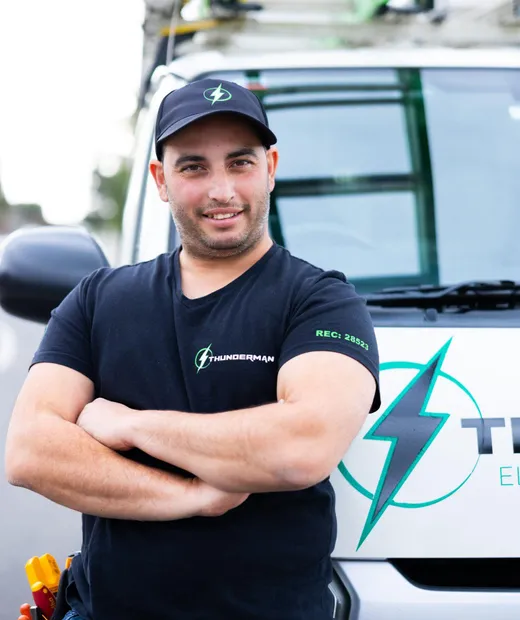
You'll get Yiannis — not a subcontractor.
Book Thunderman and the licensed electrician who quotes your job is the one who does it — and stands behind it afterwards. REC 28523, ARCtick certified, fully insured, rated 4.9★ across 53 Google reviews.
More from the Journal
Got a follow-up question? Just call.
Free quotes across Greater Melbourne — Yiannis answers personally.