
What drives the cost of a switchboard upgrade in Melbourne
Six factors that move a Melbourne switchboard upgrade quote — RCBO count, cable runs, board size, single vs three-phase and meter access.
Quick answer
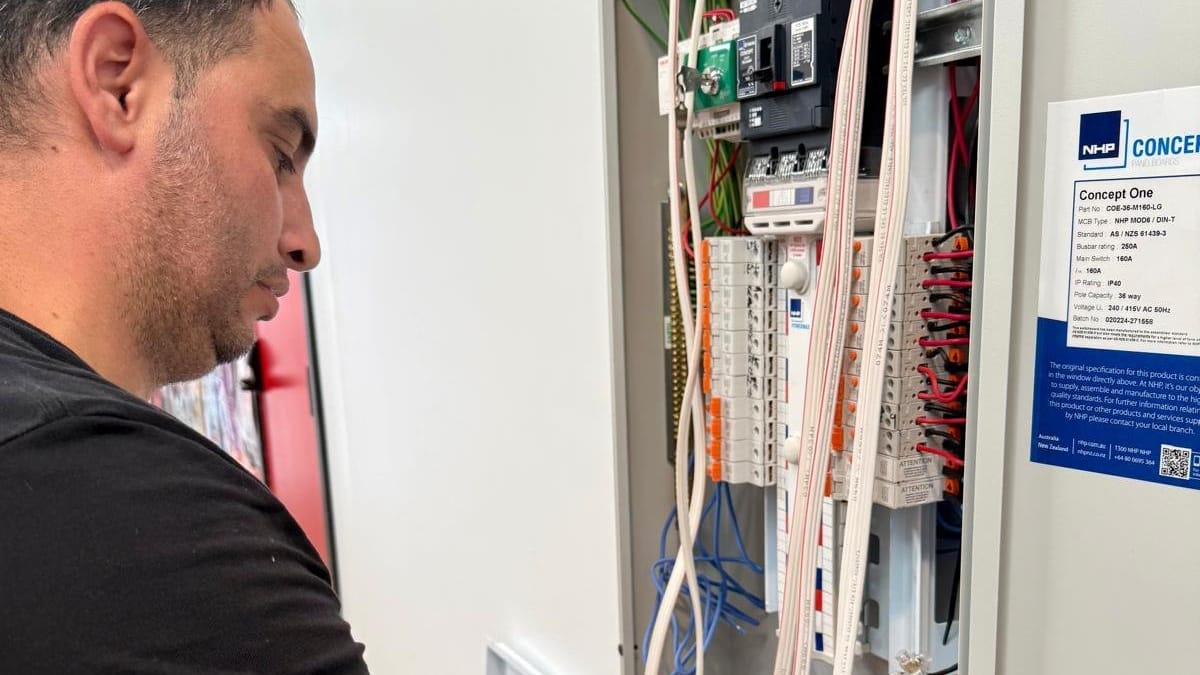
Pull the cover off two switchboards on the same street and you’ll often find two completely different jobs hiding behind them. One’s a tidy little four-circuit board that just needs modern protection bolted on. The next one along is a 1970s ceramic-fuse relic feeding a house that’s grown an aircon, a second bathroom and an induction cooktop since anyone last touched the wiring. That’s why I won’t shout a single figure down the phone. Six things really move a switchboard upgrade: the number of sub-circuits that need RCBO protection, the length and difficulty of any cable runs in the wall cavity, the size and configuration of the new enclosure, single-phase versus three-phase, how reachable the existing meter box is, and whether the meter equipment itself needs the distributor to step in. I’ll take each one in turn and show you which way it pushes the quote. Want the actual number for your place? That comes from a fifteen-minute look at your board and a quote in writing. The Thunderman residential page covers the broader scope.
Calculator
Switchboard load check.
A simplified version of the AS/NZS 3000 maximum-demand calculation. Tells you roughly whether your existing single-phase supply has the headroom for your appliance profile — or whether you should expect a switchboard + consumer-mains upgrade to be in scope.
Estimated maximum demand
—
—
Fill in the details above to get an estimate.
Simplified AS/NZS 3000 max-demand estimate using residential diversity factors. Final answer requires a site walk to confirm the actual appliance specs, the supply size and the switchboard layout. A Thunderman quote is free.
Factor 1: how many sub-circuits need RCBO protection
This is the big one. AS/NZS 3000 wants RCD protection on every final sub-circuit in a modern install, so the first thing I do on site is count circuits. A small inner-suburb cottage running lights, GPOs, an oven and hot water might land on four RCBOs. A double-storey family home with three aircon heads, an induction cooktop, a heat-pump hot water unit, a pool pump, an EV-charger circuit and a separate shed sub-board can run to fourteen. Each RCBO is a real component with a real per-unit cost, and every one gets tested and labelled on its own. Count the circuits and you’ve already worked out where most of the money goes.
Factor 2: cable run lengths and accessibility
The board is rarely the whole job. Most upgrades pull in some re-cabling. I might run a fresh sub-circuit from the new board to the kitchen for the induction cooktop, drop a new neutral and earth to the oven, or chase in a dedicated GPO circuit for the laundry. Where it gets dear is what’s in the way. Insulation packed tight in the cavity, fire-rated walls, a double-storey ceiling void with no easy access overhead. Reuse an existing clean chase and the labour stays tight; fish a cable through a double-brick two-storey with bedrooms sitting over the kitchen and the same run eats half a day. A single-storey weatherboard with a tidy roof space is, frankly, the one I quietly hope for.
Factor 3: new enclosure size and configuration
A switchboard isn’t just RCBOs in a box. The enclosure gets sized to the number of DIN-rail spots, has to house the main switch and any surge-protection device, sits with the meter cabinet behind or alongside it, and has to meet the current standard for clearance and labelling. A four-circuit cottage board and a fourteen-circuit three-phase board are simply different lumps of gear. On the older Greater Melbourne homes I sometimes have to shift the new enclosure across a touch just to win back the clearance the current rules demand.
Factor 4: single-phase or three-phase
Most of the older Craigieburn, Greenvale and Broadmeadows homes I work on are single-phase. The newer estate builds since 2018 increasingly land with three-phase already run in from the distributor pole. A three-phase board is built differently end to end: more components, more cable cores, different switchgear, and sometimes a different meter equipment setup. It won’t double the bill, but you’ll feel it.
Factor 5: existing meter-box position and the distributor
If the existing meter box already sits somewhere sensible, front wall, ground level, easy to reach, the upgrade stays put and the labour stays contained. The moment it has to move, the job grows. Maybe the clearance rules have changed, maybe the homeowner’s reno is taking out that wall, maybe the original install was never compliant to begin with. Now I’m coordinating with the local distributor (Citipower, Powercor, Jemena, AusNet or United Energy, depending on which part of Greater Melbourne you’re in) and booking an arranged supply isolation. Both add real cost.
Factor 6: what the existing meter equipment supports
Sometimes the existing meter is simply too old to carry a modern install. I see this most on the 1970s ceramic-fuse-board homes still scattered across Melbourne’s north. When that’s the case, the distributor has to re-fit the meter equipment, and that’s a separate process running on its own clock and budget. I can’t quote that part myself; it lands as a distributor-side line item, and I’ll tell you so up front rather than bury it.
How the quote comes together on the day
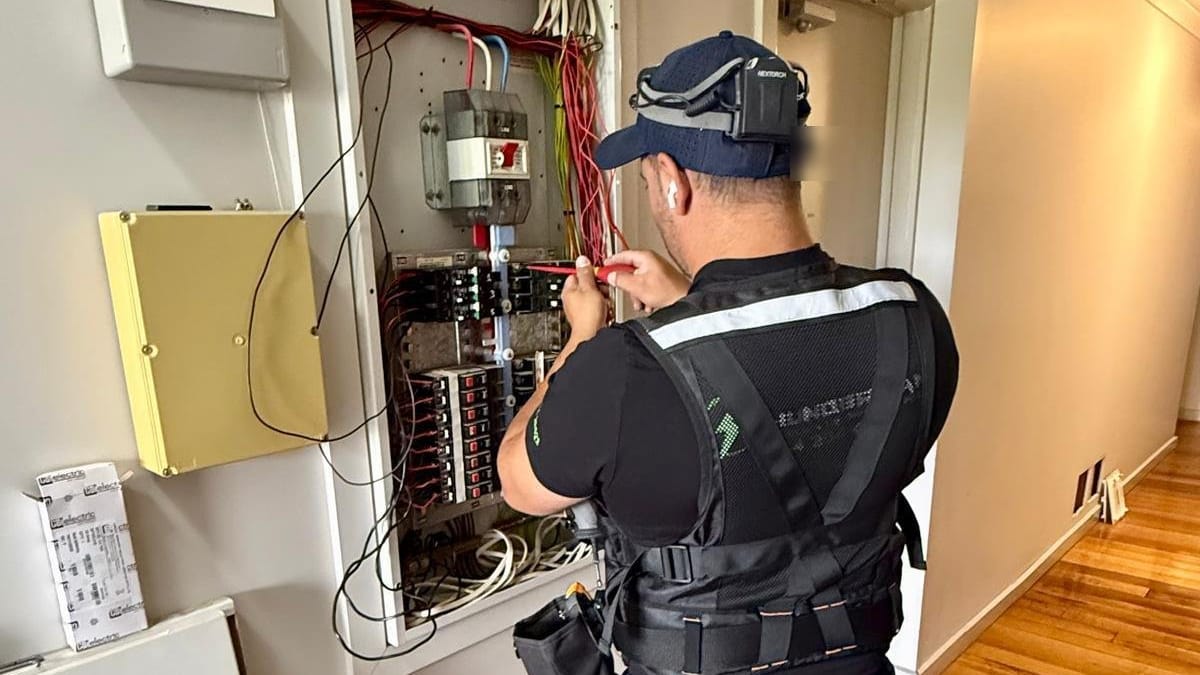
When I rock up, the first move is taking the cover off and counting the circuits that need RCBO protection. From there I work out which cable runs have to be replaced, spec the new enclosure, check where the meter equipment sits and whether the distributor needs pulling in, and cost it all against what your house actually shows me, not a phone guess. When the work’s done I lodge the Certificate of Electrical Safety with Energy Safe Victoria, because the job isn’t finished until that’s filed. The look itself takes about fifteen minutes and the written quote comes back same day or next. Thinking about a switchboard upgrade on a Craigieburn or northern-corridor home? See switchboard upgrades across Melbourne for how the job runs, the residential pillar for the wider scope, or ring the licensed REC 28523 sparky who’ll be doing the work — that’s me, on 0434 254 474.
Sources
- Energy Safe Victoria — Certificates of Electrical Safety
- AS/NZS 3000:2018 — Australian/New Zealand Wiring Rules
- Energy Safe Victoria — public register of electrical licences
Common questions
Why won't you quote a switchboard upgrade without seeing the job?
Because the job genuinely changes depending on what's behind the existing meter box, how many sub-circuits need RCBO protection, and whether the meter equipment itself needs to be re-positioned for the distributor. A site visit takes fifteen minutes and gives you a real fixed quote — a remote quote either over-quotes for safety or under-quotes and surprises you on the day.
Do I need a switchboard upgrade if I'm installing an EV charger?
Sometimes. The existing switchboard needs to have headroom for the 32 A draw of a 7 kW wallbox running alongside the household's other major loads — ducted aircon, induction cooktop, heat-pump hot water. If the original board was specified before fast home charging was a default residential expectation, the answer is usually yes. If it was built post-2018 in a new estate, often not.
How long does a typical residential switchboard upgrade take?
A single-meter single-phase residential switchboard upgrade typically takes most of a day on site — isolation, removal of the old enclosure, fit-out of the new enclosure with RCBOs on every final sub-circuit, testing every circuit, labelling, certifying, lodging the Certificate of Electrical Safety with Energy Safe Victoria. Three-phase or relocated meter equipment can extend that.
What's a Certificate of Electrical Safety and why does it matter?
It's the document a licensed Registered Electrical Contractor lodges with Energy Safe Victoria after fixed electrical work in Victoria. It certifies the work was done to the AS/NZS 3000 wiring rules and is your proof to insurers, future house buyers, and the regulator that the install is compliant. If a sparky finishes a switchboard upgrade without lodging a CoES, the work is technically incomplete.
Will I lose power for the whole day during the upgrade?
You'll be off-supply for the working window — usually a single business day. We can sometimes coordinate with the distributor for a shorter outage if the meter equipment doesn't need to be moved, but for safety reasons there's no realistic way to do this with the house live for the whole job.

The owner does your job
You'll get Yiannis — not a subcontractor.
Book Thunderman and the licensed electrician who quotes your job is the one who does it — and stands behind it afterwards. REC 28523, ARCtick certified, fully insured, rated 4.9★ across 53 Google reviews.
More from the Journal
Got a follow-up question? Just call.
Free quotes across Greater Melbourne — Yiannis answers personally.