
Airbnb and short-stay: does the two-yearly electrical check apply?
Short-stay and holiday lets are exempt from Victoria's two-yearly rental electrical check — they fall outside residential tenancy law. Here's the line — and why exempt doesn't mean not worth doing.
Quick answer
If you run a genuine short-stay or holiday let, the two-yearly electrical safety check that applies to Victorian residential rentals does not apply to you. Holiday accommodation sits outside residential tenancy law, so the rule that creates the check never reaches it — and that stays true after the 13 October 2026 change. The one thing worth getting right: the exemption follows how the property is actually used, not the fact that it’s on Airbnb.
Where the confusion comes from
From 13 October 2026, every Victorian residential rental needs an electrical safety check every two years by a licensed electrician. That change is real, it’s significant, and it’s being written about everywhere. So it’s natural for a short-stay owner to read the headlines and assume the same clock is now ticking on their Airbnb.
Most of what’s published on it never draws the line cleanly. You’ll find plenty of pages that say short-stay is “treated differently” or that it “depends” — and then stop, right at the point the question actually gets useful. That vagueness is where owners end up either worrying about a rule that doesn’t apply to them, or waving off a whole category of electrical safety because they heard the word “exempt.”
Neither is a good place to make a decision from. So here’s the line, drawn properly.
The line, drawn properly
The two-yearly check lives in the Residential Tenancies Regulations 2021, and those regulations hang off the Residential Tenancies Act 1997. The Act only governs residential rental agreements — letting premises to someone as their residence. And the same Act, at section 10, carves out holidays explicitly: it does not apply to premises ordinarily used for holiday purposes.
That’s the whole mechanism. The check can’t attach to a property the tenancy law was never written to cover.
So the split is clean:
- Genuine short-stay or holiday letting — guests staying transiently, the place ordinarily used for holidays → outside the residential tenancy rules → the two-yearly check doesn’t apply.
- A property let long-term as someone’s home — even if the booking came through Airbnb → that’s a residential rental agreement → the two-yearly check does apply.
The exemption is about the type of arrangement, not the fact that a property appears on Airbnb. A holiday flat booked by the weekend is exempt; the same flat let to a tenant who lives there for a year is not. The platform doesn’t decide it — the way the place is used does.
There’s a genuine grey middle — month-long corporate stays, mixed-use arrangements — where it turns on whether the premises are ordinarily used for holidays or let as a residence. That’s a question of fact, and anyone who tells you there’s a bright line through the middle of it is guessing. If your setup sits in that zone, it’s worth a specific answer rather than a general one.
Exempt isn’t the same as “not worth doing”
Here’s the part the “you’re exempt” pages leave out.
The law sets a floor. In a place where strangers sleep, cook on an unfamiliar stove, run a heater overnight and plug in chargers you’ll never see, you get to decide what standard sits above that floor. The two-yearly check being not-compulsory for short-stay doesn’t make the wiring in your property any newer, or the switchboard any safer, than it actually is.
That’s not a scare line, and it’s not a countdown — the 13 October date genuinely isn’t your deadline, and it would be dishonest to pretend otherwise. It’s just the honest version of the situation: the obligation doesn’t reach you, and the responsibility for what happens in your property still does. Plenty of short-stay owners look at that and decide a periodic electrical once-over is worth the peace of mind for a place they’re not living in and can’t keep an eye on. Plenty of others don’t. Both are informed choices; the point is to make it as one.
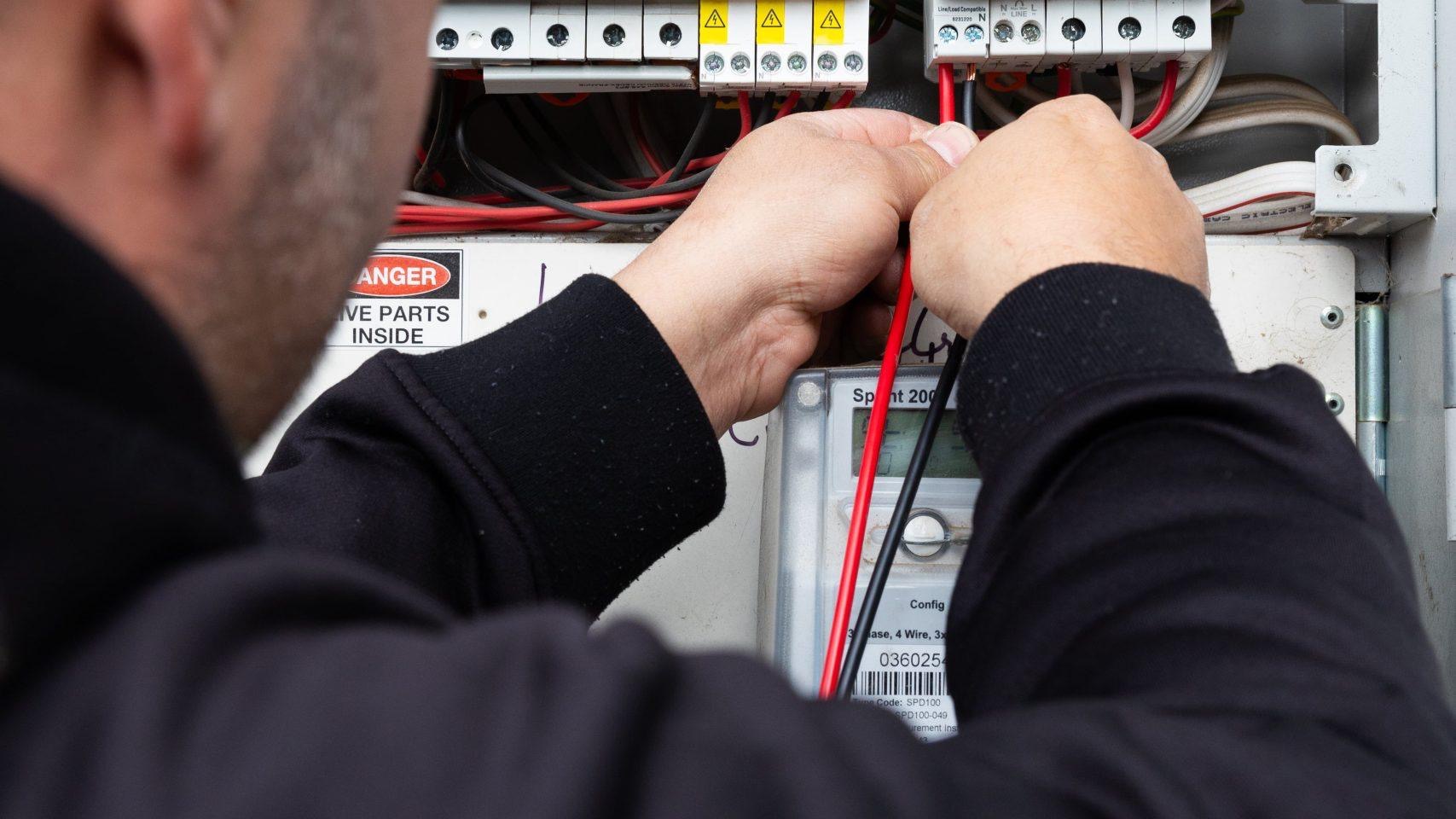
I’ve opened short-stay switchboards across Melbourne’s inner north — around Carlton and Richmond, a lot of it older apartment stock — and found boards with a breaker on every circuit and not one safety switch. That’s the thing worth knowing about, exempt or not: a safety switch (RCD) is what cuts the power when current starts leaking to earth, which is the fault that shocks people. A plain circuit breaker won’t do it.
What actually applies to short-stay instead
Stepping out of tenancy law doesn’t mean stepping out of every obligation — it means a different set.
- Australian Consumer Law. Consumer Affairs Victoria treats short-stay accommodation as a service offered under a contract, so consumer guarantees apply the way they would for any service you sell.
- Owners corporation rules, if the property is an apartment. Victoria’s short-stay accommodation provisions cover conduct — noise, unruly-party breach notices, and so on — and can bind the owner. They’re about behaviour, not electrical checks.
- The general duty that electrical work be safe. Anyone’s installation has to be electrically safe, and fixed electrical work still has to be done by a licensed electrician and certified — a short-stay property isn’t a free-for-all.
What there isn’t is an equivalent mandated periodic electrical inspection for short-stay. So the honest summary is “no two-yearly check,” not “no safety duties at all.” Those are different statements, and the difference matters.
What to do next
If you run short-stay, the practical read is: the two-yearly rental check isn’t yours to worry about, and you can stop chasing a compliance date that was never pointed at you. What’s left is the ordinary, sensible question of whether the wiring in a property you profit from and don’t live in is actually sound. An electrical inspection and switchboard assessment answers exactly that — and here it’s a decision, not an obligation.
If some of your properties are long-term lets and some are short-stay, they genuinely sit under different rules, and it’s worth sorting which is which before October rather than after. Managing a mixed portfolio? Thunderman can review the whole lot and tell you which properties the two-yearly check actually applies to — and the plain-language rental checklist covers what that check involves.
Not sure which category a property falls into? That’s a two-minute conversation, not a sales pitch. Give Yiannis a call on 0434 254 474 or send a quick message — REC 28523, across Greater Melbourne.
Sources
Common questions
Does my Airbnb need the two-yearly rental electrical safety check?
If the property is a genuine short-stay or holiday let, no — the two-yearly electrical safety check that applies to Victorian residential rentals does not apply to it. That check sits in residential tenancy law, and holiday accommodation is excluded from that law. The catch is that the exemption follows how the place is actually used, not whether it's listed on Airbnb.
Why are short-stay properties exempt?
Because the Residential Tenancies Act 1997 — the law the two-yearly check is built on — says at section 10 that it does not apply to premises ordinarily used for holiday purposes. The exemption is upstream of the regulation, so it holds even after the 13 October 2026 change that expands the check to all residential rental agreements.
My property is on Airbnb but I let it long-term — does the check apply?
Most likely yes. If someone lives there under a residential rental agreement, it's a residential tenancy regardless of the booking platform, and the two-yearly check applies. 'Listed on Airbnb' doesn't create an exemption — genuine holiday use does. The test is the nature of the arrangement.
Does the 13 October 2026 change bring short-stay in?
No. That change removes the old 'agreement started after 29 March 2021' limit so the two-yearly check reaches all residential rental agreements. It doesn't touch holiday accommodation, because the holiday exclusion is written into the Act itself, above the regulations the change amends.
If it's not legally required, is an electrical check still worth doing on a short-stay?
That's your call, and it's a fair one to make deliberately. The law sets a floor; it doesn't stop you choosing a higher standard for a place where strangers sleep, cook and charge devices you've never seen. A licensed electrician can tell you whether the switchboard has safety switches and whether the installation is sound — which is useful to know whether the law asks for it or not.

The owner does your job
You'll get Yiannis — not a subcontractor.
Book Thunderman and the licensed electrician who quotes your job is the one who does it — and stands behind it afterwards. REC 28523, ARCtick certified, fully insured, rated 4.9★ across 53 Google reviews.
More from the Journal
Got a follow-up question? Just call.
Free quotes across Greater Melbourne — Yiannis answers personally.