
Smoke alarm rules in Victoria: replacement, placement, and who installs them
Victoria requires smoke alarms that meet AS 3786 — both photoelectric and ionisation qualify. What the 10-year rule means, where alarms go, and who may replace a hard-wired one.
Quick answer
Victorian homes need smoke alarms that comply with AS 3786. Both photoelectric and ionisation alarms meet that standard and both are permitted, though the fire services recommend photoelectric. Alarms have a service life of around 10 years from the manufacture date — after that, replace them. Hard-wired alarms must be replaced by a licensed electrician. Battery-only alarms can be swapped by the homeowner. Rentals carry additional obligations for the rental provider.
The 10-year rule and why it matters
Open the cover of your smoke alarm and look for a date of manufacture — it is usually moulded into the plastic or printed on a sticker inside. If that date is more than 10 years ago, the alarm is due for replacement.
This surprises a lot of people. The alarm still beeps when you hold the test button. The battery is fresh. It looks fine. But the optical sensor inside a photoelectric alarm degrades over time, accumulating dust and losing sensitivity even when the unit appears functional. A 12-year-old alarm that still chirps is not a working smoke alarm in any meaningful sense.
The 10-year figure comes from the manufacturer’s rated service life, which aligns with guidance from fire authorities and is built into fire safety standards. Replace the unit when that date passes — don’t wait for it to fail a test.
Photoelectric or ionisation: what the rules actually say
Victoria’s building regulations, read alongside the National Construction Code (NCC), require smoke alarms to comply with Australian Standard AS 3786. That is the legal requirement, and it is worth being precise about what it does and does not say: AS 3786 covers both photoelectric and ionisation alarms, and the Victorian Government states that both types are permitted here. You will read otherwise on plenty of trade websites. It is not correct, and you deserve to know the difference between a rule and a recommendation before you spend money.
What the fire services recommend is a different question, and here the advice is consistent: photoelectric. Most house fires that kill people are slow, smouldering fires that build up while people are asleep, and photoelectric alarms respond to that type of smoke faster than ionisation alarms do. They also tend to nuisance-trip less often near a kitchen. So if your home still has ionisation units (they will be labelled), moving to photoelectric when they come due is a sensible upgrade — a choice you are making for safety, not one an inspector will fine you for.
Hard-wired vs battery-only — who can install what
This is where the licensing question comes in, and it is worth being clear.
Battery-only alarms — the kind with no cable going into the ceiling and no connection to your home’s wiring — can be replaced by the homeowner. You unclip the old one from its base, clip the new one on, and insert a battery. No licence required.
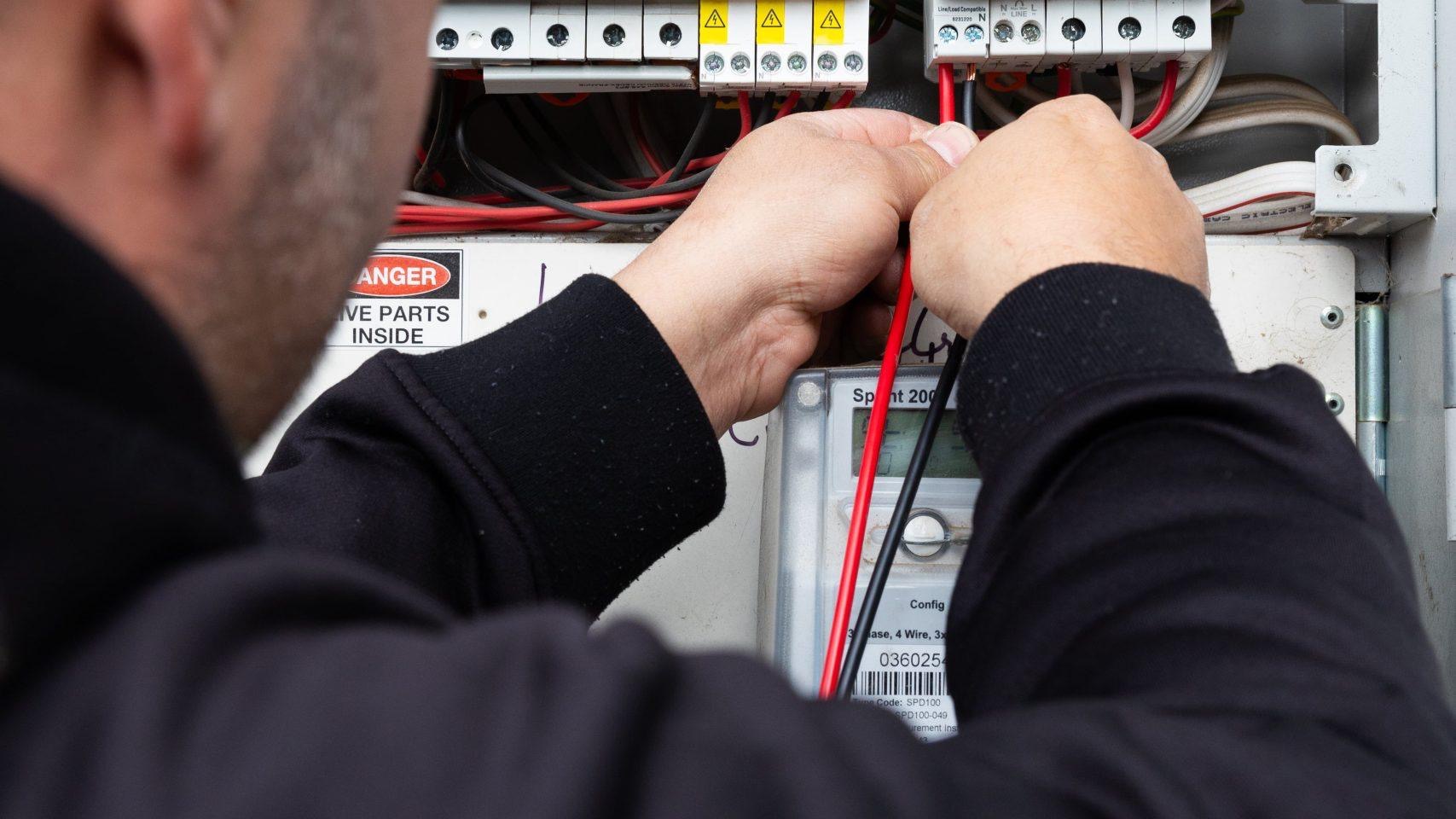
Hard-wired alarms connect to your home’s 240-volt mains circuit. They typically have a battery backup, but the primary power source is the wiring in the ceiling. Disconnecting the old unit and connecting the new one involves working with mains wiring. That is licensed electrical work in Victoria, full stop. Energy Safe Victoria is clear that any work on fixed electrical installations must be carried out by a licensed electrician — and that includes replacing a hard-wired smoke alarm.
If you’re not sure which type you have, look at the back of the unit or the ceiling plate. A wire disappearing into a conduit or straight into the ceiling is the tell. When in doubt, treat it as hard-wired and call a sparky.
For residential electrical work in and around Melbourne, Yiannis holds REC 28523 — you can verify that on the Energy Safe Victoria public register.
Interconnection — why it’s worth doing
An interconnected smoke alarm system means that when one alarm triggers, every alarm in the house goes off simultaneously. You’re asleep in a rear bedroom; a fire starts in the kitchen. Without interconnection, the kitchen alarm goes off and you may not hear it in time. With interconnection, the alarm next to your bed goes off at the same moment.
The NCC requires interconnection in new residential construction and in renovations that include new alarm installations. For existing homes, it isn’t retrospectively required in all cases — but it is worth doing as a safety upgrade, and it is a relatively straightforward job when you’re already having alarms replaced.
Wired interconnection links the alarms through a dedicated circuit. Wireless interconnection uses a radio signal between compatible units. Both are valid options. Either way, if the installation involves your home’s wiring, it needs a licensed electrician.
Where smoke alarms must go
The NCC sets minimum placement requirements for residential buildings. As a guide for a typical dwelling:
- On every storey of the home
- In each bedroom, or in the hallway or corridor directly outside sleeping areas
- In any corridor between sleeping areas and the rest of the home
Larger or multi-storey homes, homes with unusual layouts, or homes with separately occupied areas may need more alarms than the minimum. If you’re having alarms replaced and you’re unsure about coverage, it’s worth asking the electrician to check placement at the same time — it’s not a complicated question to answer on-site.
Do not install alarms inside bathrooms, in garages, or directly adjacent to cooking appliances. These locations generate enough steam, exhaust, or cooking smoke to cause nuisance trips, and most manufacturers specifically exclude them.
Rental properties — the obligation sits with the rental provider
If you’re a rental provider (landlord) in Victoria, smoke alarm obligations are part of the broader electrical safety framework under the Residential Tenancies Regulations 2021. Consumer Affairs Victoria makes clear that rental providers must ensure electrical installations and fittings — including smoke alarms — are maintained in a safe and working condition.
For hard-wired alarms in a rental, that maintenance must be carried out by a licensed electrician. A rental provider who replaces a hard-wired alarm themselves, or has a handyperson do it, is not meeting their legal obligation — and a smoke alarm that fails because of poor installation is a serious safety and liability issue.
If you’re a tenant and your smoke alarm is beeping due to a low battery, you can replace the battery yourself in a battery-only unit. If the alarm itself needs replacing, or if you have hard-wired alarms, report it to the rental provider in writing and ask them to arrange a licensed electrician.
The Residential Tenancies Regulations 2021 and the Consumer Affairs Victoria guidance are both worth reading if you manage a rental property in suburbs like Coburg — older housing stock in Melbourne’s inner north tends to have a mix of original hard-wired alarms and later battery-only additions, sometimes in the same property.
A note on alarms in older Melbourne homes
Many homes in suburbs like Brunswick were built well before smoke alarms were standard or required. Some have had alarms added over the years — not always by electricians, not always in the right locations, and not always with alarms that are still within their service life.
If your home is more than 15 years old and you haven’t had the alarms checked by a licensed electrician, it is worth doing. That applies whether you own the home or rent it out. An electrician can confirm the alarm type, check the installation date, verify placement, and — if the alarms are hard-wired — check that the circuit is sound.
Connecting that check to your broader electrical safety picture makes sense: the same visit can look at safety switches, the switchboard, and anything else that hasn’t had attention in a while.
What to do next
Check the manufacture date on every smoke alarm in your home. If any are over 10 years old, they are due regardless of whether they still beep. If yours are ionisation-type, they remain legal — but photoelectric is the recommended replacement when the time comes. Battery-only units you can swap yourself; hard-wired units need a licensed electrician.
If you’re a rental provider, make sure your records show that alarms have been checked and maintained by a licensed electrician — the Residential Tenancies Regulations 2021 put that obligation squarely on you.
If you’d rather a licensed sparky handle it, give Yiannis a call on 0434 254 474 or send a quick message for a free quote.
Sources
- Energy Safe Victoria — household wiring and safety switches
- Consumer Affairs Victoria — rental providers' gas and electrical safety
- Victorian legislation — Residential Tenancies Regulations 2021
- Victorian Department of Health — domestic smoke detectors (both types permitted)
- AS/NZS 3000:2018 — Wiring Rules
Common questions
Do I need a licensed electrician to replace a smoke alarm in Victoria?
It depends on the type. A plug-in battery-only alarm can be swapped by the homeowner. A hard-wired alarm — one with a cable disappearing into the ceiling — must be replaced by a licensed electrician. Connecting or disconnecting mains wiring is licensed electrical work in Victoria.
What type of smoke alarm is required in Victorian homes?
The requirement in Victoria is that alarms comply with Australian Standard AS 3786. Both photoelectric and ionisation alarms meet that standard and both are permitted — the Victorian Government states this plainly. Photoelectric is what the fire services recommend, because it responds faster to the slow, smouldering fires most common in homes, but choosing it is a safety decision rather than a legal obligation.
How long do smoke alarms last before they need replacing?
Smoke alarms have a manufacturer-rated service life, typically 10 years from the date of manufacture stamped on the unit — not the date you bought it. After that point the sensor degrades and the alarm should be replaced regardless of whether it still beeps when you test it.
Where must smoke alarms be installed in a Victorian home?
The National Construction Code sets the minimum requirement: on each storey, in each bedroom or adjacent hallway, and in any corridor between sleeping areas and the rest of the dwelling. Your home's specific layout may require more.
Do rental properties in Victoria need hard-wired smoke alarms?
The Residential Tenancies Regulations 2021 require rental providers to maintain working smoke alarms, but do not mandate hard-wired units for all existing rentals. Where a home already has hard-wired alarms, those must be kept in working order by a licensed electrician.
Can smoke alarms be interconnected, and is that required?
Interconnected alarms trigger every unit in the home when one detects smoke — so you hear the alarm wherever you are. Interconnection is required for new builds and renovations under the NCC. It is strongly recommended in any home as a safety upgrade, and wired interconnection requires a licensed electrician.

The owner does your job
You'll get Yiannis — not a subcontractor.
Book Thunderman and the licensed electrician who quotes your job is the one who does it — and stands behind it afterwards. REC 28523, ARCtick certified, fully insured, rated 4.9★ across 53 Google reviews.
More from the Journal
Got a follow-up question? Just call.
Free quotes across Greater Melbourne — Yiannis answers personally.