
Why your safety switch keeps tripping — and what to do
Your safety switch keeps tripping because it's found a fault and cut the power to protect you. Here's how to narrow down the cause safely, and when to call a licensed electrician.
Quick answer
A safety switch that keeps tripping is not broken — it is working. Its whole job is to watch the flow of electricity, and when it detects current leaking where it shouldn’t, it cuts the power within milliseconds to stop you getting a shock. So the question is never “how do I stop it tripping” — it is “what has it found?” Most of the time the answer is a faulty appliance. Sometimes it is moisture, an ageing circuit, or the switchboard itself. Here is how to narrow it down safely, and when it stops being a job for the homeowner.
What a safety switch actually does
A safety switch — an RCD, or residual current device — sits in your switchboard and constantly compares the electricity flowing out to a circuit against the electricity coming back. In a healthy circuit those match. When some of that current leaks to earth instead — through a faulty appliance, damaged insulation, or a person — the balance breaks, and the safety switch trips the power in a fraction of a second. Energy Safe Victoria describes it plainly: the device detects a problem and cuts the power within milliseconds to protect you from serious electric shock.
That is why a trip is a good thing, even when it is annoying. The alternative to a safety switch tripping is the fault current finding another path — and sometimes that path is a person. So before you treat a repeated trip as a nuisance to be silenced, treat it as information: something on that circuit is not right.
The most common cause: a faulty appliance
Nine times out of ten on the jobs I get called to across Craigieburn and the northern suburbs, a repeatedly tripping safety switch comes back to one appliance. A kettle with a cracked element, an old fridge with perished seals letting moisture into the wiring, a heater that has been knocked about, a phone charger that has finally given up. Any of them can leak just enough current to earth to trip the switch.
The good news is you can find it yourself, safely, without going anywhere near the switchboard internals. Here is the method:
- Unplug everything on the circuits that are tripping — appliances, chargers, lamps, the lot.
- Reset the safety switch once. If it holds with everything unplugged, the fault is in one of the appliances, not the wiring.
- Plug things back in one at a time, using each one. The appliance that trips the safety switch is your culprit.
- Stop using that appliance and have it repaired or replaced.
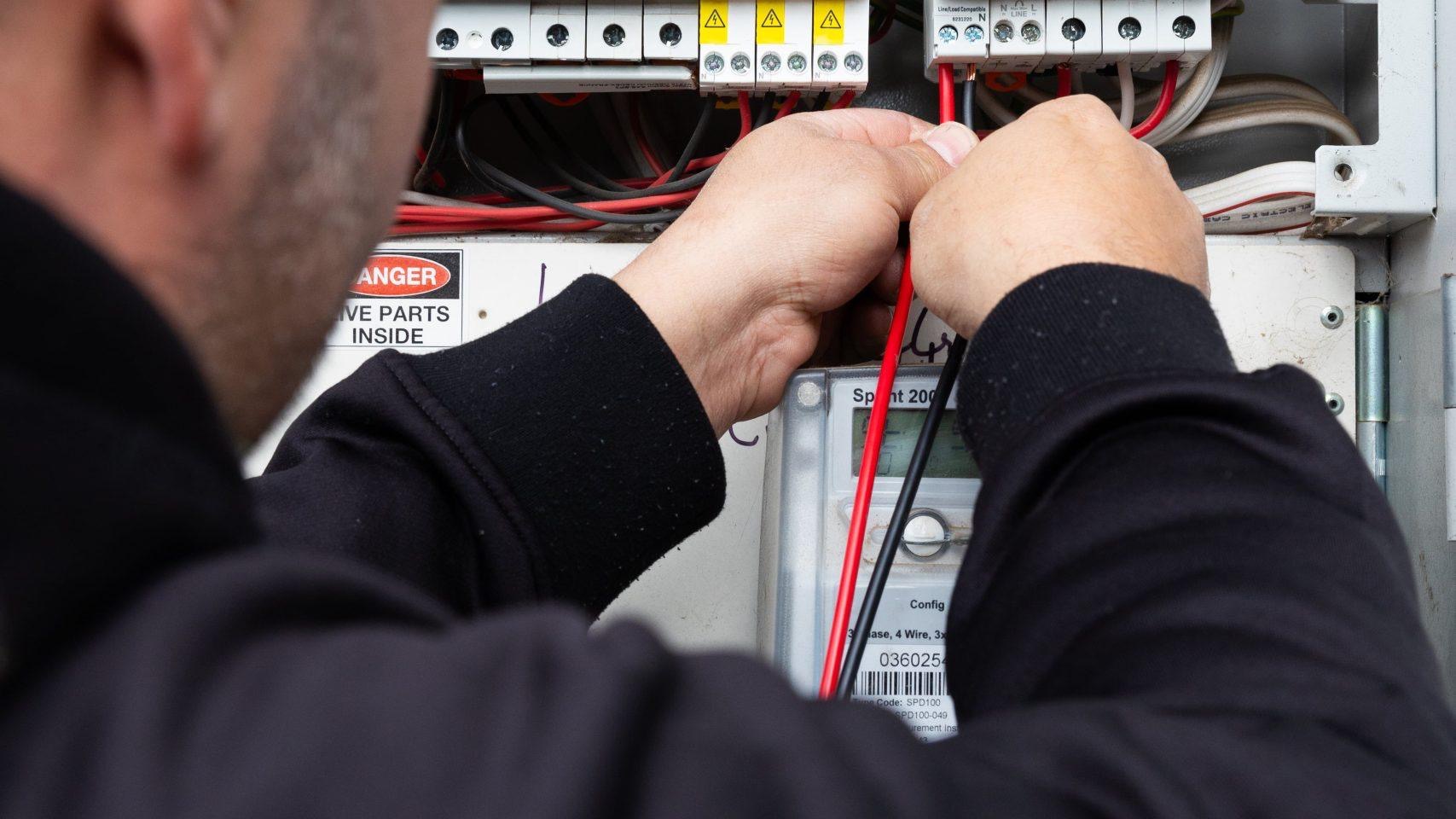
This is a safe test because it only involves the power points and the reset button on the front of the board — not the wiring, and not the inside of the switchboard, which is licensed electrician territory and should stay shut.
When it is not an appliance
If you unplug everything, reset the switch, and it still trips with nothing plugged in, the fault is in the fixed wiring or the switchboard — and that is where the homeowner troubleshooting stops. A few common patterns:
- Moisture in a circuit. Water in an outdoor power point, a leaking roof over a ceiling light, or condensation in an old junction box can all leak current to earth. These often show up after rain and clear up when things dry, then come back — which is a sign to get the circuit found and fixed properly, not to keep resetting.
- Ageing or damaged cable. On the older housing stock around Melbourne’s north, decades-old insulation can break down, especially where cables have been disturbed by rodents or renovation work. Energy Safe Victoria’s guidance on household wiring is blunt about old installations: deteriorating wiring is a real hazard, and it is not something to leave running on a switch that keeps tripping.
- Too many circuits on one safety switch. Older boards sometimes protect the whole house with a single RCD, so a small leak on any one circuit trips everything. Modern practice under the AS/NZS 3000 wiring rules is individual protection per circuit — which is exactly what an RCBO does, and where it differs from a plain safety switch or circuit breaker.
- A failing safety switch. They are mechanical devices and they do wear out. If you press the ‘Test’ button and nothing happens, the switch is no longer protecting you and needs replacing by a licensed electrician.
The switchboard question
If your board is an older one — ceramic fuses, or a single safety switch covering everything — a tripping problem is often really a switchboard problem. A modern board with an RCBO on every final sub-circuit isolates a fault to the one circuit that has it, so a dodgy appliance in the shed doesn’t plunge the whole house into darkness. Upgrading is frequently the real fix rather than chasing one nuisance trip after another; that is a switchboard upgrade, and it also brings the board up to current compliance.
When to stop and call an electrician
Reset the switch once. Do the unplug test. But leave it off and call a licensed electrician if:
- the safety switch trips with everything unplugged,
- it will not reset at all,
- it trips over and over,
- or there is any burning smell, buzzing, or heat at the switchboard.
Those are signs of a wiring or switchboard fault, and forcing the power back on against them is exactly what the safety switch is there to prevent. For fault-finding, safety-switch replacement and switchboard work across Greater Melbourne, Thunderman handles electrical repairs and emergency call-outs — Yiannis holds REC 28523 with Energy Safe Victoria, and the certificate for any fixed work is lodged with ESV the same week.
What to do next
If your safety switch is tripping right now: unplug the circuits, reset it once, and reintroduce appliances one at a time. If it holds, you have found a faulty appliance and saved yourself a call-out. If it trips with nothing plugged in, or won’t reset, that is the point to stop and get a licensed sparky on it — call Yiannis on 0434 254 474 or send a quick message for a free quote.
Sources
- Energy Safe Victoria — Test. Reset. Protect. (safety switches)
- Energy Safe Victoria — Household wiring
- AS/NZS 3000:2018 — Wiring Rules
Common questions
Why does my safety switch keep tripping?
Because it has detected a leakage fault and cut the power within milliseconds to protect you from a shock. The usual cause is a faulty appliance, but it can also be moisture in a circuit, an ageing or damaged cable, too many circuits sharing one safety switch, or a failing safety switch itself. It is doing its job — the point is to find what is triggering it, not to stop it working.
Is it safe to keep resetting a safety switch that trips?
Reset it once. If it holds, the last thing you switched on or plugged in was probably the cause. If it trips again straight away — especially with everything unplugged — leave it off and call a licensed electrician. Repeatedly forcing a safety switch back on against a real fault is not safe, and if it will not reset at all, that is a clear sign to stop and get it looked at.
How do I find which appliance is tripping the safety switch?
Unplug everything on the affected circuits, reset the safety switch, then plug appliances back in one at a time. The one that trips it is the culprit — stop using it and have it checked or replaced. This is a safe test any homeowner can do; it involves the power points and the reset button, not the inside of the switchboard.
Should I test my safety switches, and how often?
Yes. Energy Safe Victoria recommends testing your safety switches about once a year by pressing the 'T' or 'Test' button on each one — the power should cut immediately, and you reset it afterwards. If pressing test does nothing, the safety switch is not protecting you and needs a licensed electrician.
When should I call an electrician about a tripping safety switch?
Call a licensed electrician if the safety switch trips with everything unplugged, will not reset, trips repeatedly, or if there is any burning smell, buzzing or heat at the switchboard. Those point to a wiring or switchboard fault rather than a single appliance, and that is not homeowner territory.

The owner does your job
You'll get Yiannis — not a subcontractor.
Book Thunderman and the licensed electrician who quotes your job is the one who does it — and stands behind it afterwards. REC 28523, ARCtick certified, fully insured, rated 4.9★ across 53 Google reviews.
More from the Journal
Got a follow-up question? Just call.
Free quotes across Greater Melbourne — Yiannis answers personally.