
RCD, RCBO and MCB — what each safety device actually does in your switchboard
Plain-English guide to RCD, RCBO and MCB devices on an Australian switchboard — what each protects against and when AS/NZS 3000 requires it.
Quick answer
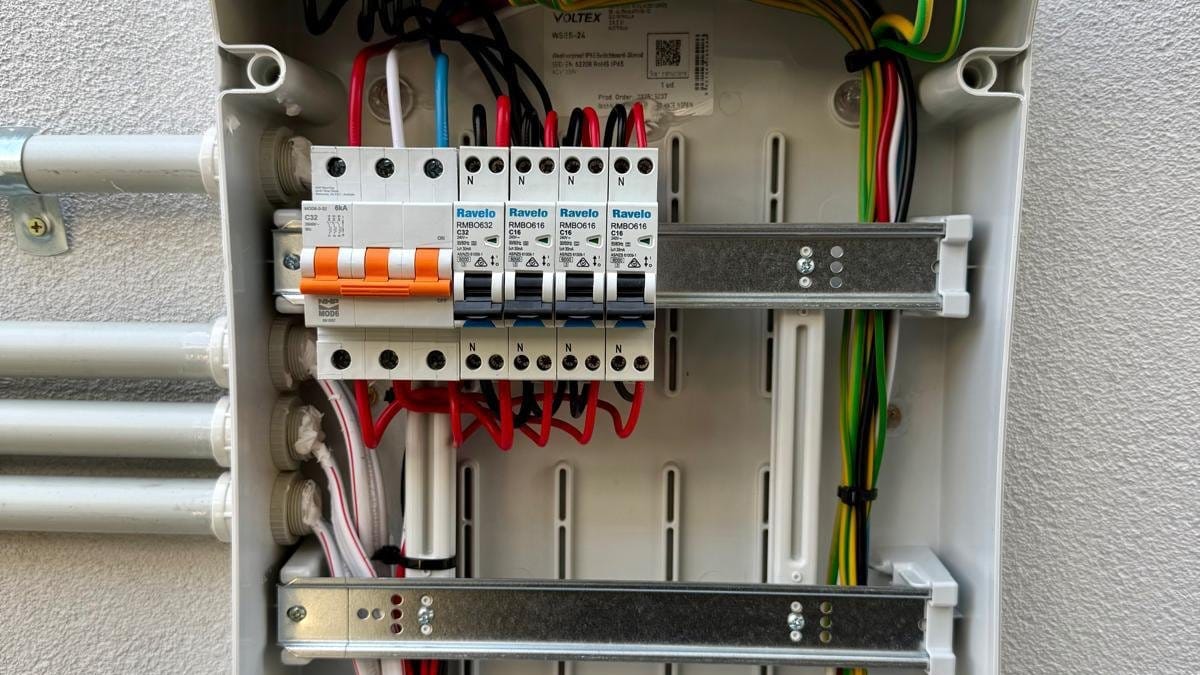
Three protective devices appear on a modern Australian residential switchboard: the MCB (Miniature Circuit Breaker), the RCD (Residual Current Device, often called a safety switch in the homeowner conversation), and the RCBO (the combined device that does both jobs). Each protects against a specific kind of fault. The MCB disconnects an overloaded or short-circuited final sub-circuit before the wiring overheats — the kind of fault where too many appliances are drawing too much current. The RCD disconnects the supply when residual current flows to earth — the kind of fault where someone has touched a live conductor and the current is leaking through them to ground. The RCBO does both jobs in a single DIN-rail device, which is the modern AS/NZS 3000 standard for residential final sub-circuits. If you’d like an inspection of your existing switchboard against current rules, the Thunderman residential page and the switchboard upgrade cost-driver post walk the scope.
What the MCB protects against
An MCB is a thermal-magnetic switch. The “thermal” part responds to sustained over-current — too much current drawn for too long, which would otherwise heat the cable insulation past its design temperature and start a slow burn somewhere in the wall cavity. The “magnetic” part responds to a hard short-circuit — current jumping a fault path at thousands of amps, which would otherwise weld the cable and start a fire instantly. The MCB disconnects within the manufacturer’s tripping curve (typically a “C-curve” for residential final sub-circuits — fast on hard faults, slower on transient overloads to ride through legitimate motor inrush). An MCB on its own doesn’t protect a person from electric shock. It protects the wiring from burning the house down.
What the RCD protects against
An RCD measures the current flowing on the active conductor and compares it to the current flowing back on the neutral. In a healthy circuit those two currents are equal — every electron going in comes back out. If they’re not equal, the difference is residual current — and the most common reason for residual current is that some of it is flowing through a human body to ground. The Australian residential RCD is typically rated at 30 mA — when residual current exceeds 30 mA, the device disconnects in well under 300 milliseconds. Thirty milliamps is below the threshold at which a sustained electric shock causes ventricular fibrillation, and 300 milliseconds is fast enough to prevent the shock from being lethal. That’s what the device exists for.
What the RCBO does
An RCBO combines an MCB and an RCD in one DIN-rail unit. It protects against over-current and short-circuit (the MCB function), and it protects against residual fault current to ground (the RCD function), and it does both on a single dedicated final sub-circuit. The modern AS/NZS 3000 standard for new and substantively-upgraded residential boards is one RCBO per final sub-circuit — so a fault on the kitchen circuit only trips the kitchen circuit, not the entire ground floor, and the offending circuit is identifiable in seconds.
How to read your switchboard label
A modern Australian switchboard typically reads from left to right: main switch (the big two-pole or four-pole isolator that disconnects the whole house from the supply), surge-protection device if fitted (a single DIN-rail unit with a clear status window), then one RCBO per final sub-circuit. Each RCBO is labelled with the circuit it protects — “Lights — Ground Floor”, “Power — Kitchen”, “Oven”, “Hot Water”, “Ducted Aircon”, “EV Charger”. An older board may still have a single shared RCD covering several MCBs grouped together — the labelling shows which circuits sit behind which RCD. Either way the homeowner should be able to identify, at a glance, which circuit a tripped device controls.
When the older approach gets upgraded
The shared-RCD older approach is fully compliant as a grandfathered install — but it gets replaced with per-circuit RCBOs at any substantive switchboard upgrade. The driver is partly diagnostic (per-circuit RCBOs identify a fault location in seconds rather than minutes), partly redundancy (a fault on one circuit no longer takes the whole house dark), and partly the EV-charger Type B RCD requirement. See the switchboard upgrade cost-driver post for the broader switchboard context.
A note on EV chargers and Type B RCDs
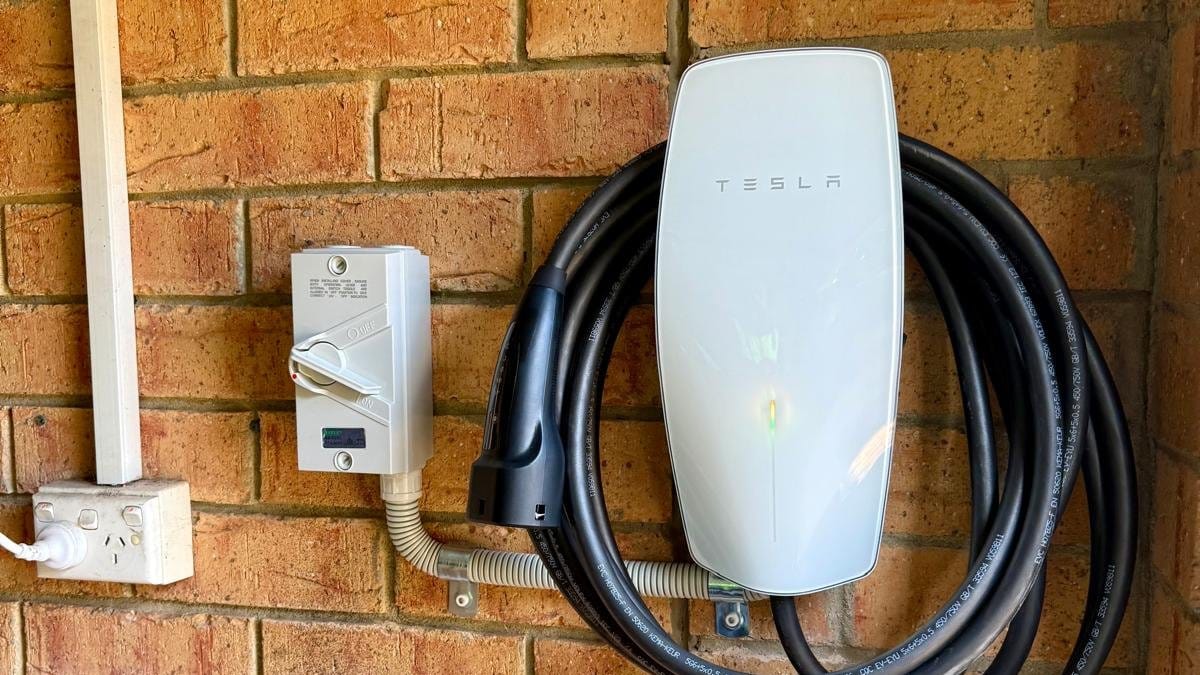
The Type B RCD detects DC residual fault current as well as AC. EV wallboxes can generate DC residual current under specific failure modes, and a Type AC or Type A RCD will not trip on a DC fault. The current AS/NZS 3000 requirement is a Type B RCD (or a Type A RCD certified against the IEC 62752 EV-charger requirement, which is a narrower compliance path) on every EV-charger final sub-circuit. This applies to a Craigieburn home retrofitting an EV charger as much as it does to a new-estate home in the Whittlesea growth corridor.
How Thunderman handles a switchboard inspection
A switchboard inspection on a Greater Melbourne home walks the existing board, identifies whether the protection is shared-RCD, per-circuit RCBO, or a mix; confirms whether the protection levels match the current AS/NZS 3000 standard; flags any final sub-circuits without RCD protection at all; and supplies a written report with the recommended path. Where the inspection finds gaps, the upgrade is a coordinated install with a Certificate of Electrical Safety lodged with Energy Safe Victoria on completion. The Thunderman residential page walks the broader scope.
Sources
- AS/NZS 3000:2018 — Australian/New Zealand Wiring Rules
- Energy Safe Victoria — household wiring and safety switches
- Energy Safe Victoria — public register of electrical licences
Common questions
What is the 6-second rule under AS/NZS 3000?
AS/NZS 3000 requires the protective device on a final sub-circuit to disconnect a residual fault current of 30 mA in no more than 300 milliseconds. The trip is functionally instantaneous from the user's point of view — well under one second. The broader 'within 6 seconds' framing applies to circuit-breaker overload disconnection, where a thermal-magnetic device disconnects an overloaded circuit within the manufacturer's stated tripping curve. Both timings exist to keep people alive in a fault scenario.
Why is my older Melbourne board labelled 'RCD' but the modern boards have 'RCBO' on every circuit?
The older approach grouped multiple final sub-circuits behind a single shared RCD (typically protecting four or six circuits together). The modern approach gives every final sub-circuit its own RCBO — combining the residual-current protection with the overload protection in one device. The modern approach is cleaner because a fault on one circuit doesn't trip the others, and identifying which circuit faulted takes seconds instead of minutes.
Do all my circuits need RCD protection under the current rules?
Yes, for almost all residential final sub-circuits. AS/NZS 3000 requires RCD protection on every final sub-circuit in a modern residential install — lights, power points, the oven, the hot water, the aircon, the EV charger. There are very narrow exemptions for some hardwired safety-critical loads (smoke alarms on a non-RCD sub-circuit in some configurations), but the general answer for a homeowner is yes. Older boards installed before the current rules took effect are grandfathered but get brought up to current rules at any substantive upgrade.
What is a Type B RCD and why does an EV charger need one?
A Type B RCD detects DC residual currents in addition to the AC residual currents that a Type A or Type AC RCD handles. An EV charger using a fast wallbox can generate DC residual fault current under specific failure modes — and an AC-only RCD won't trip on that. A Type B RCD on the EV final sub-circuit ensures the fault is detected and the supply disconnected. AS/NZS 3000 requires this for fast-charge EV installs.
Can I add an RCD myself or do I need a sparky?
You need a licensed electrician. Adding an RCD or replacing an MCB with an RCBO is fixed electrical work in a switchboard — it requires a Registered Electrical Contractor under the Victorian Electrical Safety Act, and the work has to be certified with a Certificate of Electrical Safety lodged with Energy Safe Victoria. The DIN-rail components themselves are readily available; the install isn't a DIY job.

The owner does your job
You'll get Yiannis — not a subcontractor.
Book Thunderman and the licensed electrician who quotes your job is the one who does it — and stands behind it afterwards. REC 28523, ARCtick certified, fully insured, rated 4.9★ across 53 Google reviews.
More from the Journal
Got a follow-up question? Just call.
Free quotes across Greater Melbourne — Yiannis answers personally.