Going off-grid on the Melbourne fringe: what an electrician will tell you first
Thinking about off-grid power on the Melbourne fringe? Here's the honest electrician's view: load surveys, battery sizing, generator backup, and why most homes are better off going hybrid first.
Quick answer
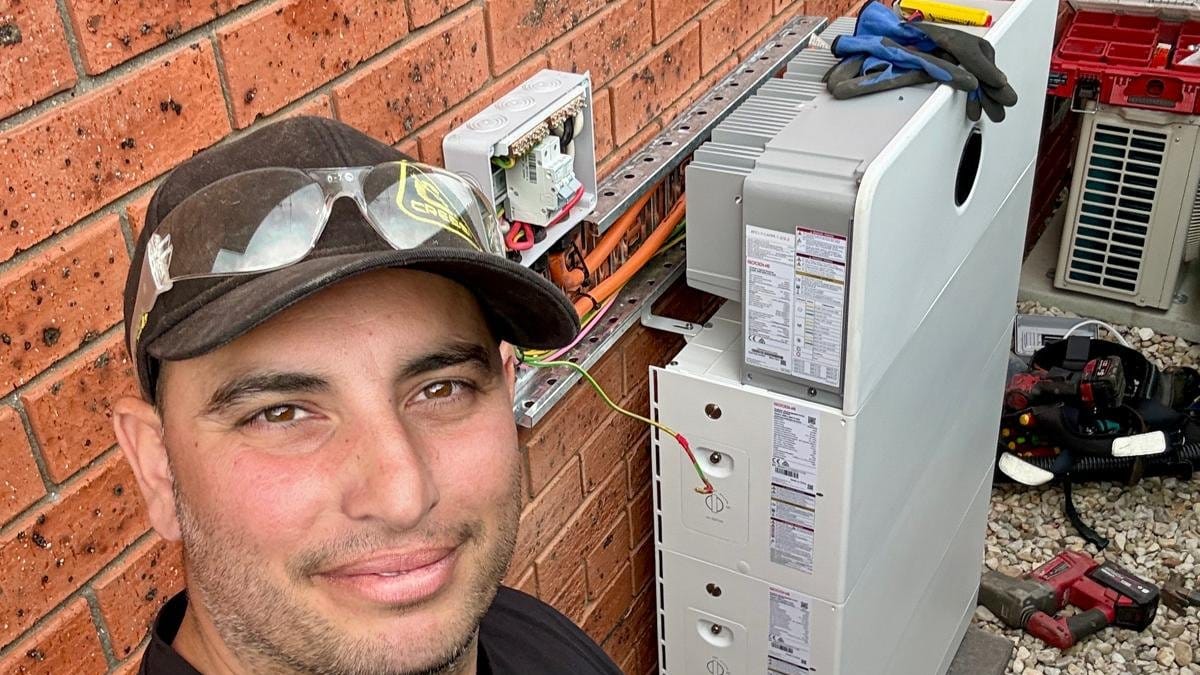
For most homes on the Melbourne fringe that have grid access, a hybrid solar-and-battery system delivers better value and simpler compliance than going fully off-grid. If full off-grid is genuinely the right fit — remote block, expensive grid connection, deliberate lifestyle choice — start with an honest load survey, size the battery bank to your actual winter loads, and always include a backup generator. That’s the short version.
The question behind the question
When someone says “I want to go off-grid,” what they usually mean is one of a few different things. Sometimes it’s a remote rural block where running a grid connection would cost more than the system itself. Sometimes it’s a principled decision to get clear of rising electricity bills. Sometimes it’s a property on the Melbourne fringe — Epping, Whittlesea, Mernda, the Yarra Valley — where the grid exists but feels unreliable, expensive, or just beside the point.
Each of those situations points toward a different answer. That’s worth sorting out before anyone starts quoting you panels and batteries.
The honest electrician’s first question isn’t “how many panels do you want?” It’s “what are you actually trying to achieve, and what does your property look like?” Because the technical solution follows from the answer to that — not the other way around.
Why most Melbourne-fringe homes are better off going hybrid first
A hybrid system connects solar panels, a battery bank, and the grid through a hybrid inverter. You generate and store your own power during the day, draw on the battery at night, and fall back to the grid only when the battery is low. If you generate more than you use, you can export the surplus.
That architecture solves most of what people want from off-grid living: lower bills, resilience during outages, reduced dependence on the network. And it does so without the complexity, the ongoing maintenance, and the upfront cost of a fully stand-alone system.
For a fully off-grid build you need a significantly larger battery bank to cover several days of autonomy through Melbourne’s grey winter weeks. You need a backup generator — and a plan for fuelling and servicing it. The federal discount does not disappear off-grid: under the Clean Energy Regulator’s Small-scale Renewable Energy Scheme, an off-grid battery on a home that is lived in — a remote farmhouse, say — can still earn STCs (small-scale technology certificates), as long as it has its own solar system. A battery for a shed or a bore pump cannot. And every fault, every flat battery at 11pm, is entirely your problem to manage.
None of that is insurmountable. But it’s worth knowing before you commit.
For solar-and-battery installations across Greater Melbourne, including properties on the urban fringe, Thunderman starts with this conversation — not a quote.
The load survey: get this wrong and nothing else matters
If you do decide full off-grid is the right path, the load survey is where the whole project stands or falls.
A load survey is a systematic tally of every electrical load in the house: the wattage of each appliance or circuit, and a realistic estimate of daily run-time. Hot water. The oven. The fridge — which runs 24 hours, not just at meal times. The aircon, which in a Melbourne summer will work harder than you expect. Lighting. The laptop. The power tools in the shed.
Add those up carefully and you get two numbers: peak demand (the maximum instantaneous draw, which sizes your inverter) and daily energy consumption (which sizes your solar array and battery bank).
The common mistake is to survey a typical Tuesday and forget about the week in June when everyone is home, the heating is running all day, and there are four days of overcast weather in a row. Off-grid system design under AS/NZS 4509 — the Australian and New Zealand standard for stand-alone power systems — requires the design to account for the worst-case seasonal scenario, not the average. Melbourne’s winter solar resource is significantly lower than summer. That gap has to be covered somewhere: bigger panels, more battery, a generator, or some combination of all three.
If your load survey is optimistic, your system will let you down in winter. That’s not a minor inconvenience; it’s a cold dark house.
Sizing the battery bank
Battery sizing for off-grid is driven by days of autonomy — how many consecutive days the system can run at design load without any solar input. For most Australian residential stand-alone systems, the target is somewhere between two and five days depending on the climate and risk tolerance.
Melbourne’s latitude and typical winter cloud cover mean you need to plan for real low-solar stretches. A well-designed off-grid system for a Melbourne-fringe home will likely need a larger battery bank than the equivalent hybrid system in Queensland or WA — not because the technology is different, but because the solar resource is.
Battery technology matters here too. Lithium iron phosphate (LiFePO4) chemistry is now common in residential installations because of its cycle life, thermal stability, and depth of discharge. The Clean Energy Council maintains an approved battery product list as a consumer reference point — it’s worth checking that any battery you’re quoted appears there.
What won’t appear in this post is a figure for how much battery storage you’ll need. That depends entirely on your load survey, your solar array size, your location’s solar resource, and your acceptable risk of running low. Anyone who quotes you a battery bank without doing a proper load survey first is guessing.
The backup generator: not optional, just honest
Even a well-designed off-grid system will occasionally run low. That’s not a system failure; it’s the nature of relying on a variable resource. The practical and economical answer is a backup generator — typically diesel or LPG — sized to top up the battery bank when needed.
The generator doesn’t need to run your whole house. It needs to run long enough to get the batteries back to a usable state of charge. Modern hybrid inverter-chargers can manage this automatically, starting the generator at a preset battery threshold and stopping it once charging is complete.
Sizing the generator correctly, integrating it with the inverter, and running the fuel supply safely are all part of the electrical design. This is not a weekend DIY project — generator integration involves mains-level electrical work and must be done by a licensed electrician. Energy Safe Victoria is clear that all electrical installation work, including connections to stand-alone power systems, requires a licensed A-Grade electrician and a Certificate of Electrical Safety.
CEC accreditation and what to verify
For grid-tied solar installations, the Clean Energy Council’s Solar Accreditation (SAA) is mandatory in practice because it’s required to access STCs. Off-grid, the battery on a lived-in home can still earn STCs, and that also requires an accredited installer — for batteries, one with battery endorsement. Accreditation is a meaningful quality marker for the installer either way.
What you can and should verify independently:
- The installer’s REC number on the Energy Safe Victoria public register. This confirms they are a Registered Electrical Contractor in Victoria, which is the minimum legal requirement for all electrical work.
- Their CEC accreditation at cleanenergycouncil.org.au, particularly if the system includes grid-tied components.
- That they will issue a Certificate of Electrical Safety on completion of the work. ESV is explicit that solar installations require one.
Yiannis holds REC 28523 and CEC Solar Accreditation SAA S6375256.
A note on specialty electrical work and remote blocks
Some Melbourne-fringe properties — particularly in the Whittlesea corridor and areas north of Epping — sit far enough from established infrastructure that a grid connection quote is genuinely prohibitive. For those blocks, full off-grid isn’t just a lifestyle preference; it’s the practical and economical choice.
In that situation, the same principles apply: start with an honest load survey, design to AS/NZS 4509, include a generator, and use accredited and licensed trades. The difference is that the financial case for going fully off-grid is clearer when the alternative grid connection is expensive enough to tip the equation.
If you’re in that position, the place to start is a site assessment — not a quote. The site’s solar resource, the load requirements, the available fuel for backup, and the construction timeline all feed into the design. Getting those facts on the table first saves everyone time.
What to do next
If you’re seriously considering off-grid or hybrid solar for a Melbourne-fringe property, do the load survey first — even a rough one. Write down every appliance you run and how long it runs each day. That document will be more useful in your first conversation with an electrician than any amount of research about panel brands.
If you have grid access and you’re weighing up hybrid versus full off-grid, the honest answer for most homes is to start hybrid. You can always add battery capacity or move toward more self-sufficiency later.
If you’d rather a licensed sparky work through it with you, give Yiannis a call on 0434 254 474 or send a quick message for a free quote.
Sources
Common questions
Is going fully off-grid legal in Victoria?
Yes, fully off-grid stand-alone power systems are legal in Victoria. The installation must comply with AS/NZS 4509 (Stand-alone power systems) and all electrical work must be carried out by a licensed A-Grade electrician who issues a Certificate of Electrical Safety.
What standard covers off-grid power systems in Australia?
AS/NZS 4509 is the Australian and New Zealand standard for stand-alone power systems. It covers system design, installation, and performance. Your installer should be able to explain how your design meets this standard.
Do I need CEC accreditation for an off-grid solar installer?
For grid-tied solar the Clean Energy Council's Solar Accreditation is mandatory to access STCs. Off-grid is no exception: a battery on a lived-in off-grid home can earn STCs too, and the battery must be installed by a Solar Accreditation Australia (SAA) accredited installer with battery endorsement. Beyond the rebate, accreditation is a strong quality benchmark. Always verify the installer's REC number on the Energy Safe Victoria public register.
Why do most off-grid builds still include a backup generator?
Even a well-sized battery bank will run low after a string of overcast days or during unusually high demand. A backup generator — usually diesel or LPG — acts as a safety net to top up the batteries without touching the grid. It is significantly cheaper than oversizing the battery bank to cover every worst-case scenario.
What is a load survey and why does it matter for off-grid sizing?
A load survey is a detailed tally of every electrical appliance in your home: its wattage and how many hours a day it typically runs. For a grid-tied home the survey is useful but not critical — if you undersize, you just draw from the grid. Off-grid, an undercooked load survey means your system runs flat in winter. Getting it right is the single most important step before spending anything.
Is a hybrid solar system a better first step than full off-grid?
For most Melbourne-fringe homes that have grid access, a hybrid system — solar plus battery plus grid connection — delivers most of the resilience benefits at lower upfront complexity. You can still export and import, you don't need a backup generator for most scenarios, and you can expand the battery later. Full off-grid makes strong sense when the grid connection itself is expensive, unreliable, or simply not available.
The owner does your job
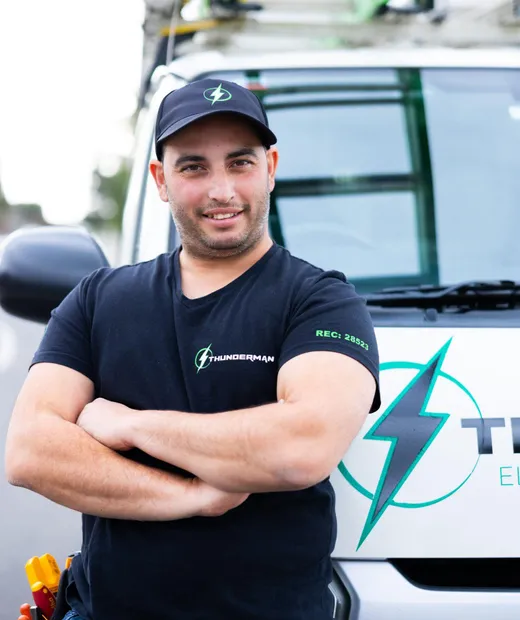
You'll get Yiannis — not a subcontractor.
Book Thunderman and the licensed electrician who quotes your job is the one who does it — and stands behind it afterwards. REC 28523, ARCtick certified, public liability insured, rated 4.9★ across 53 Google reviews.
More from the Journal
Got a follow-up question? Just call.
Free quotes across Greater Melbourne — Yiannis answers personally.