Three-phase EV charging at home: when 22 kW is worth it
Most EVs cap AC charging well below 22 kW, so three-phase home charging only pays off in specific cases. Here's how to decide before spending on an upgrade.
Quick answer
Check your car’s onboard AC charger rating before anything else. If it tops out at 7–7.4 kW, a three-phase supply will not speed up your charging — your vehicle is the bottleneck, not the socket. Three-phase home charging makes genuine sense only if your car accepts 11 kW or 22 kW AC, or if you are planning a future-proof install alongside a solar upgrade.
The number that actually limits your charging speed
There is a lot of marketing noise around EV chargers that quotes “up to 22 kW” without mentioning the detail that determines whether that figure applies to your car at all.
Every EV has an onboard AC charger — the component inside the vehicle that converts grid AC into the DC your battery stores. That component has a rated ceiling, and it is the hard limit for home charging regardless of what your wallbox can supply.
Here is roughly how the Australian market breaks down at the time of writing:
- Single-phase, 7–7.4 kW: the majority of EVs sold in Australia, including most variants of the Tesla Model 3 and Model Y, the BYD Atto 3, the Hyundai Ioniq 5 (some variants), and many others. A single-phase 32 A circuit fully satisfies these cars.
- Three-phase, 11 kW: a growing number of European vehicles — the Peugeot e-208, the Renault Megane E-Tech, various MG and Volvo models — cap out here. Three-phase supply lets them charge at their full rate.
- Three-phase, 22 kW: a smaller group, including certain Mercedes-Benz EQ models and some Renault variants. These genuinely benefit from a full three-phase 32 A circuit at home, though 22 kW draws close to 100 A of three-phase current — which is not trivial to provision.
If you are not sure of your car’s figure, it is in the owner’s manual under “AC charging” or “onboard charger”. The number listed there is the ceiling your car will ever accept from a home wallbox.
What three-phase supply actually means in a Melbourne home
Melbourne’s distribution network is three-phase at the street level, but the connection to your property is usually single-phase unless you or a previous owner requested an upgrade, or the property was built with three-phase supply already in place.
In practice, three-phase connections are more common in:
- Newer greenfield estates where the developer wired for it — parts of Craigieburn and similar outer-growth corridors often have this.
- Older inner and middle suburbs like Brunswick where properties were connected for large workshop equipment, old electric stoves or ducted systems.
- Properties with existing large three-phase loads (pool pumps, big ducted aircon, workshops).
If you are not sure what you have, look at your meterbox. A single-phase supply has one live conductor coming in; a three-phase supply has three. Your switchboard will also tell the story — a three-phase board has a main switch that is noticeably wider than a single-phase unit, often labelled 3P or with three separate poles. A licensed electrician can confirm this in a few minutes.
Upgrading from single-phase to three-phase supply is not a small job. It involves your electricity distributor (AusNet, United Energy, Jemena, or Powercor depending on your suburb), a new service connection, an upgraded switchboard, and a licensed electrician to manage the installation work and issue the required Certificate of Electrical Safety. ESV’s guidance on what constitutes electrical installation work — and the CoES requirement that follows — is clear: this is not a DIY project at any stage.
Smart load management and why it matters more than raw kilowatts
Even homes with three-phase supply need to think about load management. A 22 kW charger running flat-out draws around 32 A per phase. Add a ducted aircon, an electric hot water system, and a few other loads, and you can trip your main protection or exceed your metered supply capacity.
A smart EV charger solves most of this. The better units (from brands like Zappi, myenergi, Wallbox, and others) include a current transformer (CT) clamp that monitors your whole-of-home consumption in real time. When other loads are heavy, the charger backs off automatically. When the house is quiet, it ramps up. This is sometimes called dynamic load management, and it means you can run a reasonably capable charger without upgrading your main supply.
This also matters for the solar integration question.
How EV charging fits with a solar system
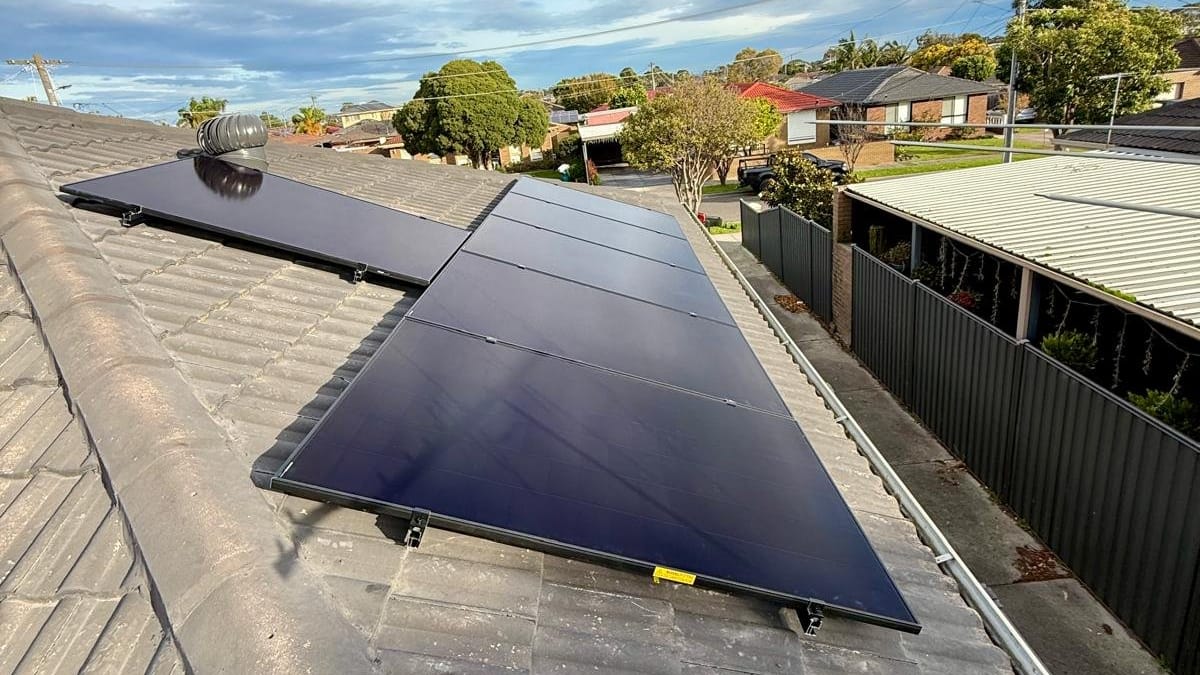
If your home has solar — or you are considering adding it — a smart charger can be set to charge primarily from your solar generation during the day. Rather than exporting surplus solar at a low feed-in tariff, you divert it into the car battery at whatever rate the solar is producing.
The practical reality: a standard 6.6 kW rooftop system on a sunny Melbourne day might sustain 4–5 kW of net export after household loads. That is a reasonable single-phase charging rate, though it means a full charge from empty on a typical EV battery takes the better part of a sunny day. If you want to charge a car meaningfully from solar alone, a larger system — 10 kW or more — with good north-facing orientation makes the numbers more comfortable.
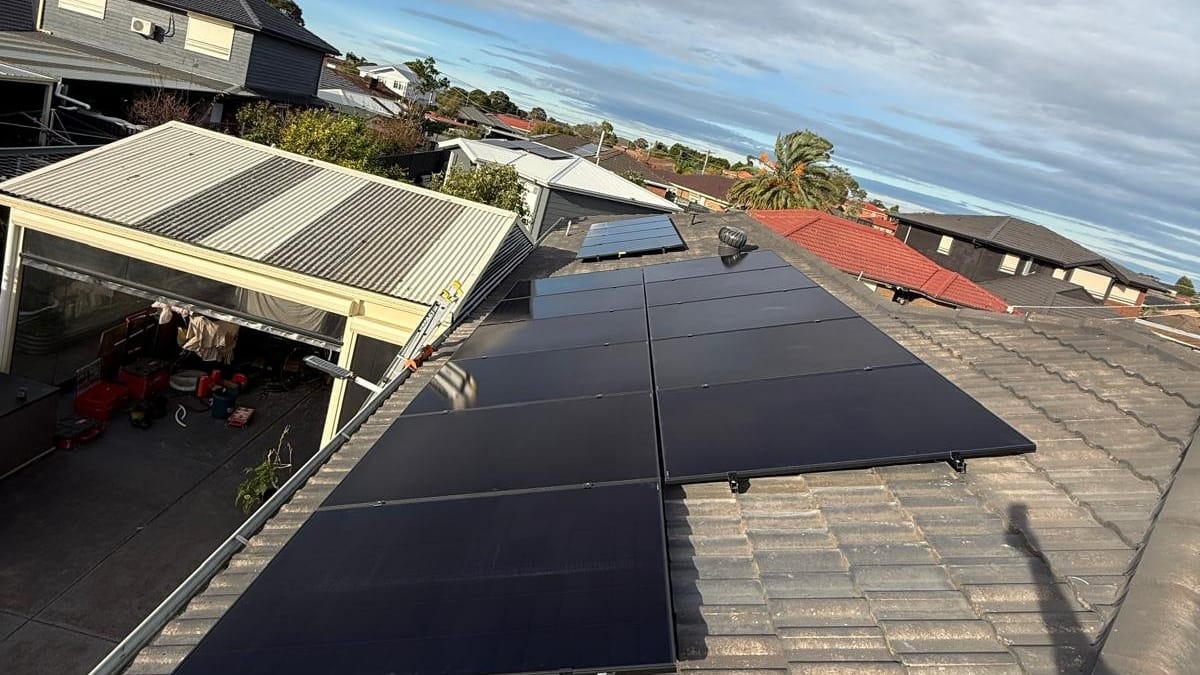
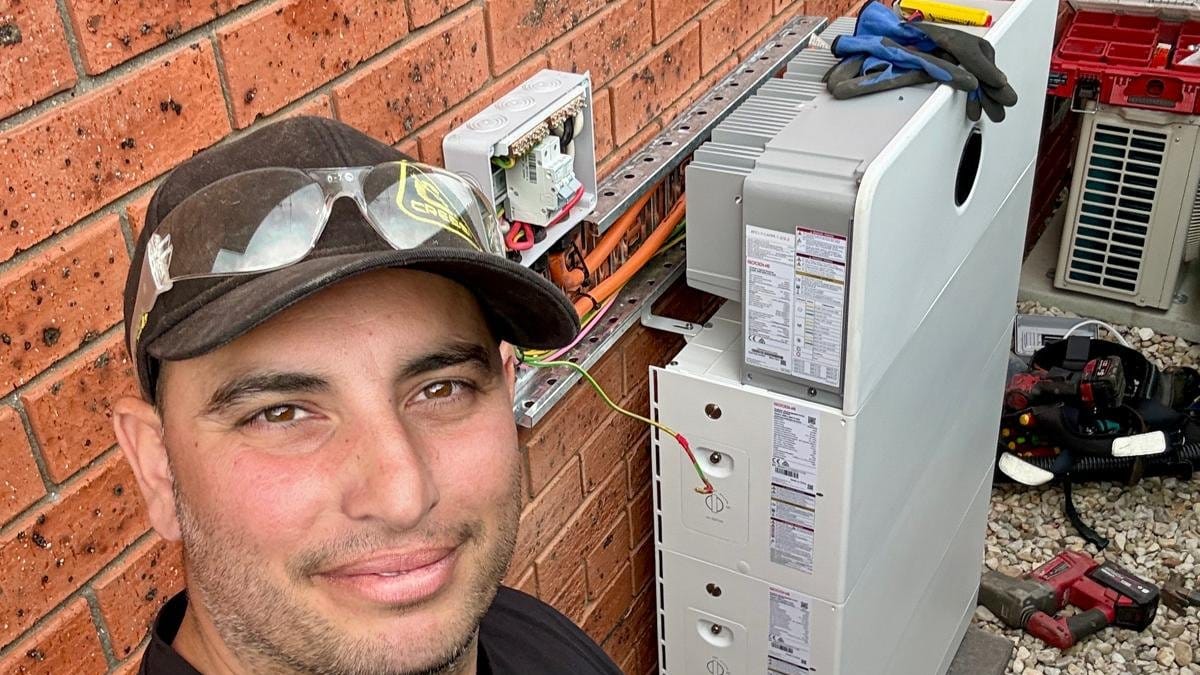
For solar and battery installations, Yiannis holds Clean Energy Council accreditation (SAA S6375256), which is the accreditation your installer needs to access the federal small-scale solar incentive scheme. Worth checking that your installer holds this before committing.
The interaction between a battery storage system, an EV charger, and your grid connection is not trivial to configure well. The order of priority (charge the house battery first, then the car? or vice versa?) depends on your usage pattern, your tariff structure, and the capabilities of your inverter and charger. Getting this set up properly at install time is worth the effort.
When three-phase home charging is genuinely worth pursuing
Given all of the above, here is a plain-English framework for thinking about it:
Three-phase is worth pursuing if:
- Your car’s onboard charger accepts 11 kW or 22 kW AC (check the manual).
- You have an existing three-phase supply, or you have other reasons to upgrade (large solar system, workshop, ducted aircon) that justify the connection upgrade anyway.
- You regularly need to charge a lot of range overnight — say, 200+ km — and want to do it in a few hours rather than overnight.
- You are planning a dual-vehicle household with two chargers running simultaneously.
Single-phase is fine if:
- Your car caps at 7–7.4 kW.
- You drive typical commuting distances (under 80 km a day) and can charge overnight.
- You are not upgrading your solar system in the near term.
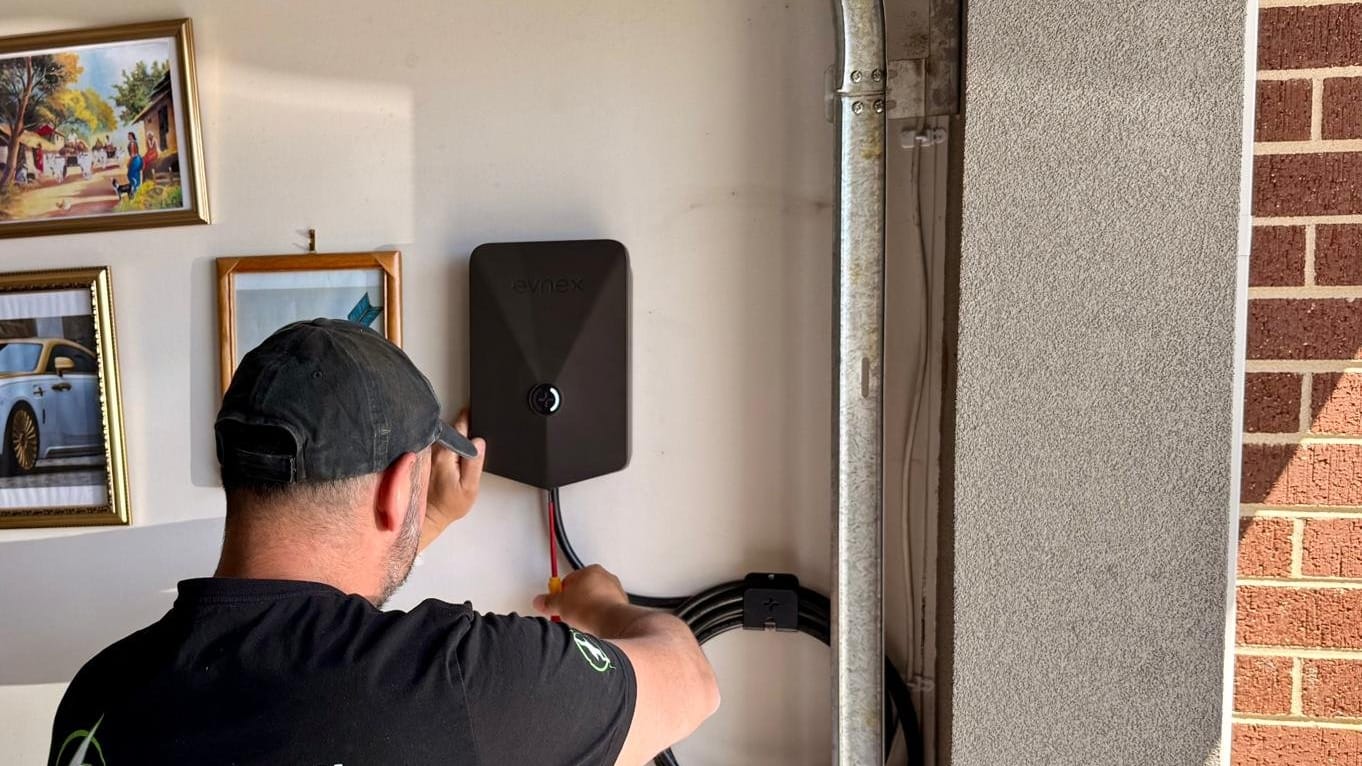
A single-phase 7 kW charger on a 32 A circuit, installed properly with a smart load management unit, handles the daily needs of most Australian EV drivers without any supply upgrade. For residential electrical work including EV charger installation, the job requires a licensed REC and a CoES issued on completion — ESV publishes the requirements clearly, and you can verify any electrician on their public register.
The question is not “is three-phase better?” in the abstract. It is “does my specific car and usage pattern justify the additional work and supply upgrade?” For a lot of households, the honest answer is not yet — but designing the installation so it can be upgraded later costs very little and is worth doing.
What to do next
Start with your car’s manual and find the onboard AC charger rating. Then have a look at your meterbox to see whether you have single or three-phase supply already. Those two pieces of information determine almost everything else.
If you want a licensed sparky to assess your switchboard, confirm your supply configuration, and recommend the right charger and circuit for your setup, give Yiannis a call on 0434 254 474 or send a quick message for a free, no-obligation quote.
Sources
Common questions
Will a three-phase charger actually charge my EV faster?
Only if your car supports three-phase AC charging. Most EVs sold in Australia accept single-phase at 7–7.4 kW, so a three-phase charger delivers no extra speed for them. Vehicles that do accept three-phase can charge at up to 11 kW or 22 kW depending on their onboard charger.
Does my Melbourne home already have three-phase supply?
Many suburban homes in Greater Melbourne are single-phase only. Three-phase supply is more common in newer estates (like parts of Craigieburn) and older inner-suburb properties that were wired for large appliances. A licensed electrician can check your switchboard and meterbox to confirm.
Can I charge an EV from solar panels?
Yes. A smart EV charger can be programmed to draw primarily from your solar array during the day, reducing grid consumption. This works on both single-phase and three-phase installs, though the charging rate must stay within what your solar system can produce at that moment.
What licence does an electrician need to install an EV charger?
EV charger installation is electrical installation work in Victoria, so it must be done by a Registered Electrical Contractor (REC). The installer must issue a Certificate of Electrical Safety (CoES) for the work. ESV runs the public register of RECs — Yiannis holds REC 28523.
Do I need council approval or a building permit for a home EV charger?
In most cases, a standard wall-mounted EV charger does not require a building permit — it's treated as electrical installation work, which requires a CoES but not a permit. If the installation involves significant structural work or a new sub-board, your electrician can advise on whether anything else is needed.
The owner does your job
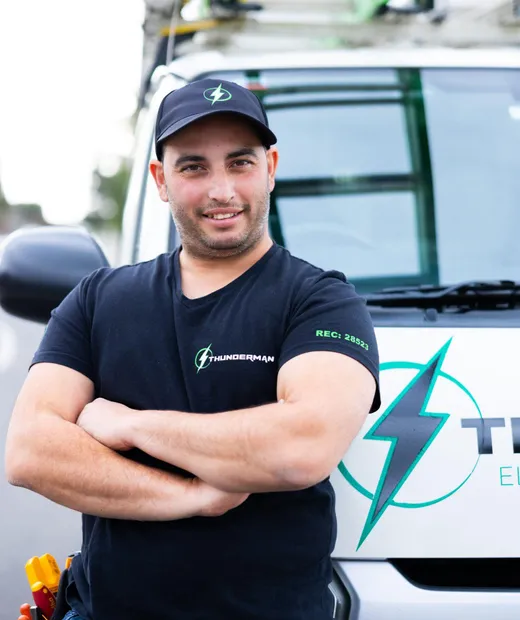
You'll get Yiannis — not a subcontractor.
Book Thunderman and the licensed electrician who quotes your job is the one who does it — and stands behind it afterwards. REC 28523, ARCtick certified, public liability insured, rated 4.9★ across 53 Google reviews.
More from the Journal
Got a follow-up question? Just call.
Free quotes across Greater Melbourne — Yiannis answers personally.