
Buyer guide
Every split system sold in Australia, with the figures you can check.
Before a unit can be sold here it has to be registered with the Australian Government. That register lists 380 wall-mounted reverse-cycle models across 8 brands, with the capacity, the efficiency and the noise level of each. These pages put that data where you can use it — and add the part a showroom leaves out: what it takes to actually run the thing.
Quick answer
Every wall-mounted single-phase reverse-cycle air conditioner sold in Australia must be registered with the Government's GEMS database before it may legally be sold. That register currently lists 380 such models across 8 brands: Daikin, Mitsubishi Heavy Industries, Carrier, Mitsubishi Electric, Fujitsu, TCL, Hisense and Teco. For each one it publishes the rated cooling and heating capacity, the power drawn, the annual efficiency figures (AEER for cooling, ACOP for heating), the star ratings and, for 363 of them, the indoor noise level. Thunderman Electrical and Air Conditioning Services uses that data rather than manufacturer marketing to advise Melbourne households on sizing and selection, and installs under ARCtick certification with REC 28523. In Melbourne's climate the heating efficiency figure (ACOP) matters more than the cooling star rating, because a reverse-cycle system runs for warmth far more of the year than for cooling.
Start with the room
What size do you actually need?
Capacity is the decision that everything else follows from. Too small and the unit runs flat out and never gets there; too big and it short-cycles, which costs efficiency, comfort and compressor life. The classes below are the eight the Australian market actually sells, with the number of registered models in each and the room size each typically suits.
Room-size ranges are wide on purpose. They come from the published 150 watts per square metre rule of thumb adjusted for orientation, insulation and occupancy — the same calculation thesizing calculatoron this site uses. A west-facing, poorly insulated room sits at the small end of a class; a south-facing, well-insulated one at the large end.
Or start with what matters to you
Three questions worth ranking on.
The quietest units
Ranked by declared indoor sound level, from the 363 models that publish one. The figure that decides whether you can sleep with it running.
Cheapest to run
Ranked by AEER, the annual cooling efficiency figure. Two units with the same star rating can draw measurably different power.
Best for heating
Ranked by ACOP. In Melbourne this is the number that matters most, and it is the one a cooling-focused showroom never leads with.
By brand
What each brand actually registers.
One thing worth knowing before you compare: a retailer's catalogue lists far more Mitsubishi Electric units than Daikin ones, but that is counting colourways. On the register — where each entry is a distinct approved model — Daikin carries by far the widest range. The counts below are registrations, not shelf listings.
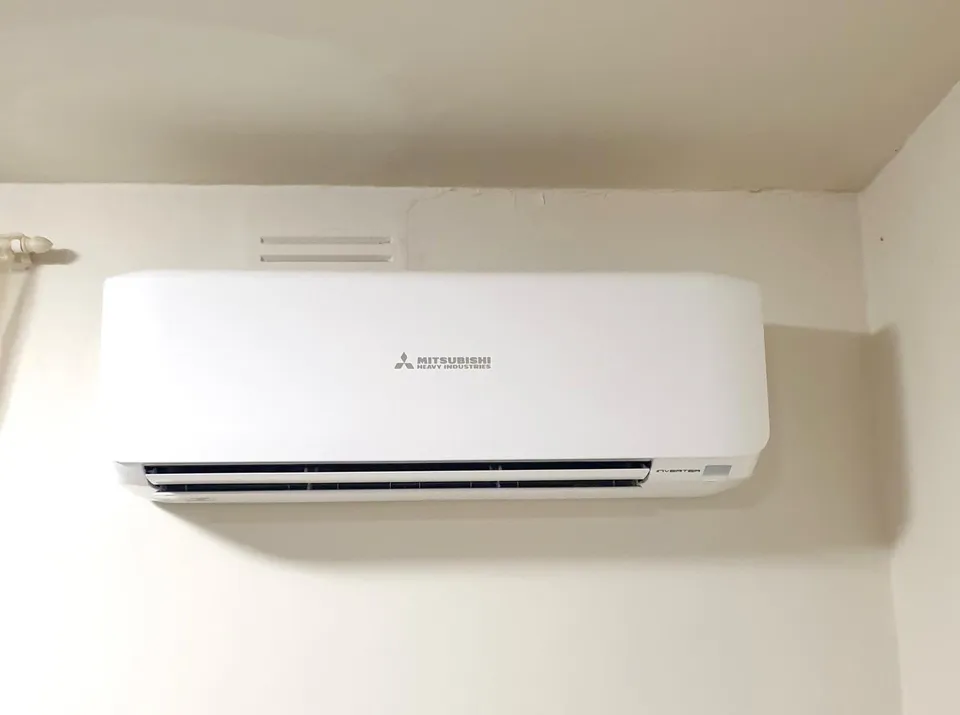
Mitsubishi Electric and Mitsubishi Heavy Industries are two different companies. In Australia they have separate ranges, separate warranties and separate distributors, and they get confused constantly — including on quotes. If a quote says only "Mitsubishi", it is worth asking which one.
Where these numbers come from
You don't have to take our word for any of it.
Every figure on these pages is read from the GEMS registration database (Australian Government) — the register an appliance must be listed on before it can legally be sold in Australia. Each model is shown with its registration number, so you can look up any claim atthe register itselfand see the same figures we did. Nothing here is a manufacturer's marketing claim passed along, and nothing is our own estimate dressed up as data.
What isn't in the register is judgement: which unit suits your room, your switchboard and the way you actually live in the house. That part comes from twenty years on the tools, and it is what the free quote is for.
Know the numbers. Now get the bit the numbers can't tell you.
The register says what a unit does. It doesn't say whether your switchboard can carry it, where the head should go, or whether one unit or two suits the shape of the room. Yiannis will tell you that — free quote, no obligation.