
Ceiling fans plus aircon: how to cool a Melbourne house in summer
Fans and air conditioning are not rivals. Here is how the two work together, what a fan can and cannot do, and why a ceiling fan install is a licensed electrician's job in Victoria.
Quick answer
A ceiling fan does not cool air. It moves it, which carries heat off your skin and makes a room feel cooler than it is. Run together with an air conditioner, a fan lets you sit comfortably at a higher thermostat setting and spreads the cooled air into corners the indoor unit cannot reach. Installing one is hardwired electrical work and needs a licensed electrician.
The thing most people get wrong about fans
A fan is not a small air conditioner. It has no cooling capacity whatsoever. Put a thermometer in a room, switch the fan on, come back an hour later and the reading will be the same or a touch higher, because the motor itself gives off a little heat.
What a fan does is move air past you. Your skin is warmer than the room, and moving air strips that warmth away faster than still air does. The effect is real and it is immediate, but it happens to people, not to rooms. This is why leaving a fan running in an empty bedroom achieves precisely nothing.
Once you have that straight, the rest follows. A fan is a comfort device you sit under. An air conditioner is a machine that changes the state of the room. They are not competitors, and the households that stay comfortable through a Melbourne February are the ones that stop treating them as an either-or.
How the two work together
Here is the practical version, the way it plays out in a Melbourne house in February.
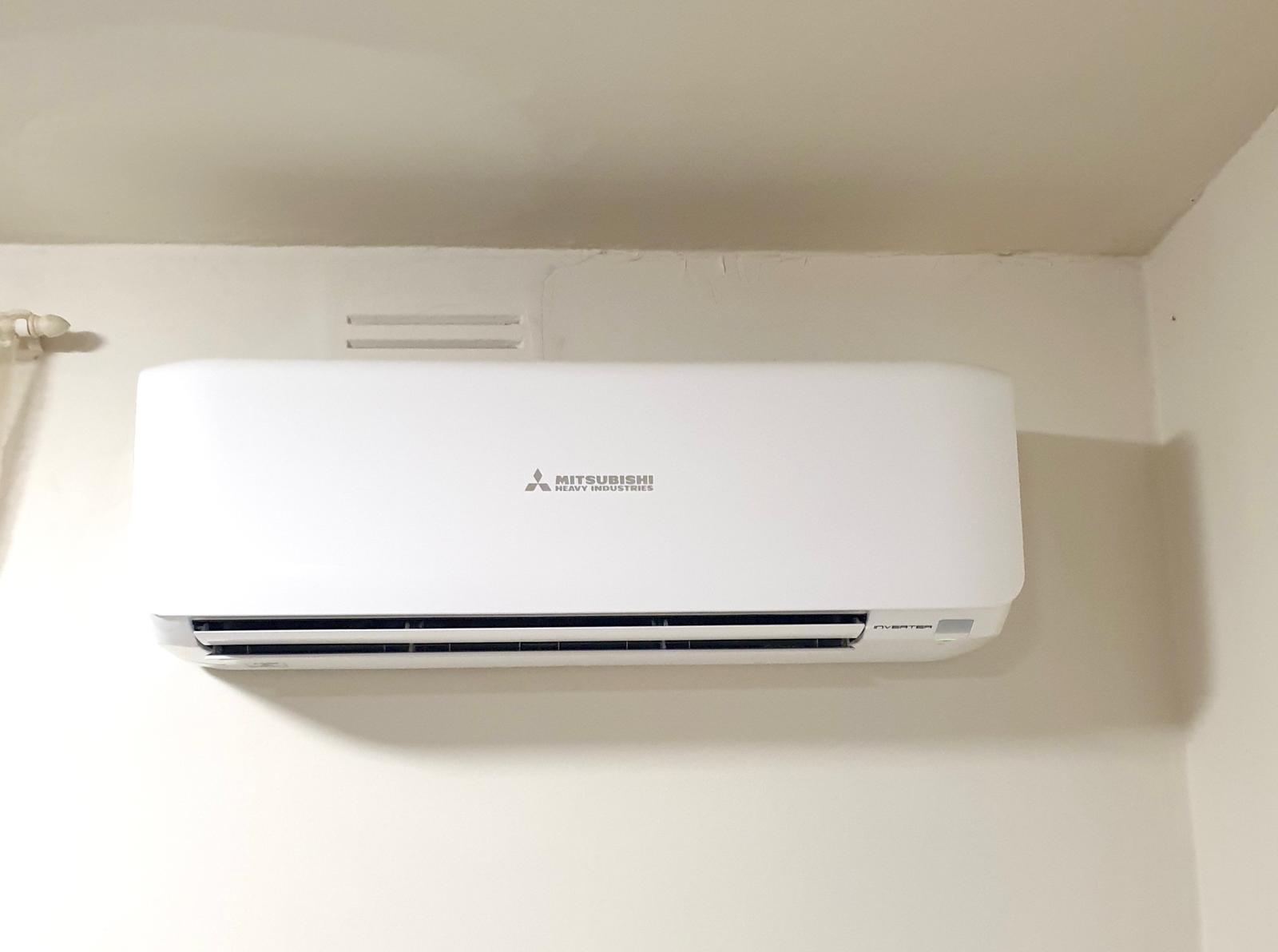
Without a fan, you set the aircon to a temperature at which the still air feels comfortable. With a fan running, you feel comfortable at a slightly warmer setting, because the moving air is doing part of the work. Nudging the thermostat up a degree or two means the compressor is not being asked to hold as large a gap between inside and outside, and it spends less of the afternoon running flat out.
The second thing a fan does is deal with the shape of the room. A wall-mounted split system throws cooled air in one direction from one point, usually high on a wall. In a long living area, an L-shaped open plan, or a room with a bulkhead in the wrong place, that leaves pockets the airflow simply never reaches. A ceiling fan set to gently push air downward turns those pockets over. Plenty of complaints about a system being “too small for the room” are really complaints about air distribution.
Third, there is the overnight case. Melbourne cools off after most hot days, and a fan alone is frequently enough to sleep in once the outside temperature drops below the inside one. Windows open on both sides of the house, a fan running low, and the aircon off entirely.
The order that works: fan first, aircon when the fan alone stops being enough, both together on the worst days.
The winter half nobody uses
Most ceiling fans have a reverse switch, and a great many of them are never touched.
Warm air rises and sits against the ceiling. In a room with standard ceilings that is a minor loss. In the high-ceilinged Edwardian and Victorian places you find across Brunswick and around Coburg, a genuinely useful amount of the heat you are paying to produce ends up two metres above anyone’s head.
Run in reverse on the lowest speed, the fan draws air upward through the middle of the room and pushes the warm layer down the walls, where it mixes back in rather than blowing directly on anybody. Done right you should not feel a draught at all. If you do, the speed is too high.
It is a switch on the side of the motor housing or a button on the remote. Flick it in April, flick it back in October.
Why the install is a sparky’s job
A ceiling fan is hardwired. It is connected to a circuit inside the ceiling, usually at an existing light point, and that makes fitting one electrical installation work under AS/NZS 3000. In Victoria that work belongs to a licensed electrician, and Energy Safe Victoria is the body that registers electrical contractors and runs the public register you can check them on. Yiannis holds REC 28523.
There is a second reason beyond the paperwork, and it is the one worth raising at the kitchen table. Three things about a ceiling fan install are easy to get wrong and awkward to undo:
- The fixing. A fan is a spinning mass hanging over a bed or a lounge. It has to be anchored to something structural, not to a plasterboard sheet or a light-fitting bracket that was never intended to carry it.
- The clearances. How far the blades sit above the floor, and how much space they have to anything nearby, decides whether a given fan suits a given room at all. Low ceilings, raked ceilings and rooms with a loft change the answer, and it is a judgement made on site rather than from a product page.
- The switching. Whether the fan shares a switch with the light, gets its own wall control, or runs from a remote receiver decides what the wiring in the ceiling has to look like. That decision is much cheaper to make before the fan goes up.
If any of that turns up an ageing switchboard or a lighting circuit with no safety switch, it is worth handling in the same visit. Energy Safe Victoria is plain about the risk that old, degraded domestic wiring carries, and a fan is a good moment to look, because someone is already in the ceiling with the power off. That kind of work sits with our residential electrical services.
What to do next
Before summer arrives, walk the house and ask three questions. Which rooms do people actually sit in on a hot evening? Which of those rooms have air that never seems to move? And does a fan you already own have a reverse switch nobody has tried?
If you are thinking about adding one, work out the room and the ceiling height first and buy the fan second. Getting the height and clearance wrong is the most common reason a fan comes back down again.
If you’d rather a licensed sparky handle it, give Yiannis a call on 0434 254 474 or send a quick message for a free quote.
Sources
- Energy Safe Victoria — household wiring and safety switches
- Energy Safe Victoria — public register of electrical licences
- AS/NZS 3000:2018 — Wiring Rules
Common questions
Does a ceiling fan make a room colder?
No. A fan does not lower the air temperature at all. It moves air across your skin, which carries heat away and makes the room feel cooler than the thermometer reads. Switch it off in an empty room and you have gained nothing.
Should I run a ceiling fan and the air conditioner at the same time?
In most Melbourne homes, yes. The fan spreads the cooled air and lets you sit comfortably at a slightly higher thermostat setting, which means the compressor spends less of the afternoon at full tilt.
Can I install a ceiling fan myself?
Not in Victoria. A ceiling fan is hardwired to a circuit, so installing one is electrical installation work and belongs to a licensed electrician. You can check any electrician's registration on the Energy Safe Victoria public register.
What is the reverse switch on a ceiling fan for?
Winter. Run in reverse at low speed, the fan pushes the warm air that has collected at ceiling level back down the walls without creating a draught. It is most useful in rooms with high ceilings.
Are ceiling fans suitable for bedrooms?
Often yes, but the mounting height and the clearance around the blades matter, and low or raked ceilings change the answer. That is one of the things worth checking on site before you buy the fan.

The owner does your job
You'll get Yiannis — not a subcontractor.
Book Thunderman and the licensed electrician who quotes your job is the one who does it — and stands behind it afterwards. REC 28523, ARCtick certified, fully insured, rated 4.9★ across 53 Google reviews.
More from the Journal

Got a follow-up question? Just call.
Free quotes across Greater Melbourne — Yiannis answers personally.